
Last updated October 17, 2026
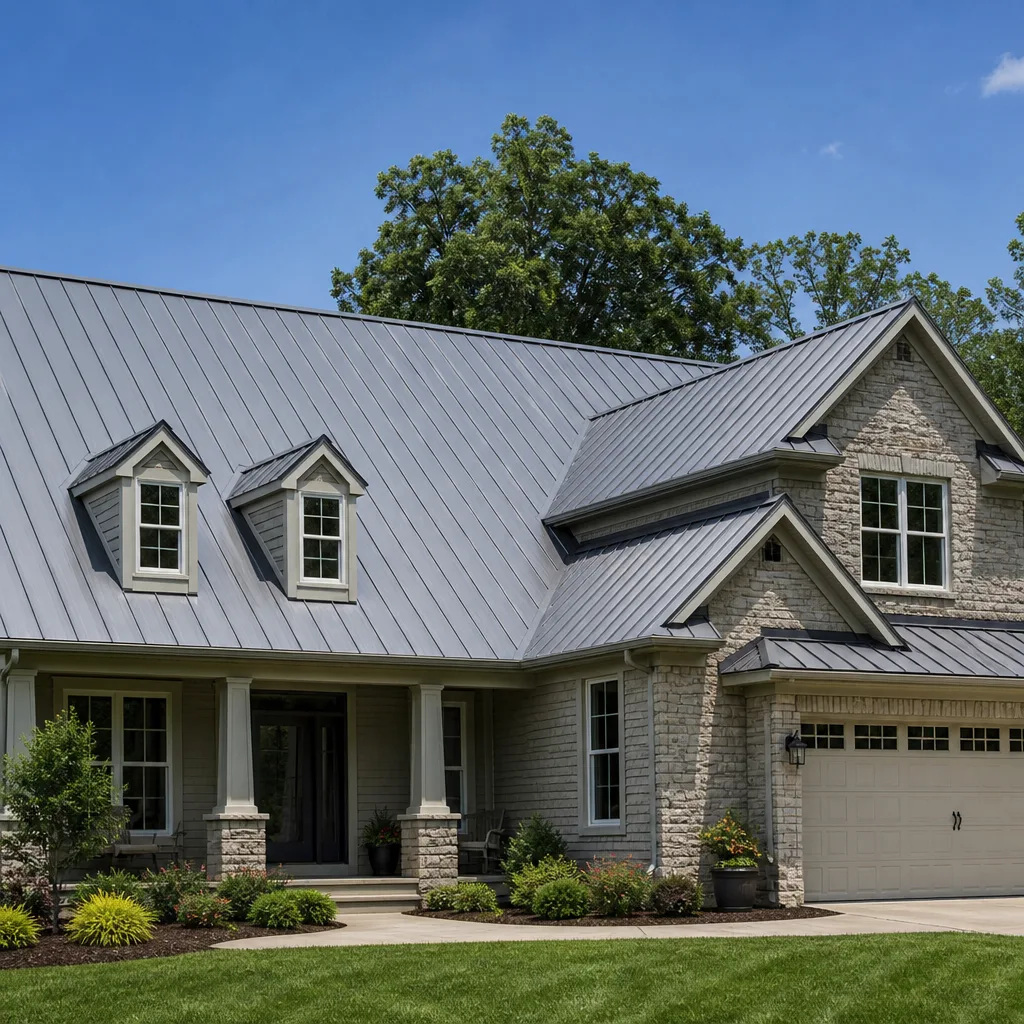 Metal roofing
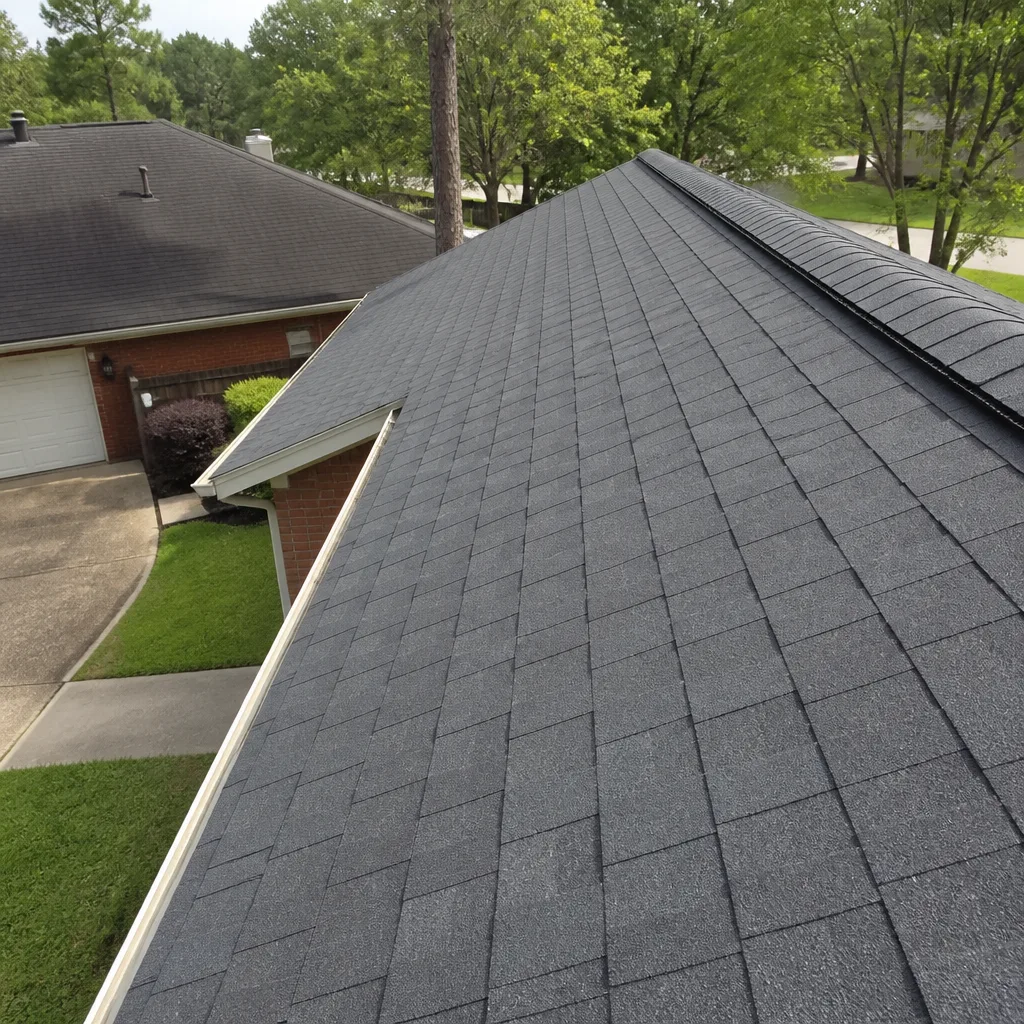
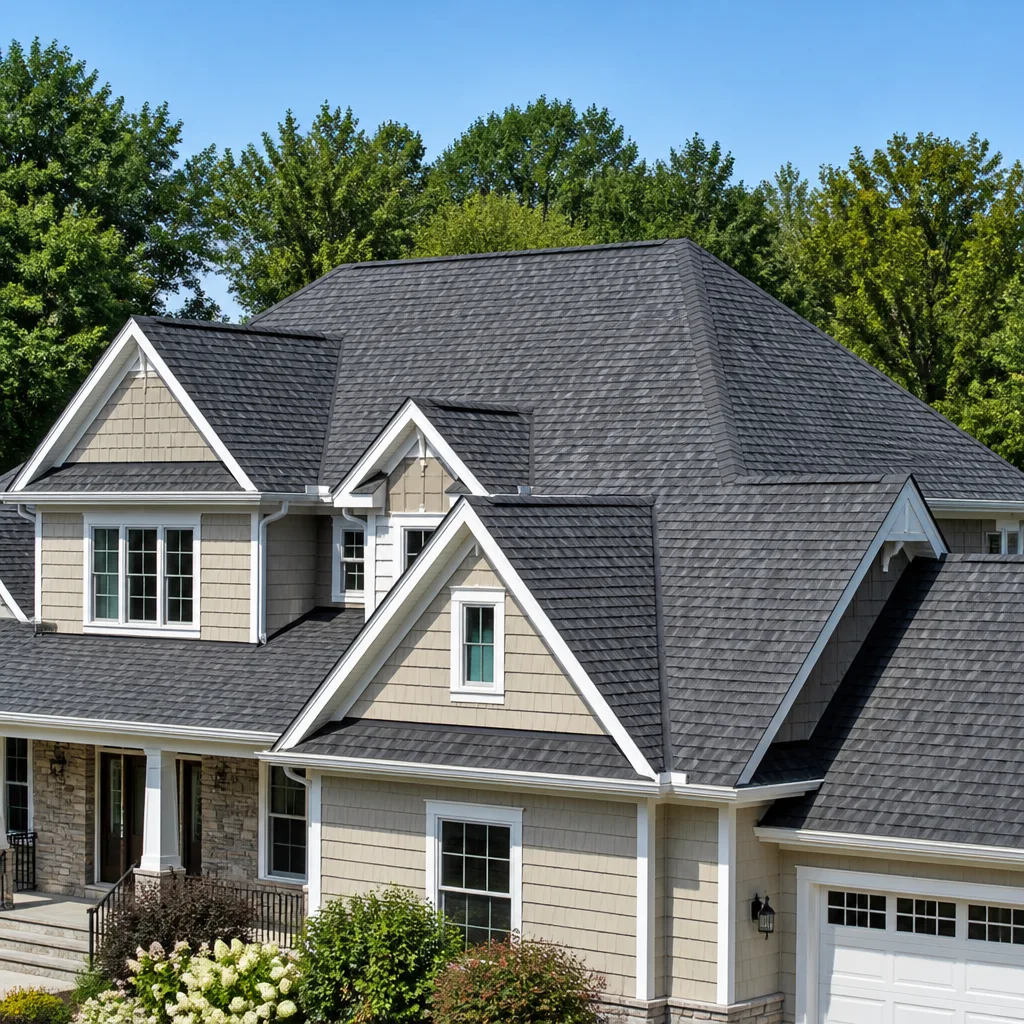 Architectural shingles
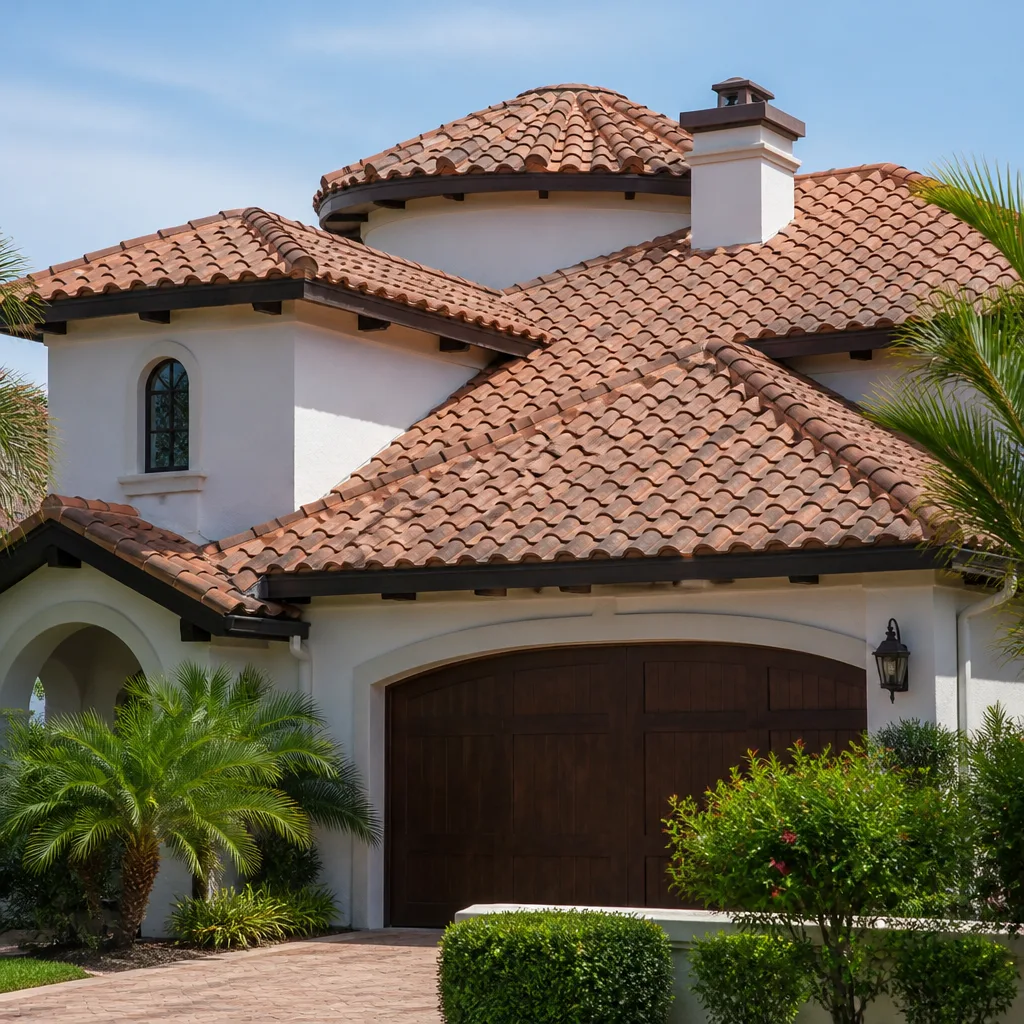 Tile roofing
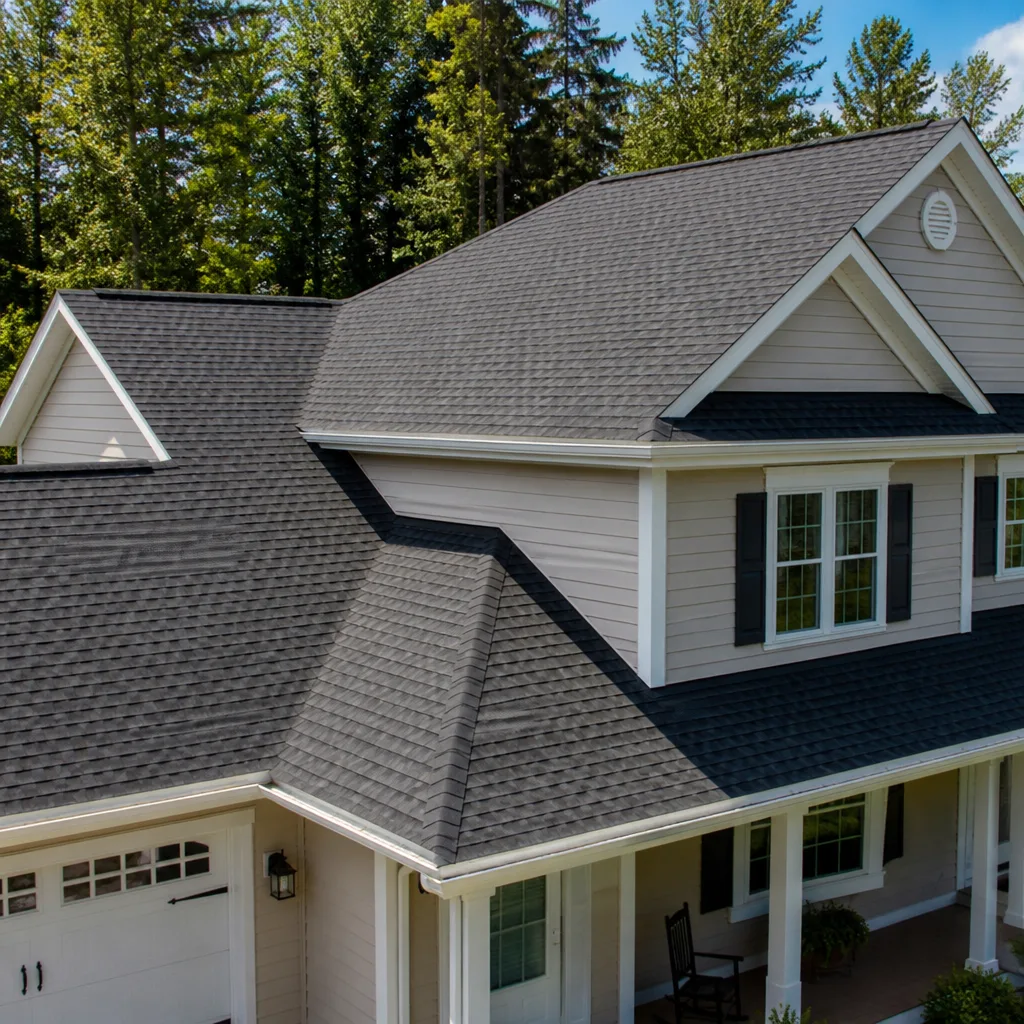 GAF
GAF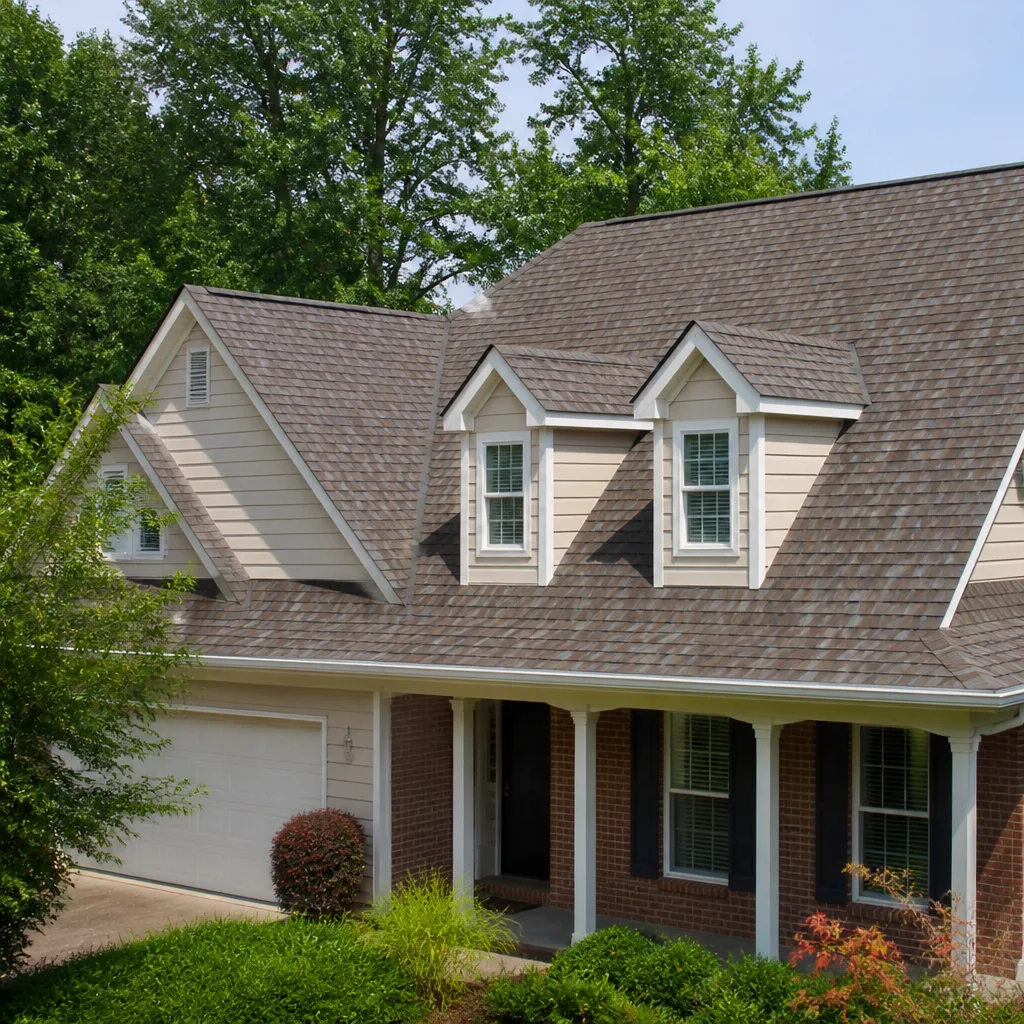 Owens Corning
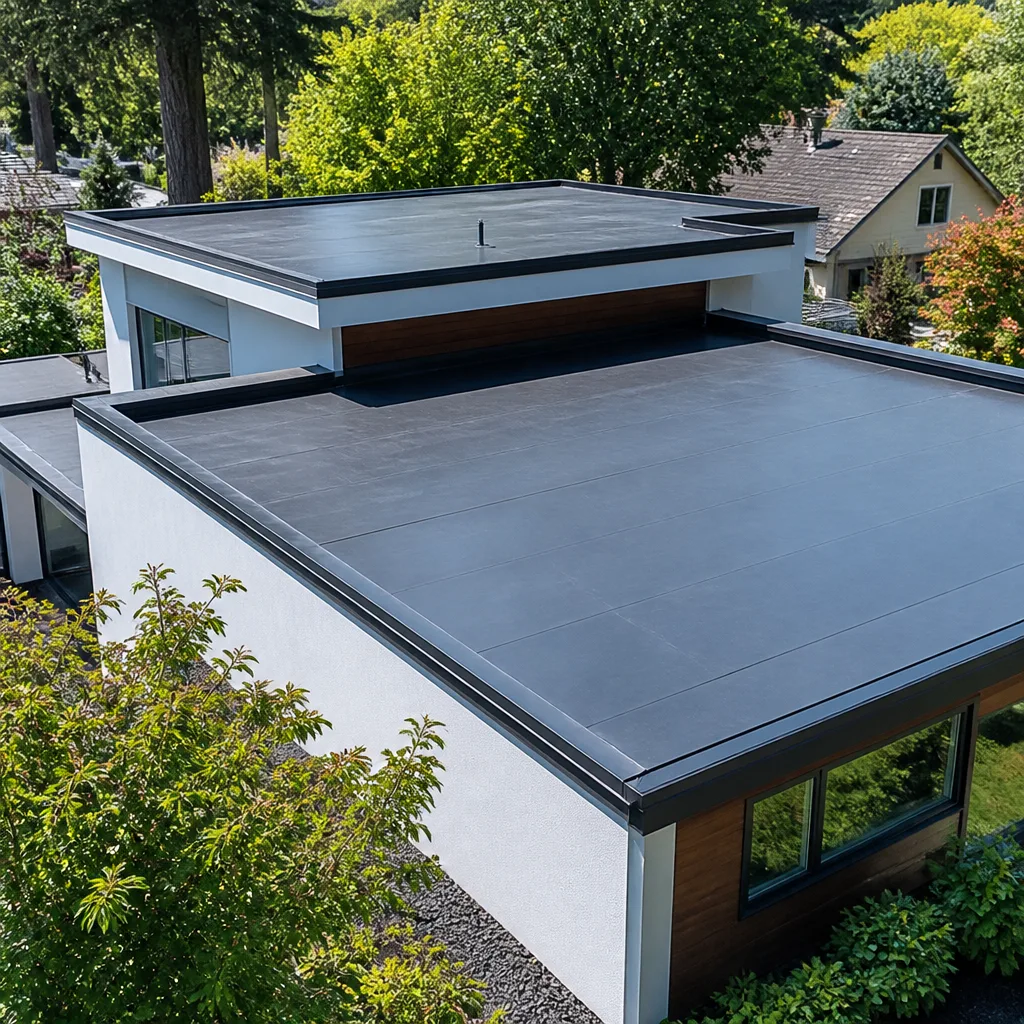 Flat & low-slope
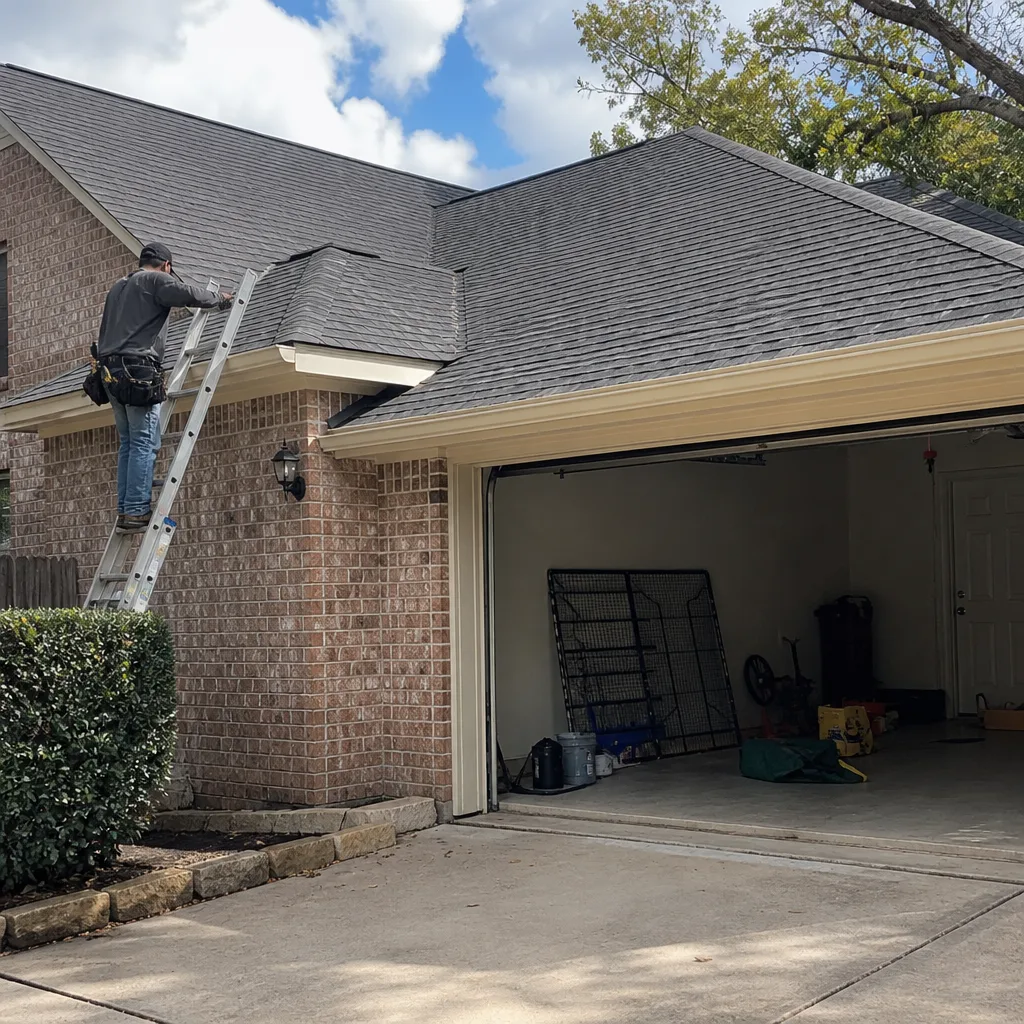
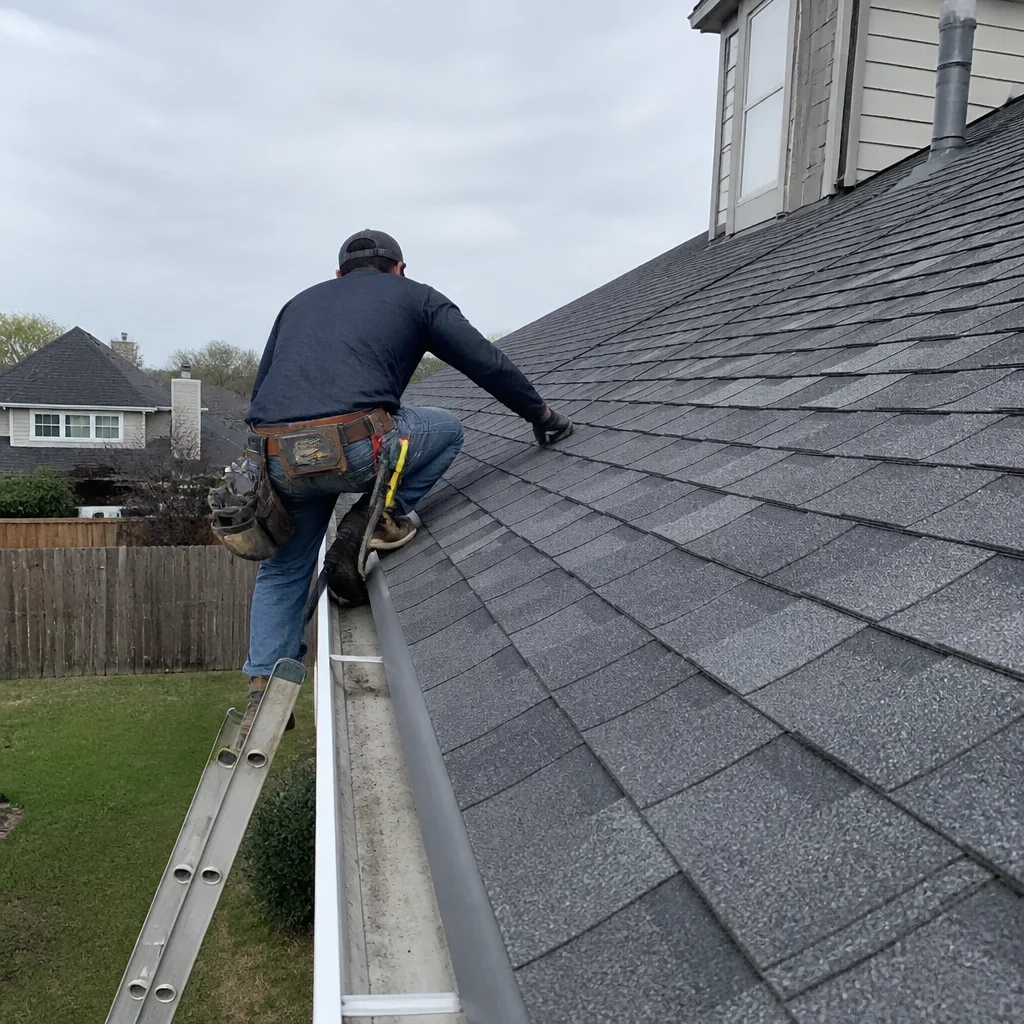
Free roof inspection with deck photos before we talk money - GAF and Owens Corning certified installation
The Complete Guide to Roofing in Houston
Houston averages 64 inches of rain per year, nearly double the national average, yet most roofing guides written for “Texas” were built around Dallas’s dry heat. The advice doesn’t transfer. A roof that performs beautifully in Lubbock will fail early in Kingwood or Katy if it wasn’t designed for Houston’s specific combination of humidity, clay soil movement, hurricane-force wind gusts, and relentless UV exposure. This guide covers what actually matters for a Houston roof, and you can find more guides & resources on our blog: the local codes that changed after Hurricane Harvey, the soil conditions that crack decking, the shingle choices that hold up to algae and hail, and the real dollar ranges you should expect to see on a Houston roofing estimate. By the end, you’ll know how to read a bid line by line and spot the difference between a roofer who builds for Houston and one who just nails shingles.
Styles & brands we work with
Quick Answer
Roofing in Houston is not a standard Texas roof job. Homeowners should expect to pay between $4.50 and $7.50 per square foot for a full asphalt shingle replacement in the Houston market, with most single-family homes landing between $9,000 and $18,000 total depending on roof complexity, material grade, and whether the existing decking needs repair. The three Houston-specific factors that drive cost and performance are: wind-uplift standards enforced in Harris County after Hurricane Harvey, clay-heavy soil that moves foundations and cracks decking, and humidity that makes algae-resistant shingles a functional necessity rather than an upgrade.
Table of Contents
- Why Houston’s Climate is Different From the Rest of Texas
- Clay Soil, Foundation Movement, and Roof Decking Stress
- Harris County Wind-Uplift Requirements After Hurricane Harvey
- Algae, Humidity, and Why Shingle Selection Matters in Houston
- Houston Roof Replacement Costs by Material (Local Ranges, Not National Averages)
- How to Read a Houston Roofing Estimate Line by Line
- Common Mistakes to Avoid
- When to Call a Professional
- Frequently Asked Questions
- The Bottom Line
Why Houston’s Climate is Different From the Rest of Texas
Houston sits in a humid subtropical zone, which means the roof on your home deals with conditions that a roof in Fort Worth or San Antonio never faces. The average annual rainfall in Houston sits around 64 inches, while Dallas gets roughly 39 inches. That extra two feet of water per year lands on shingles, works its way into flashing seams, and tests every seal around vents, pipes, and valleys. And it doesn’t fall gently. Houston thunderstorms deliver rain in concentrated bursts. A single afternoon storm can drop three inches in an hour. Water has to move off the roof fast, and any low spot, clogged valley, or poorly lapped shingle becomes a leak point under that kind of volume.
What Houston Weather Does to a Roof Over Time
- Repeated wet-dry cycling: Shingles expand when wet and contract when dry. In Houston, that cycle happens hundreds of times per year rather than a dozen times. Cheap shingles with poor dimensional stability start to curl, crack, and lose granules faster.
- High nighttime humidity: Even when it’s not raining, Houston’s dew point stays elevated for months. This keeps roof decking damp longer than ideal, which accelerates rot in OSB or plywood that wasn’t properly ventilated.
- Intense UV exposure: Houston gets more direct sun than most people realize. Combined with heat that pushes attic temperatures past 140 degrees in July, asphalt shingles age from both the top (UV) and the bottom (thermal load from inadequate ventilation).
- Hail and wind events: Severe thunderstorms roll through regularly, and hurricane remnants bring sustained wind and debris. Even when a roof isn’t catastrophically damaged, repeated moderate storms loosen fasteners and wear down sealant.
At Brennan Roofing Co Houston home, we’ve seen roofs in Montrose and the Heights fail five years early simply because they were installed with materials and techniques better suited to a drier climate. The roof wasn’t defective. It was built for the wrong environment. A Houston roof needs specific material choices, specific underlayment, and specific attention to ventilation. That’s the starting point for everything else in this guide.
Clay Soil, Foundation Movement, and Roof Decking Stress
Most national roofing guides never mention soil. That omission costs Houston homeowners real money. Houston sits on expansive clay soils, particularly in the western and southwestern suburbs like Katy, Richmond, Sugar Land, and parts of Cypress. These clays swell when wet and shrink when dry. During Houston’s alternating flood-and-drought cycles, the ground under your foundation moves. Sometimes it moves enough to shift the foundation itself.
When a foundation moves, even a quarter inch, the roof moves with it. The framing transfers that stress upward through the walls and into the roof decking. What you get at the roofline are small but real gaps: flashing separated from chimney masonry, step flashing pulling away from dormer walls, decking seams telegraphing through underlayment, and shingles buckling along ridge lines. None of these show up on a standard inspection from the driveway. They show up as leaks inside the house.
What This Means for a Houston Roof
- Decking inspection matters as much as shingle inspection. Before any new roof goes on, the decking must be checked for deflection, rot from past leaks, and nail-holding capacity. In Houston, we routinely find decking that has to be replaced because the clay soil below caused enough movement to loosen fasteners over time.
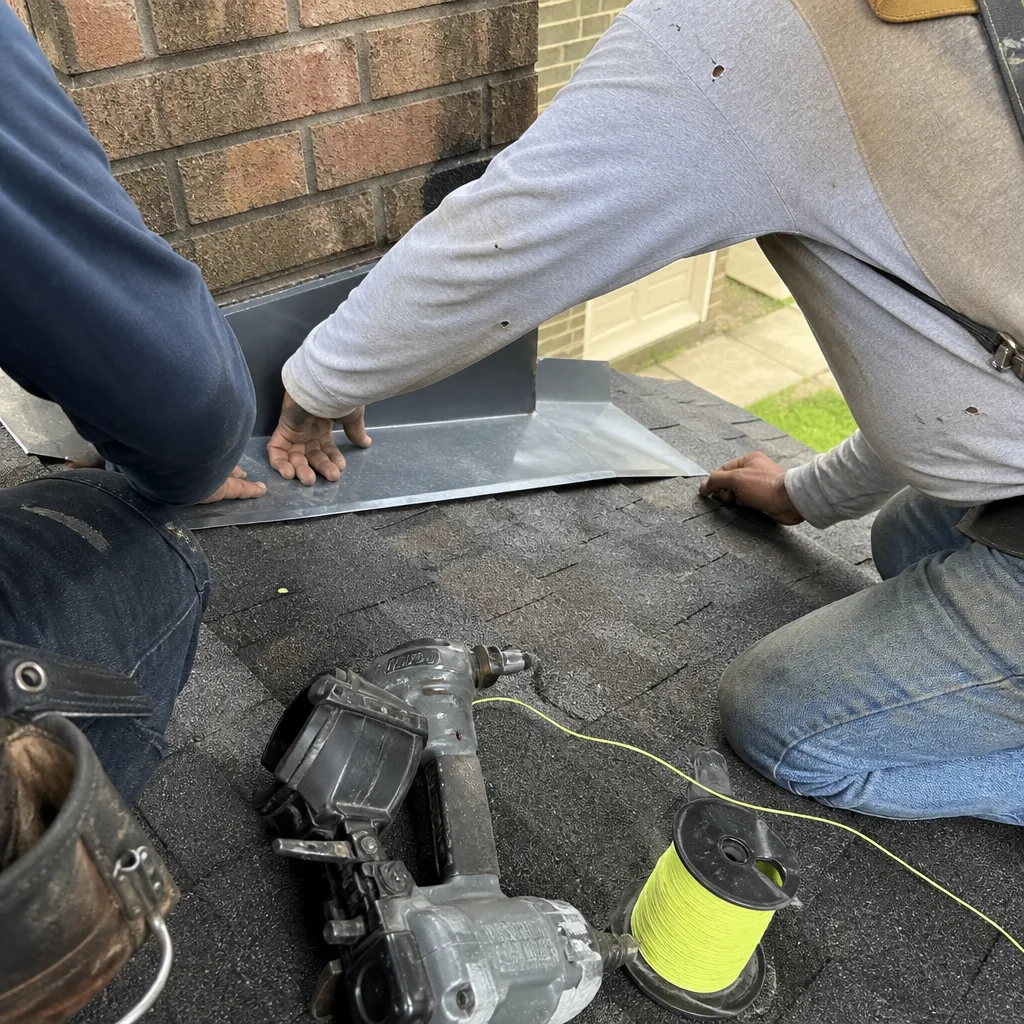
- Flashing details deserve more attention than shingle brand. The shingle is only as good as the flashing around it. In Houston, flashing at chimneys, skylights, and wall intersections is the first place leaks start when the ground moves. High-quality flashing installed with proper overlap and sealant is cheap insurance.
- Ventilation becomes non-negotiable. A properly vented roof keeps the attic temperature down, which reduces thermal cycling on the decking and helps extend the life of the entire system. In a climate where the soil is already stressing the decking from below, you don’t need heat stress compounding it from above.
In Pecan Grove and Greatwood, we regularly see spring roof failures that trace back to foundation settlement during the previous dry summer. The shingles look fine. The decking underneath is not. A Houston roofer who doesn’t look at the decking and the flashing is not doing the job.
Harris County Wind-Uplift Requirements After Hurricane Harvey
Hurricane Harvey changed how Houston builds roofs. After the storm, local enforcement standards and insurance expectations in Harris County tightened significantly. Wind uplift, the force that tries to peel the roof off the house during a high-wind event, is now a central factor in any code-compliant Houston roofing job. The relevant standard is the county’s adoption of updated International Residential Code provisions with specific wind speed zones that reflect Houston’s true exposure.
What does this mean in plain language? It means the roof has to be fastened, not just nailed. The days of a roofer showing up with a nail gun and standard four-nail-per-shingle pattern are over in Harris County. Depending on the wind zone your home falls into, your roof may require six nails per shingle, upgraded underlayment rated for higher uplift resistance, and additional fasteners at the perimeter and ridge where wind pressures are highest.
Key Wind-Uplift Details for Houston Homeowners
- Nail count and placement: The wind zone determines how many nails per shingle are required. In the higher zones, six nails are standard. The nails must land in the correct position within the nail strip, which is tighter than most hand-driven work allows.
- Underlayment: Synthetic underlayment with higher tear resistance is now the practical standard for new Houston roofs. It holds up better during install, resists wind-driven rain better than felt, and meets the newer uplift standards more reliably.
- Perimeter and corner reinforcement: The edges of the roof carry more uplift load than the field. Code-compliant Houston installs include additional fastening at eaves, rakes, and ridges. This is not optional.
- Deck attachment: If the decking isn’t properly fastened to the trusses or rafters, the shingles and underlayment don’t matter. A high-wind Houston storm can pull the entire roof assembly off if the decking lifts first. Older homes in the Memorial and Spring Branch areas often need deck re-nailing to meet current standards.
Every estimate you get for a Houston roof should state the nail pattern, the underlayment type, and that the install will meet current Harris County wind uplift requirements for your home’s wind zone. For help vetting your contractor, see our How to Hire a Roofing Contractor in Houston: A Step-by-Step Guide. If an estimate doesn’t mention wind uplift, ask why. If the roofer can’t answer, get another roofer. A roof installed to pre-Harvey standards is a roof installed wrong for Houston today.
Algae, Humidity, and Why Shingle Selection Matters in Houston
Algae-resistant shingles are not an upsell in Houston. They’re what keeps your roof from turning black-streaked and losing reflectivity within a few years. Gloeocapsa magma, the blue-green algae that feeds on the limestone filler in asphalt shingles, thrives in warm, humid environments. Houston’s climate is close to ideal for it. The black streaks you see on roofs in The Woodlands and Pearland are not dirt. They’re living algae colonies, and they spread from roof to roof by airborne spores.
Most major manufacturers, including GAF and Owens Corning, incorporate copper or zinc granules into their shingles specifically to inhibit algae growth. These granules slowly release metal ions that prevent the algae from gaining a foothold. Without them, a Houston roof can start streaking within two to three years of installation. With them, the roof stays clean for significantly longer.
Why Algae Resistance Is a Houston Functional Requirement
- It affects resale value: A heavily streaked roof looks old, even if it’s structurally fine. Homebuyers in Houston notice. A clean roof sells faster and appraises better.
- It affects cooling costs: Dark algae streaks reduce the reflectivity of the shingle, which pushes attic temperatures higher in Houston’s already brutal summers. Algae-resistant shingles stay lighter and cooler.
- It prevents premature granule loss: Algae growth holds moisture against the shingle surface. Over time, that moisture accelerates granule loss and shortens the life of the roof.
The cost difference between a standard shingle and an algae-resistant shingle from a line like CertainTeed’s Landmark series is roughly $300 to $700 on a typical Houston home. Over the 20 to 30 year life of the roof, that’s about $15 to $35 per year. For a roof that stays clean, reflects heat better, and lasts longer, it’s one of the best values in the entire roofing budget. Any Houston estimate that treats algae resistance as a premium add-on is treating Houston like a dry-climate market.
Houston Roof Replacement Costs by Material (Local Ranges, Not National Averages)
National roofing cost averages are useless in Houston. Labor rates here are competitive but not cheap, the code requirements add cost, and the material choices that make sense in Houston differ from what a national article assumes. The figures below reflect what homeowners in Houston and surrounding areas like Missouri City, Humble, and Pasadena should expect to see on written estimates in the current market. These are full replacement costs, including tear-off of the existing roof, all labor, materials, decking repair where limited damage exists, and standard perimeter flashing.
Houston Roof Replacement Cost Ranges
| Material Type | Cost Per Square (100 sq ft) | Typical 2,000 sq ft Home | Lifespan in Houston |
|---|---|---|---|
| 3-Tab Asphalt Shingle | $350 – $450 | $7,000 – $9,000 | 12 – 18 years |
| Architectural Asphalt Shingle | $425 – $550 | $8,500 – $11,000 | 20 – 28 years |
| High-Performance Asphalt (Class 4 impact, algae-resistant) | $500 – $650 | $10,000 – $13,000 | 25 – 32 years |
| Standing Seam Metal | $900 – $1,300 | $18,000 – $26,000 | 40 – 60 years |
| Concrete Tile | $800 – $1,100 | $16,000 – $22,000 | 50+ years |
What Drives Houston Roofing Prices Up
- Decking replacement: If the existing decking is rotted, delaminated, or swollen from past leaks, it has to be replaced before the new roof goes on. Decking replacement in Houston typically runs $2.50 to $4.00 per square foot of decking replaced, and it’s common for 20 to 40 percent of the deck to need work on older homes.
- Steep or complex roof geometry: Homes with multiple valleys, dormers, chimneys, or a steep pitch above 8/12 take longer to roof and use more flashing. That adds labor hours, which is where Houston costs climb fastest.
- Two-story access and site conditions: Homes on narrow lots, homes with landscaping that limits dumpster placement, and two-story homes all add setup time and disposal cost.
- Code-required upgrades: If the home predates Harvey-era wind uplift enforcement, bringing the roof up to current Harris County standards can add $500 to $1,500 in additional fastening and underlayment costs.
What Drives Houston Roofing Prices Down
- Simple rooflines: A single-gable ranch in Pasadena or a simple hip roof in Cypress rools quickly and uses fewer materials. Simple roofs cost less per square.
- Good existing decking: If the decking is in good shape and the fastening is adequate, the bid drops by the decking replacement cost and the labor to remove it.
- Off-season scheduling: Houston’s roofing season runs hard from late spring through fall. Scheduling a replacement in the slower winter months can save 5 to 10 percent, though the weather windows are tighter.
- Insurance-covered replacement: If a hail or wind event damaged the roof and the claim is approved, the out-of-pocket cost drops to the deductible. A good Roofing Company in Houston will walk you through the claim process.
Every number above is a starting point, not a promise. The only way to know what your specific roof costs in Houston is to have a written estimate done by a roofer who has inspected the decking, the attic, and the flashing. The estimate should break it out line by line. Which brings us to the next section.
How to Read a Houston Roofing Estimate Line by Line
A Houston roofing estimate should read like a legal document, because that’s what it is. The estimate is your protection. It tells you exactly what the roofer will do, what materials they’ll use, and what you’re paying for. If it’s vague, that’s a red flag. If it’s missing line items that this guide covers, that’s a red flag. Here’s what a complete Houston roofing estimate should show you and what each line actually means.
Step-by-Step: Reading Your Houston Roofing Estimate
- Scope of work: The estimate should state clearly whether this is a full tear-off and replacement or a re-cover over the existing shingles. In Houston, a full tear-off is almost always the right call. Re-covers trap moisture, hide decking problems, and don’t meet current wind uplift standards in most Harris County zones.
- Decking allowance: Look for a line item that covers decking replacement. Good Houston roofers include a per-sheet or per-square-foot allowance in the contract so you know the cost before any rotten decking is exposed. Without this, you’re writing a blank check.
- Underlayment specification: The estimate should name the underlayment product, not just say “underlayment.” Look for a specific synthetic underlayment rated for high wind and secondary water resistance. If the estimate says “felt,” ask if that’s current code compliant for your wind zone. In most of Harris County, it is not.
- Flashing and roof accessories: This line should cover drip edge, valley metal, pipe boots, chimney flashing, and step flashing. If the estimate doesn’t mention flashing replacement, the roofer plans to reuse old flashing. Reused flashing is the most common cause of leaks on a new roof in Houston.
- Ventilation: A complete estimate includes ridge vent, soffit vents, or the ventilation system the roofer will install. Attic ventilation in Houston is a functional requirement. An estimate that doesn’t include ventilation is an estimate for a roof that will fail early from heat and moisture.
- Material specification: The shingle brand and model should be named. The estimate should state the nail pattern (four or six per shingle, per the wind zone) and whether the shingle is algae-resistant. If it just says “architectural shingle,” ask for the specific product. You have a right to know what’s going on your roof.
- Disposal and cleanup: This line covers tear-off debris, dumpster rental, and site cleanup. Houston roofers should include magnetic nail pickup to catch fasteners from the yard and driveway. If the estimate doesn’t mention cleanup, ask.
Red Flags on a Houston Roofing Estimate
- No decking allowance: Decking damage is common in Houston. If the estimate doesn’t address it, the final bill will.
- “Labor and materials” as the only line: You deserve better than a lump sum with no breakdown. Lump-sum bids hide sloppy work and cheap material substitutions.
- No mention of Harris County or wind uplift: A roofer who isn’t building to current Houston code standards isn’t building a roof that will hold up to the next big storm.
- Pressure to sign same-day for a “discount”: A legitimate Houston roofer with a real estimate doesn’t need high-pressure tactics. The work stands on its own.
At Brennan Roofing Co Houston, every estimate is written before any work starts. The price goes on paper, line by line, and it doesn’t move at the door. No add-ons after the fact, no “we found something while we were up there” surprise. What the estimate says is what you pay. That’s the Roof Repair in Houston standard we hold to on every job.
Common Mistakes to Avoid
- Choosing a roofer by quote alone without checking the estimate’s completeness. A low bid that doesn’t include decking allowance, flashing replacement, or proper ventilation will end up costing more than a higher bid that covers everything. Compare line items, not bottom lines.
- Accepting a re-cover instead of a tear-off. In Houston, re-covering a roof adds weight, hides decking rot, and typically fails current wind uplift standards. A full tear-off costs more up front and saves thousands over the life of the roof.
- Reusing old flashing on a new roof. Flashing is the most leak-prone element of any Houston roof. Reusing old flashing to save $300 opens the door to leaks that cost thousands to diagnose and repair later.
- Skipping the attic inspection before the job starts. The attic tells you what the roof is hiding. Mold, decking rot, poor ventilation, and signs of past leaks all show up in the attic before they show up inside the house. Any Houston roofer who doesn’t look in the attic isn’t doing the job.
- Choosing shingles without algae resistance. In Houston’s humidity, standard shingles start streaking within a few years. The marginal savings vanish when the roof looks old prematurely and loses reflectivity.
- Not verifying the roofer’s decking fastening plan. If you live in a Harris County wind zone, the decking must be fastened to current code. Older homes often need re-nailing before the new roof goes on. Skipping this step means the roof fails at the deck in the next high-wind event.
- Ignoring the warranty on the work itself. A shingle manufacturer warranty and a workmanship warranty are different things. What happens if the roofer’s work fails in year one? In Houston, that answer should be in writing before any work starts.
When to Call a Professional
Some roof situations are clear DIY territory, like cleaning gutters or trimming back tree limbs. Most are not. If you see water stains on a ceiling, shingles in the yard after a storm, granule loss in the gutters, or daylight coming through the attic, call a Houston roofing professional. The same applies if your roof is more than 15 years old and has never been inspected by someone who went into the attic, not just walked the ridge. A roof that fails in Houston rarely fails all at once. It fails quietly, over months, behind the shingles where you can’t see it. The inspection is cheaper than the repair, every time. If you need a Roof Inspection in Houston, Brennan Roofing Co Houston offers free estimates in Houston. Call (940) 461-8481 to schedule one. A live person answers, day or night, and the price goes on paper before any work begins.
Frequently Asked Questions
A full asphalt shingle roof replacement in Houston typically costs between $8,500 and $13,000 for a standard 2,000 square foot home, depending on shingle grade, decking condition, and roof complexity. That range assumes architectural asphalt shingles with algae resistance, current Harris County fastening standards, and replacement of standard flashing. The only way to get an accurate number for your home is a written estimate. Call (940) 461-8481 to schedule a free one with Brennan Roofing Co Houston.
Yes. Algae-resistant shingles are a functional necessity in Houston because the city’s high humidity and warm temperatures create ideal conditions for Gloeocapsa magma, the algae that causes black roof streaks. Shingles without algae-resistant granules typically start streaking within two to three years in Houston, while treated shingles from manufacturers like GAF and Owens Corning stay clean significantly longer. The upgrade costs a few hundred dollars on most homes.
After Hurricane Harvey, Harris County adopted updated wind speed zones and enforcement standards that require higher nail counts per shingle, upgraded underlayment with higher tear resistance, and additional fastening at roof perimeters and ridges. The exact requirements depend on your home’s wind zone. A roofing estimate in Houston should state the nail pattern and confirm code compliance for your specific location.
The black streaks are algae, specifically Gloeocapsa magma, which feeds on the limestone filler in asphalt shingles and thrives in Houston’s warm, humid climate. The algae doesn’t just look bad. It holds moisture against the shingle, reduces reflectivity, and accelerates granule loss over time. Algae-resistant shingles prevent the problem; pressure washing attempts to remove it often damage the shingles and void the warranty.
A well-installed architectural asphalt shingle roof in Houston typically lasts 20 to 28 years, while 3-tab shingles last 12 to 18 years. Houston’s climate shortens roof life compared to drier parts of Texas because of repeated wet-dry cycling, high attic temperatures, algae growth, and storm stress. Proper ventilation, algae-resistant shingles, and code-compliant fastening all extend the usable life.
Yes. Houston’s expansive clay soils swell when wet and shrink when dry, which causes foundation movement that transfers stress up through the framing and into the roof decking and flashing. The result is flashing gaps, seam separation, and decking stress that shows up as leaks. It’s one of the most common hidden causes of roof failure in Houston, and it’s why a proper Houston roof inspection includes looking at the decking and flashing, not just the shingles.
The Bottom Line
Houston is its own roofing category. The rain, humidity, clay soil, wind uplift codes, and algae pressure combine to create conditions that generic Texas roofing advice doesn’t address. A roof built for Dallas fails early in Houston. A roof built for Houston accounts for decking stress from foundation movement, fastening standards that trace back to Hurricane Harvey, shingle choices that resist algae and handle wet-dry cycling, and flashing details that hold up when the ground moves. Get a written estimate that breaks out every line item. Read it. Ask about the decking allowance, the nail pattern, the underlayment, and the ventilation. If the roofer can’t answer those questions, find one who can. A Houston roof done right lasts 25 to 30 years. A Houston roof done wrong shows its first leak within five. The difference is in the details, and the details should be on paper before any work starts.
Written by Travis Oakley, Owner at Brennan Roofing Co Houston, serving Houston since 2000.
See the difference
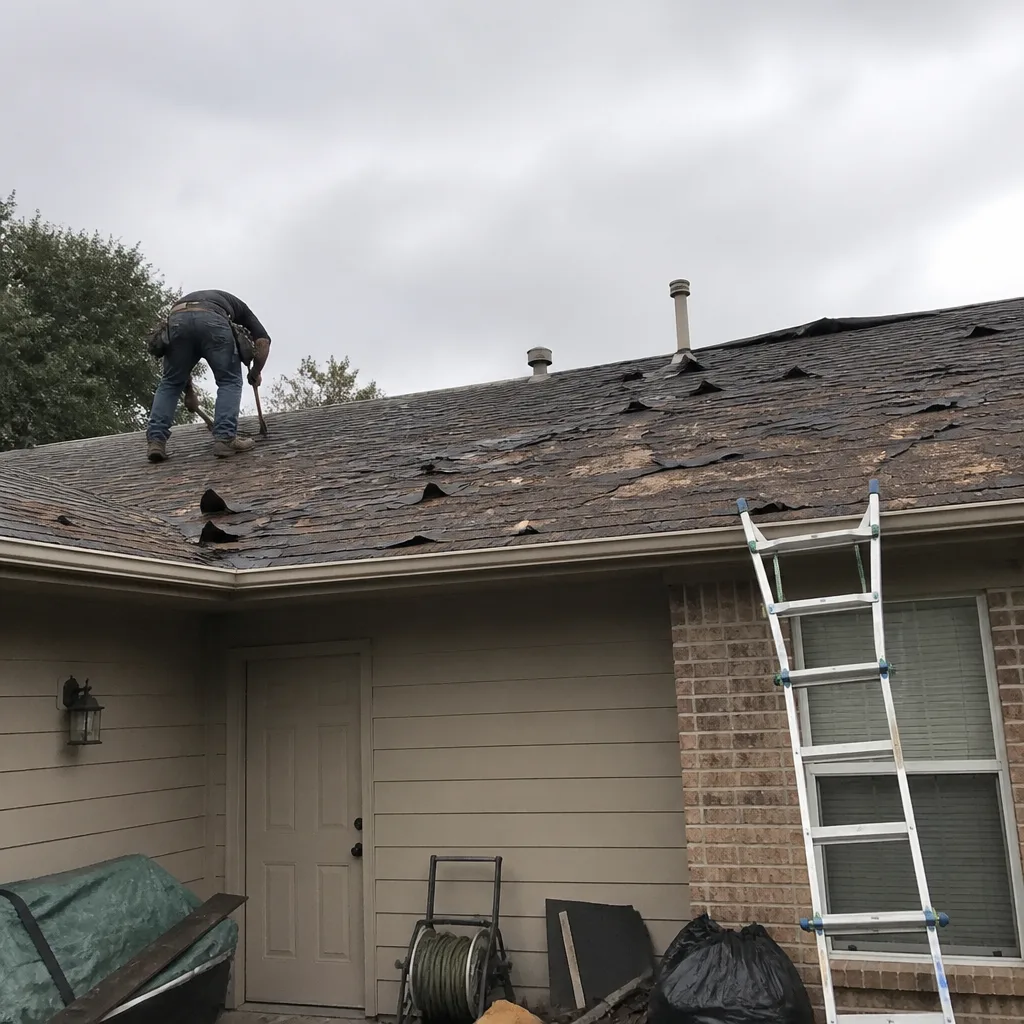 Before
 After
After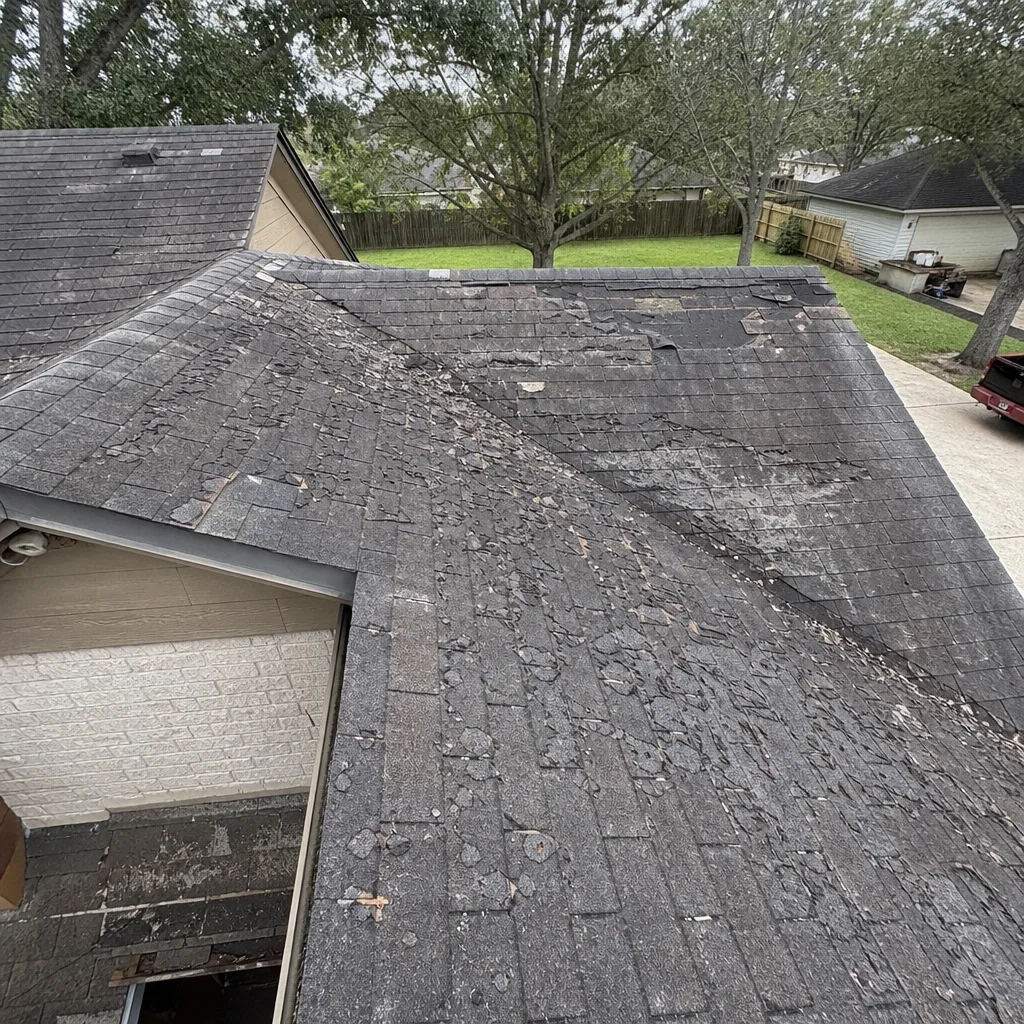 Before
 After
After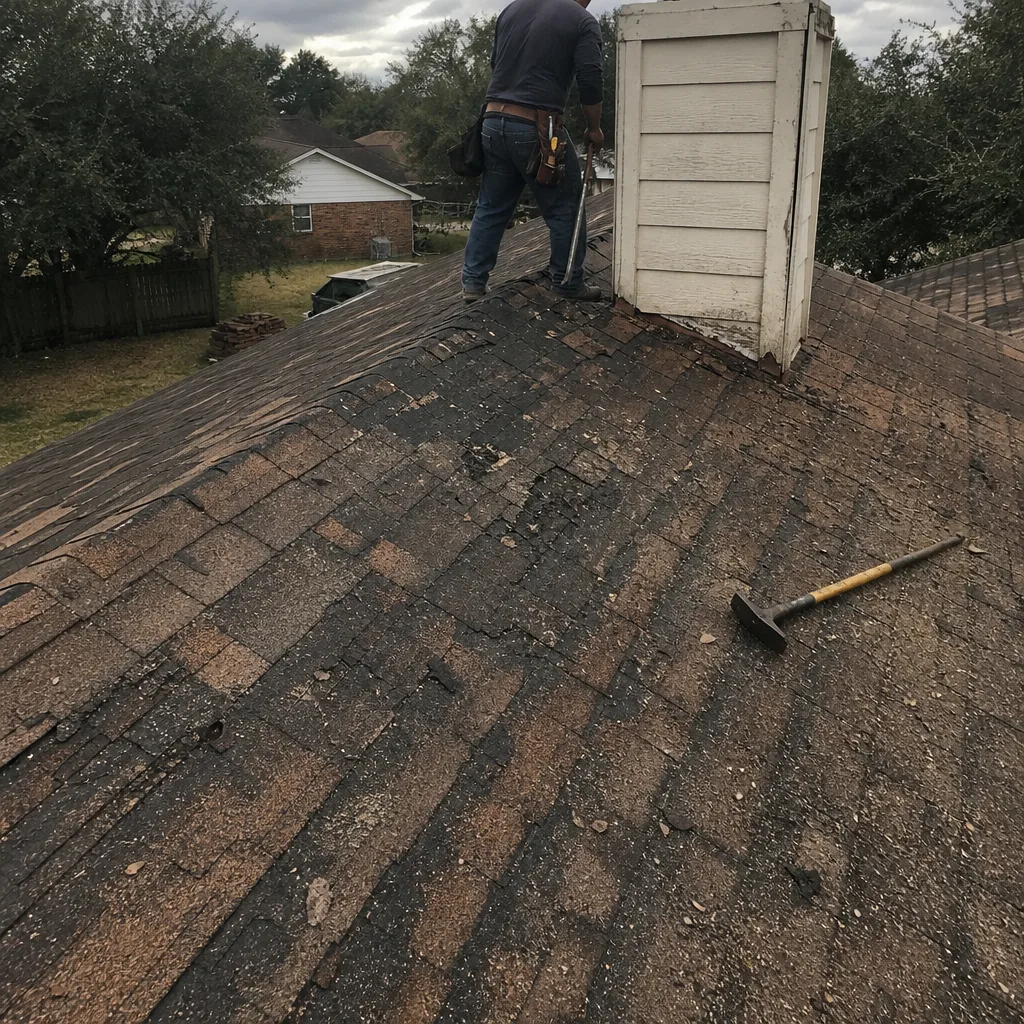 Before
 After
After