
Last updated October 17, 2026
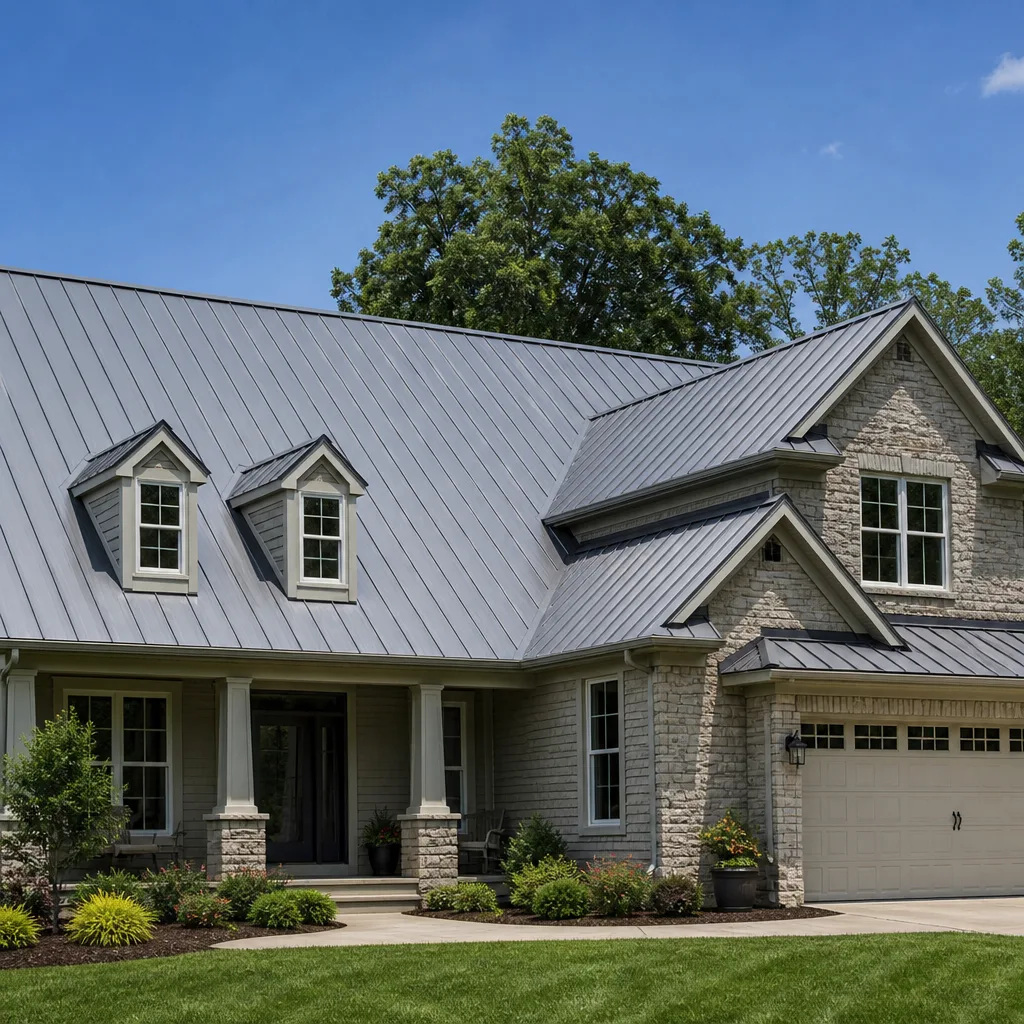 Metal roofing
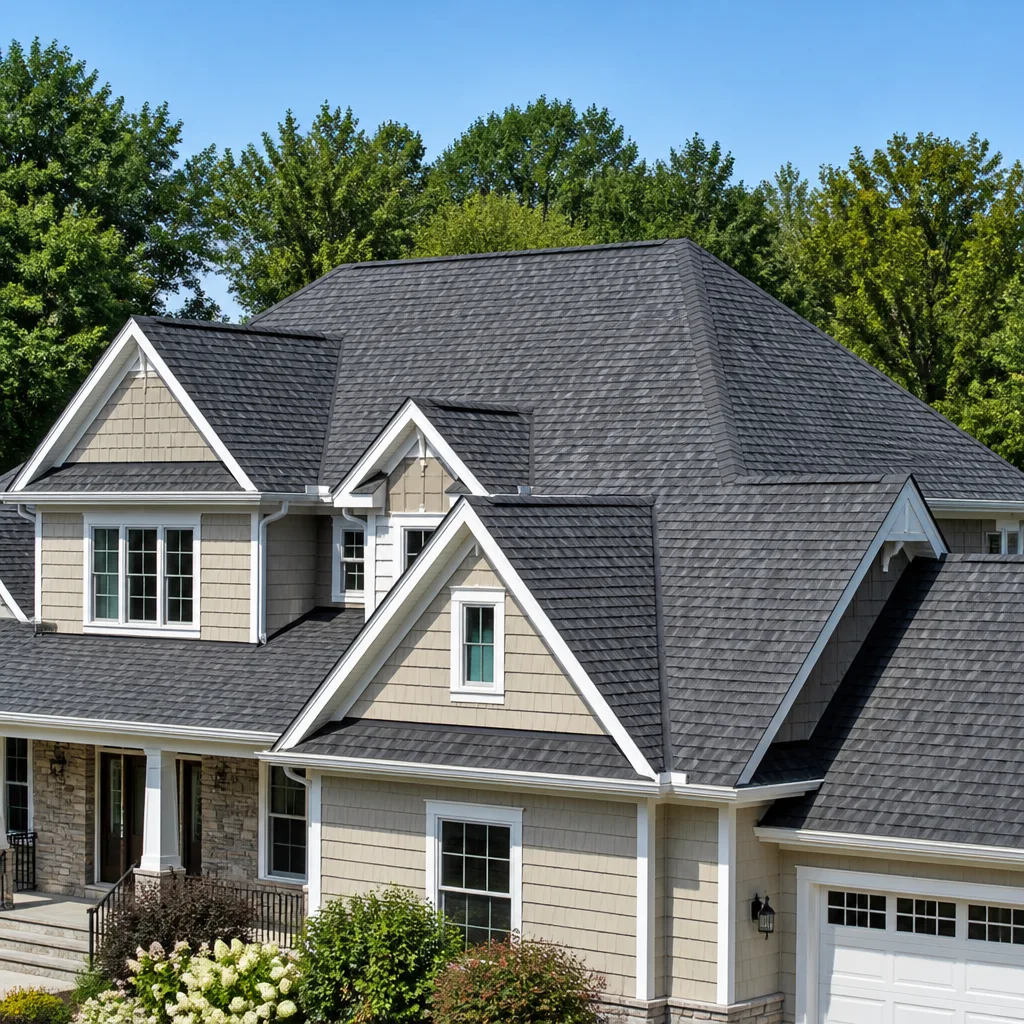 Architectural shingles
 Tile roofing
 GAF
GAF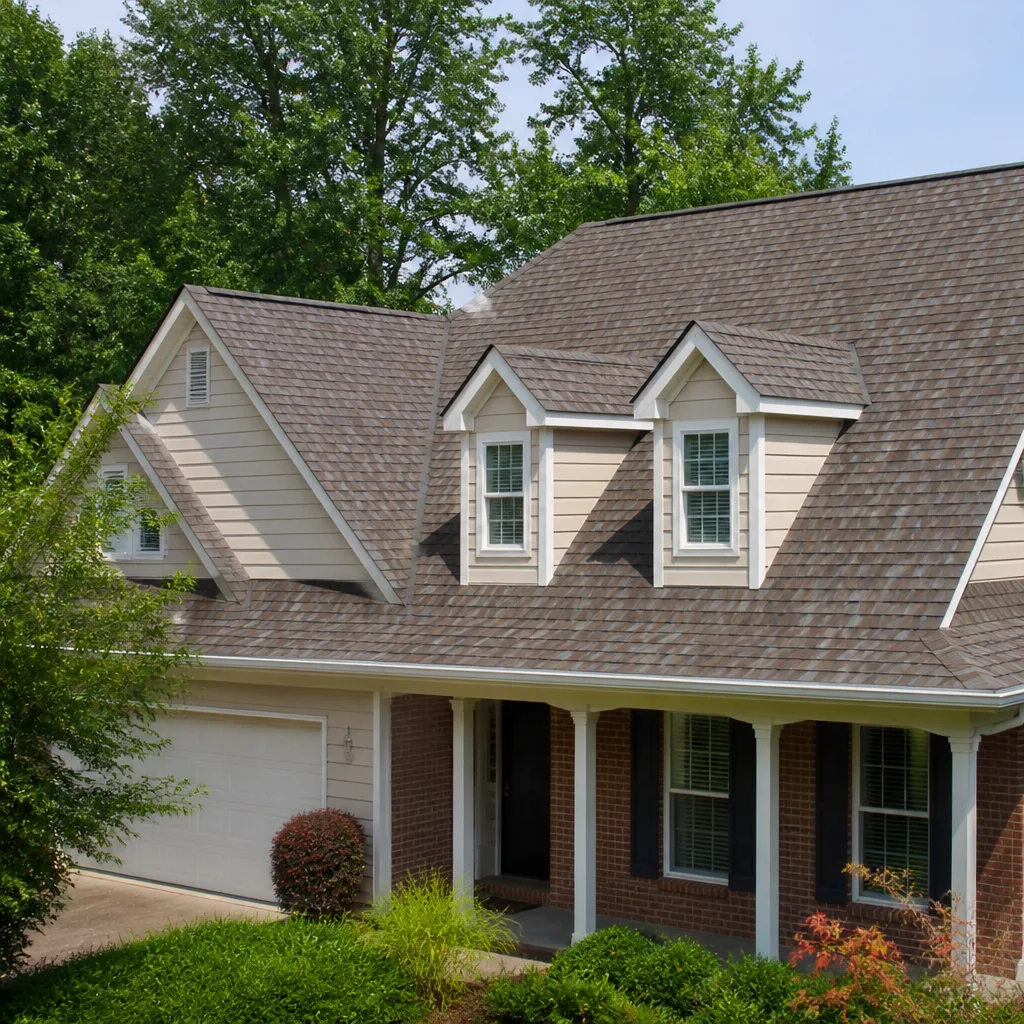 Owens Corning
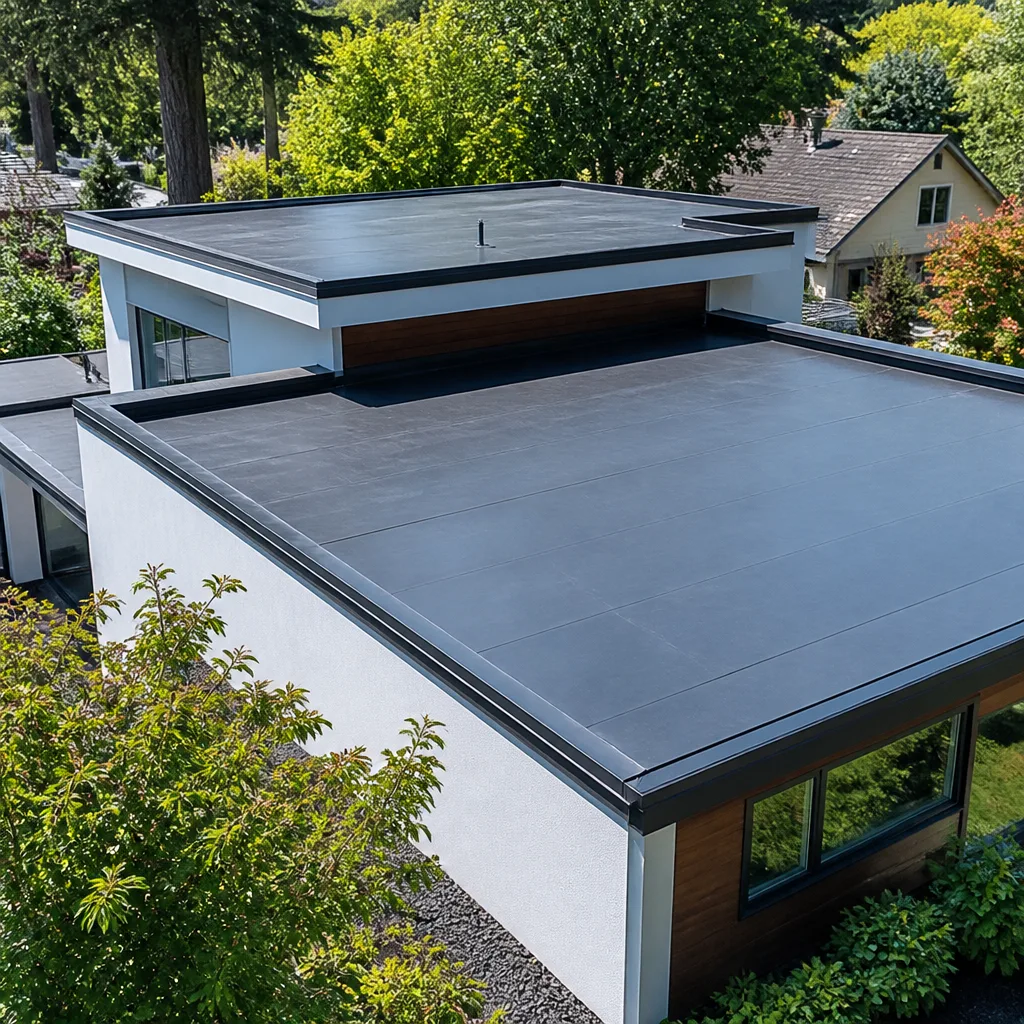 Flat & low-slope
Free roof inspection with deck photos before we talk money - GAF and Owens Corning certified installation
How to Hire a Roofing Contractor in Houston: A Step-by-Step Guide
After Hurricane Harvey, Texas investigators documented over 1,000 contractor fraud complaints in the Houston area alone. Most victims said the company had good reviews online. That detail should stop you cold. A five-star Google rating is the easiest thing in the world to fake, and in the months after a Houston storm, out-of-state crews flood the market, work a neighborhood for six weeks, and disappear before the shingles start curling. This guide gives you a pre-hire filter that identifies fly-by-night operators before any money changes hands. You’ll learn how to verify a license and insurance in under five minutes, what questions separate a straight answer from a dodge, and why a written price on paper is the single most protective document you can hold. We’ve been on Houston roofs since 2000, and we wrote this so you never have to learn any of it the hard way.
Quick Answer
To hire a roofing contractor in Houston, verify their Texas license and insurance, require a written itemized price before any work starts, ask five specific questions about scope and warranty, and reject any contractor who demands a large deposit or knocks on your door after a storm. A trustworthy roofer will show you state registration documents, put every number on paper without pressure, and guarantee the work in writing for a specific period. Expect to pay $380 – $650 per square (100 square feet) for asphalt shingle replacement in the Houston market, depending on materials, pitch, and tear-off work. For a deeper dive into pricing, see our Roofing Cost Breakdown: The Houston Homeowner’s Reference for 2026.
Styles & brands we work with
Table of Contents
- How to Verify a Texas Contractor License and Insurance in Under Five Minutes
- The Five Questions to Ask Before a Roofer Touches Your Roof
- Why a Written, Itemized Price Is the Most Protective Document You Can Have
- What a Contractor’s Warranty Should Actually Say in Plain Language
- Red Flags Specific to Post-Storm Houston Solicitation
- Houston-Specific Factors That Change What Roof You Need
- A Step-by-Step Hiring Process for Houston Homeowners
- Common Mistakes to Avoid
How to Verify a Texas Contractor License and Insurance in Under Five Minutes
Texas does not license roofing contractors at the state level the way some states do. Instead, roofers in Houston are regulated through a patchwork of city requirements and voluntary registrations. What you must verify is twofold: that the company has a current certificate of insurance, and that it exists as a registered business entity in Texas.
Here is the five-minute verification process we recommend to every Houston homeowner:
- Pull the certificate of insurance directly from the roofer’s insurer. Ask for the certificate, then call the insurance agency listed on it and confirm the policy is active. Do not accept a PDF as proof. A certificate that was valid in March can be cancelled by May. Call the number on the certificate, not a number the roofer gives you separately.
- Check the Texas Comptroller’s office. Search the business name at comptroller.texas.gov under the franchise tax search tool. If the company has been operating in Texas for any length of time, it should appear with an active taxpayer ID. A company that does not show up at all is a warning sign.
- Confirm general liability coverage of at least $1 million. The certificate should list general liability with a $1 million per-occurrence limit. If the roofer hesitates to show the certificate or gives you a number below that, end the conversation.
- Check for workers’ compensation coverage. In Texas, workers’ comp is not mandatory for private employers, which means many roofers skip it to save money. If a crew member falls off your roof and the company has no workers’ comp, the medical liability can land on you. Ask specifically: “Do you carry workers’ compensation insurance?” If the answer is no, ask how they handle an injury on your property. A straight answer is “We carry it.” A dodge is “We’re careful.”
- Verify the physical address. A legitimate Houston roofer has a physical address, not just a P.O. box or a phone number. Drive by it if you can. In our experience, a company with no office you can find is often a crew working out of a truck with a magnetic sign.
Five minutes. That’s the whole process. The homeowners we talk to after a bad experience almost always skipped one of these steps, usually because the roofer was standing on their doorstep and the pressure was on.
The Five Questions to Ask Before a Roofer Touches Your Roof
Most Houston homeowners ask the wrong questions. They ask about price first and process last. The order matters. Price is the last thing you should discuss, because a low number means nothing without knowing what it covers. These five questions are designed to reveal character and competence before the quote ever comes up.
1. “Will I get a written price before any work starts?”
A trustworthy answer is “Yes, always.” Not “We’ll work something out.” Not “It depends on what we find.” The price goes on paper before the first shingle comes off. At Brennan Roofing, we operate under The Garrison Standard, which means the written price is a prerequisite, not a courtesy. If a roofer refuses to commit anything to writing before starting, you are looking at an estimate built to be padded later.
2. “Are your technicians background-checked?”
You are letting strangers onto your roof, which means they will be walking around your house, climbing ladders to your second story, and potentially entering your attic. A roofer who cannot answer this question directly is telling you something. The Garrison Code at Brennan Roofing requires background-checked, uniformed technicians on every job. We know exactly who is on your roof, and so should you.
3. “What happens if the repair fails within the first year?”
A straight answer is “We come back and fix it at no charge.” A dodge is “That won’t happen.” Everything fails eventually. The question is whether the company stands behind the work. Our 365-Day Done Right Promise is a written guarantee for one full year, with a free return visit if the repair or installation fails within that period. If a roofer won’t put this in writing, don’t hire them.
4. “Who shows me the quote and who manages the crew?”
In Houston, a lot of roofing “companies” are actually one salesperson who subcontracts the actual work to whoever is available that week. The person who shakes your hand at the door is not the person who nails shingles on Wednesday. That’s fine if the company manages the crew directly and stands behind the work. It’s a problem when the salesperson vanishes after the deposit clears. Ask who will be on-site, who you call with questions during the job, and who answers if something goes wrong three months later.
5. “Do you pull permits and meet Houston code?”
The City of Houston requires a permit for roof replacement on most residential properties. A roofer who suggests skipping the permit to save you money is not doing you a favor. You are the one who owns the problem when the unpermitted roof fails or the city discovers it during a home sale. A reliable contractor pulls the permit, schedules the inspection, and passes it. We handle permits and inspections on every Houston roof replacement. If a roofer suggests otherwise, that is your cue to end the conversation.
Why a Written, Itemized Price Is the Most Protective Document You Can Have
A verbal quote is worth the air it’s spoken into. A written, itemized price is a different animal. It forces the contractor to commit to specifics before work begins, and it gives you something to point to if the final bill looks different.
Here is what a legitimate written estimate from a Houston roofer should include, line by line:
- Square count. The roof’s area in squares (one square equals 100 square feet). A 2,200-square-foot roof is roughly 22 squares. If the number is wrong, everything downstream is wrong.
- Tear-off and disposal. Removing the old shingles, hauling debris, and paying dump fees. This usually runs $60 – $100 per square in Houston.
- Underlayment. The moisture barrier between the decking and the shingles. Synthetic underlayment runs $8 – $15 per square more than felt and is worth it in Houston’s humidity.
- Decking repair allowance. Rotted decking (the plywood beneath the shingles) cannot be seen until the old roof comes off. A good estimate will include a per-sheet price for replacement, usually $75 – $110 per 4×8 sheet.
- Flashing. The metal around chimneys, vents, valleys, and pipe penetrations. Flashing is the most common source of Houston roof leaks. Cheap flashing equals leaks, every time.
- Drip edge. The metal strip along the roof’s edge that directs water into the gutter instead of behind it. Code-required in Houston. Some low-end estimates “forget” to include it, then upcharge later.
- Shingle type and brand. The specific product, not just “architectural shingles.” At Brennan Roofing, we install materials from IKO, Atlas, and Boral, depending on the homeowner’s budget and the roof’s slope. You should know exactly what you’re paying for.
- Permit and inspection fees. The city charges real money for these. If they are not on the estimate, someone is paying for them out of pocket, and that someone will be you.
- Labor. A separate line for labor is not always required, but the estimate should make clear what portion of the total is labor versus materials.
A written estimate that lumps everything into one number is an estimate built to be padded. “Roof replacement: $14,000” tells you nothing. “22 squares of Atlas architectural shingles, tear-off, synthetic underlayment, drip edge, new flashing at 6 penetrations, permit and inspection, decking replacement allowance at $95/sheet, labor: $14,000” tells you everything. That’s the difference between a document and a guess. At Brennan Roofing, every job begins with this document in your hand. No work starts until you have the number on paper.
What a Contractor’s Warranty Should Actually Say in Plain Language
Most roofing warranties are written in language designed to be read once and never acted upon. Here is what a good one should say, in plain English, and what to look for.
Duration. The warranty should state a specific period, not vague language like “limited lifetime.” A workmanship warranty of at least one year is the bare minimum. If a roofer offers less than a year, the unspoken message is that they do not trust their own crews. Our 365-Day Done Right Promise is exactly what it sounds like: one full year, in writing, and we come back for free if it fails within that period.
Coverage details. The warranty should state exactly what is covered: leaks, shingle failures, flashing defects, and workmanship errors. It should also state what is not covered: storm damage, foot traffic, and damage from things like falling tree limbs. A good warranty is specific about the line between workmanship and weather.
What voids it. A warranty that does not say what voids it is a warranty you cannot rely on. Common voiding factors: another contractor works on the roof, the homeowner makes modifications, or a different roofer does a repair. Ask the question directly: “What voids this warranty?” A roofer who cannot answer that question in one sentence has not thought about it.
Who to call if the company is gone. This is the question almost nobody asks. Houston gets hit with storms, companies come and go, and the warranty means nothing if the phone number is disconnected. A warranty backed by a manufacturer escapes this problem. If the material fails, the manufacturer covers it regardless of whether the installer still exists. That is why material choice matters. Boral, Atlas, and IKO all stand behind their products with warranties independent of the installer. At Brennan Roofing, we pair our written workmanship guarantee with manufacturer-backed materials, so you are covered from both directions.
One more thing: a warranty is only as good as the person who answers the phone when you call to use it. Our phones are answered by a live person around the clock, no voicemail, no automated system. That is part of the warranty too, even if it is not written on the page.
Red Flags Specific to Post-Storm Houston Solicitation
Houston is a storm town. After every big weather event, the same cycle repeats: out-of-state crews arrive in wrapped trucks, work a neighborhood, collect checks, and move to the next city. The Houston Better Business Bureau consistently ranks roofing among the top complaint categories after major storms. Here are the red flags specific to our market.
- Door knocking within days of a storm. Legitimate Houston roofers do not need to door-knock. Their phones are already ringing. In our experience, a crew knocking on doors in a storm-damaged neighborhood is almost always from out of state. They are not roofing companies. They are sales teams with a truck.
- The phrase “insurance specialist.” Any roofer who positions themselves as an “insurance claim specialist” or “storm damage expert” is selling you a claims process, not a roof. They will file an inflated claim on your behalf and then bill the insurance company for whatever they can extract. The problem lands on you when the claim is audited.
- Demand for a large upfront deposit. In Houston, a roofing company with a physical office, employee crews, and supplier accounts does not need your deposit to buy shingles. A 50% deposit demand is a signal that the company cannot float materials, which means it is either tiny or fly-by-night. At Brennan Roofing, we do not ask for a deposit before materials are staged, and the price you see is the price you pay.
- Out-of-state plates, no local address. This sounds shallow, but it is not. A legitimate Houston roofer has a Houston address. Ask for it. Drive by it. If the office is a rented mailbox at a UPS Store, the company is a truck and a business card.
- Pressure to sign today. A roofer who says the price is only good for 24 hours is not selling you a roof. They are selling you a deadline. Any legitimate estimate from a Houston roofer is good for at least 30 days, and usually longer. If the price disappears tomorrow, the roofer is the one who is not stable, not the price.
- “We work with your insurance deductible.” This phrase is an invitation to insurance fraud. In Texas, contractors who waive deductibles in exchange for higher claims are committing a crime, and the homeowner is the one who gets prosecuted. Run from this offer.
If any one of these red flags appears, thank the contractor for their time and close the door. If two appear, call the Texas Attorney General’s consumer protection division and report the solicitation. Fly-by-night operators rely on homeowners being too polite to say no.
Houston-Specific Factors That Change What Roof You Need
Houston is not Dallas. Houston is not San Antonio. Houston is a coastal city with a subtropical climate, and that changes what a roof should look like.
Humidity and heat. Houston’s humidity averages over 70% year-round, and summer attic temperatures routinely exceed 140 degrees. That means ventilation matters more in Houston than in almost any other Texas market. A roof with poor attic ventilation will cook its own shingles from underneath, shortening the lifespan by years. When you get an estimate, ask about ridge vents, soffit vents, and airflow. A roofer who does not mention ventilation in Houston is not thinking about Houston.
Wind uplift and the coastal code. Parts of Houston fall within the Texas Department of Insurance windstorm zone, which requires roofing materials rated for high-wind coverage. Harris County code requires specific nailing patterns and underlayment standards for wind resistance. A roofer who installs a Fort Worth roof on a Houston house is cutting corners you will pay for later.
Oak trees and moss. Houston’s live oaks are beautiful and terrible for roofs. Branches rub shingles, leaves clog valleys, and shade creates the damp conditions where moss and algae grow. You need a roofer who understands tree-related damage, because half the roofs in the Heights, West University, and Memorial have at least one tree limb resting on them.
Clay and concrete tile neighborhoods. Houston has pockets of Spanish-style homes with clay or concrete tile roofs in places like River Oaks and Tanglewood. These materials require different underlayment, different flashing techniques, and different installers. A roofer who does exclusively asphalt shingle work may not have the skill set for tile. We install materials from Boral, which makes concrete tile systems designed for exactly this application, and we match the material to the house, not the other way around.
These factors get missed by generic hiring guides, but they are the difference between a roof that lasts 12 years and one that lasts 25 in Houston’s climate.
A Step-by-Step Hiring Process for Houston Homeowners
Here is the process we recommend, in order, for every Houston homeowner. It is designed to filter out the bad actors before they ever set foot on your property.
Step 1: Get at least three written estimates.
Not two. Three. You need a spread. Call roofing companies with actual Houston addresses and ask for a written, itemized estimate. At Brennan Roofing, we provide one on every job, no exceptions. The number goes on paper before any work starts.
Step 2: Verify license and insurance on all three.
Run the five-minute verification process described above on every single one. If one of the three fails, the list is now two.
Step 3: Ask the five questions on the phone, before anyone visits.
Do not wait for the estimator to show up. Ask about written pricing, background checks, the failure policy, crew management, and permits on the first phone call. A roofer who hedges on the phone will hedge worse in person.
Step 4: Compare the estimates line by line.
Put the three written estimates side by side. Is the square count the same? Does everyone include drip edge and underlayment? Does one estimate omit decking repair? In our experience, the cheapest estimate is usually missing something, and that something is the thing that gets added back at the end.
Step 5: Check at least two references from completed Houston jobs.
Ask for addresses of completed roofs in your area and drive by them. Look at the shingle lines, the flashing work, the drip edge. You do not need to be a roofer to see a sloppy edge. If possible, knock on the door and ask the homeowner how the process went. Houston homeowners are happy to talk about roofers who did right by them and loud about ones who did not.
Step 6: Sign a written contract with the itemized price attached.
The contract should reference the written estimate as an attachment. If the contractor will not attach the itemized price to the contract, walk away. The contract should also name the person responsible for the job and state the warranty terms in plain language.
Step 7: Hold final payment until the inspection passes.
The City of Houston requires a final inspection for most roof replacements. Do not release the final payment until the inspection passes and you have walked the job with the contractor. A roofer who demands full payment before inspection is telling you something about their confidence in their own work.
That is the whole process. It takes time, and fly-by-night operators count on you not wanting to spend it. The homeowners who get burned are almost always the ones who moved fast because a storm had them rattled. Slow down. The roof has been there a long time. It will survive one more week.
Common Mistakes to Avoid
- Hiring the first roofer who shows up after a storm. The door-knockers in Houston after a weather event are almost always out-of-state sales crews. Legitimate local roofers are already booked. Wait, verify, and choose deliberately.
- Choosing the lowest bid without comparing line items. A $13,000 quote that omits drip edge and decking repair will cost more than a $15,000 quote that includes everything. Compare the line items, not the bottom line.
- Paying a large deposit before materials are ordered. A Houston roofer with a real office and supplier accounts does not need your money upfront. If you must pay a deposit, it should be modest and tied to a specific milestone.
- Accepting a verbal quote as binding. Verbal quotes are worth the air they are spoken into. If the number is not on paper, it does not exist. Require a written, itemized price before any work begins.
- Skipping the insurance verification. Many Houston roofing crews carry no workers’ comp, which means a fall on your property becomes your liability. Check the certificate, call the insurer, and confirm workers’ comp in writing.
- Waiving the permit. The City of Houston requires permits for roof replacements. A roofer who suggests skipping the permit is asking you to take a risk you should not take. Pull the permit, pass the inspection, and keep the paperwork.
- Not asking who answers the phone after the job is done. A roofer’s true character shows up three months after they are paid. Our phones are answered by a live person around the clock, because that is what a homeowner deserves.
See the difference
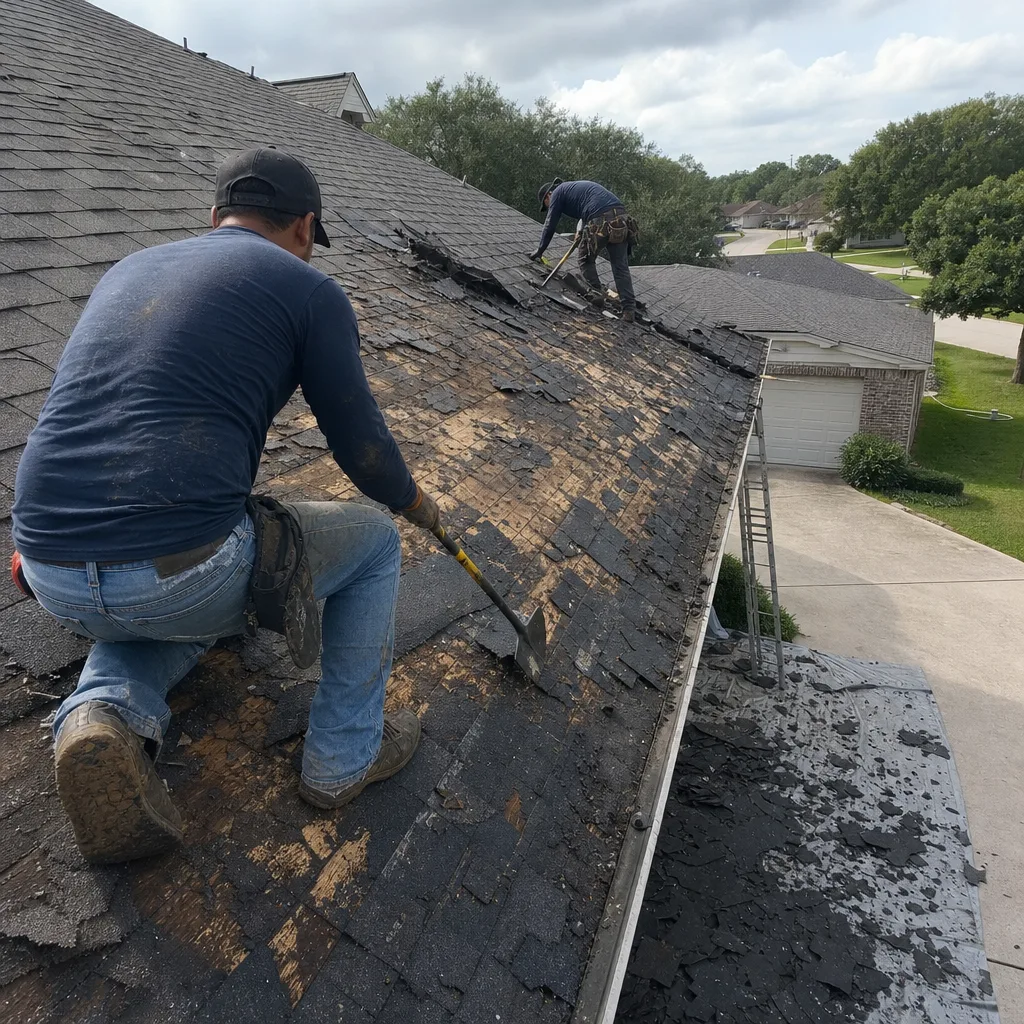
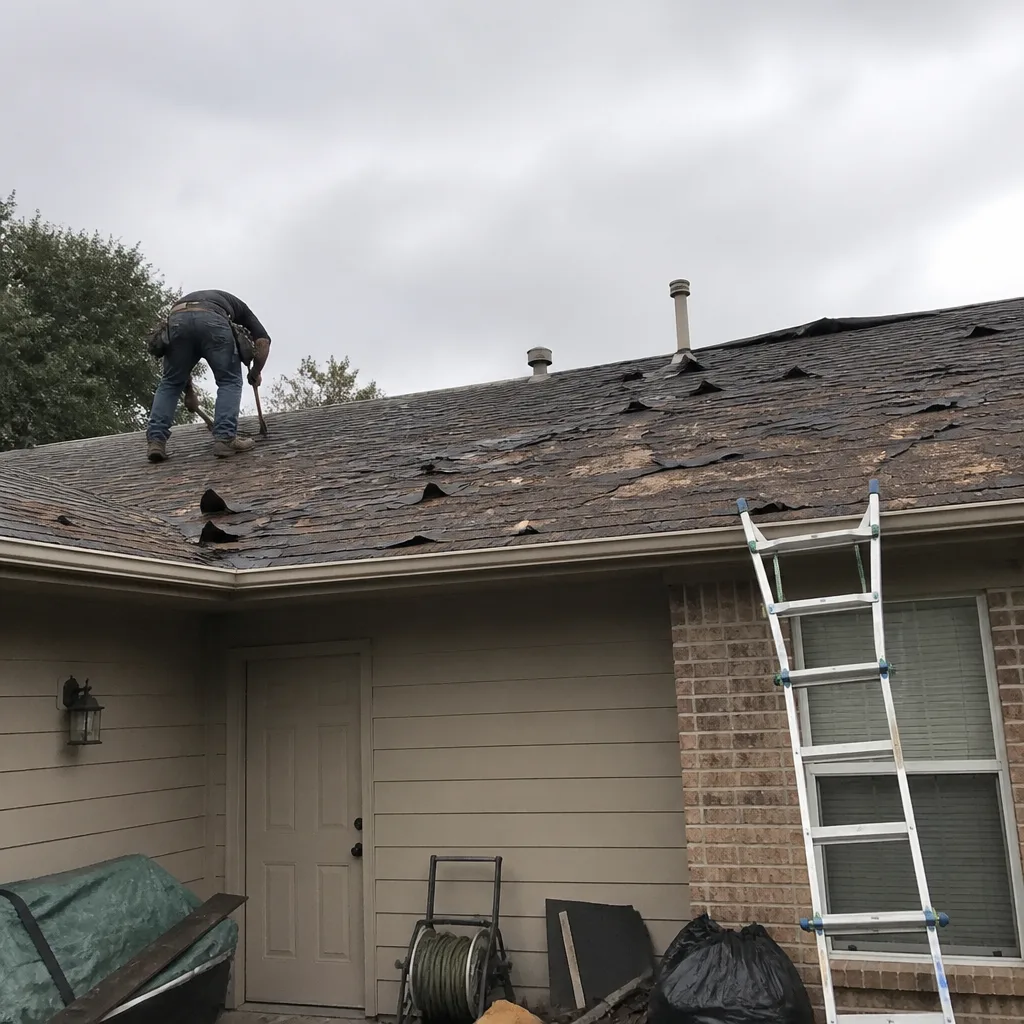 Before
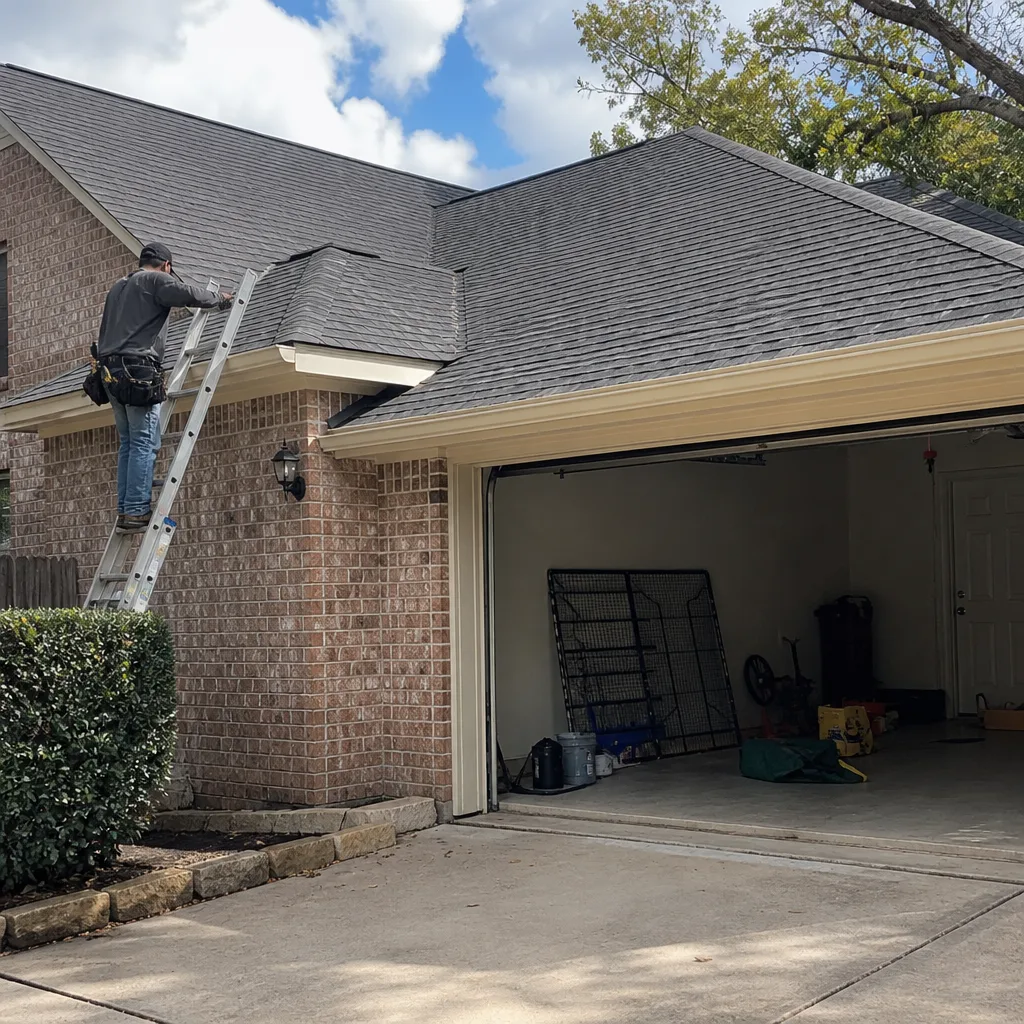 After
After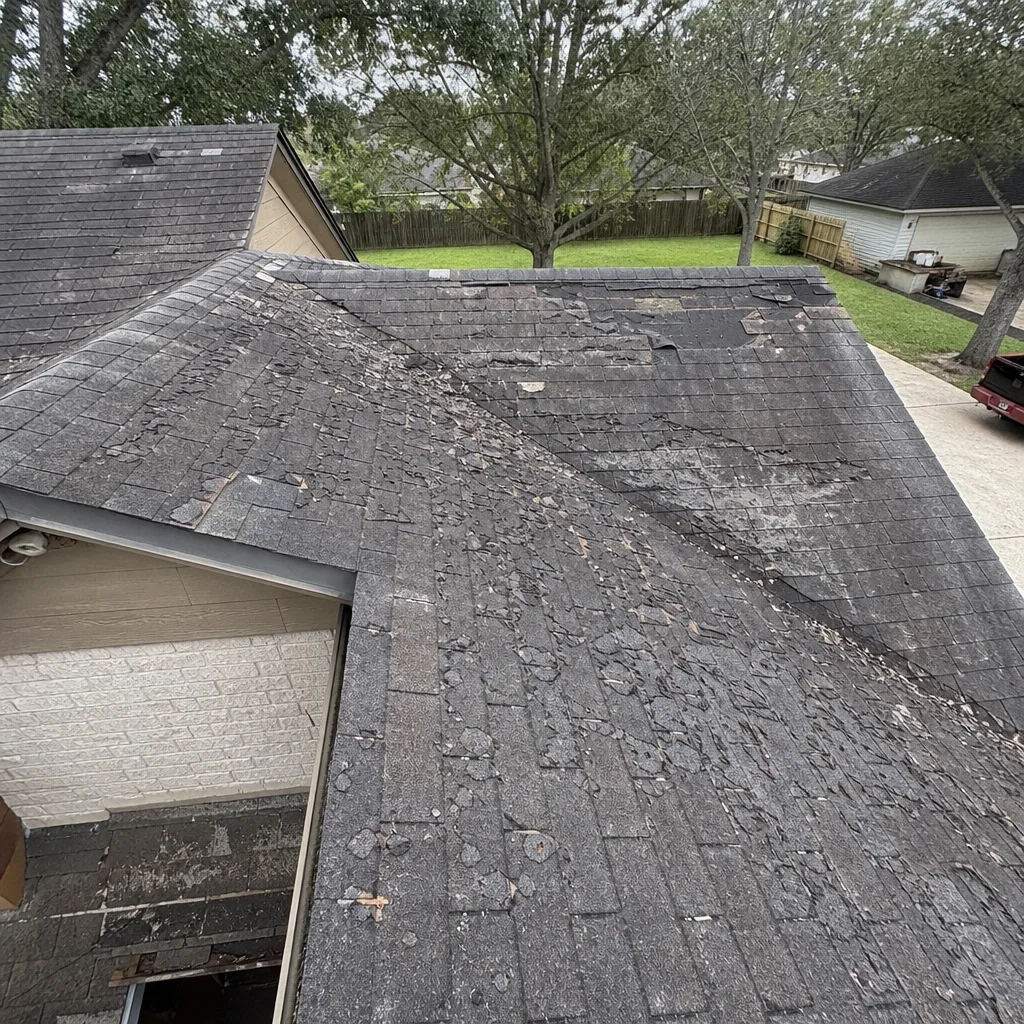 Before
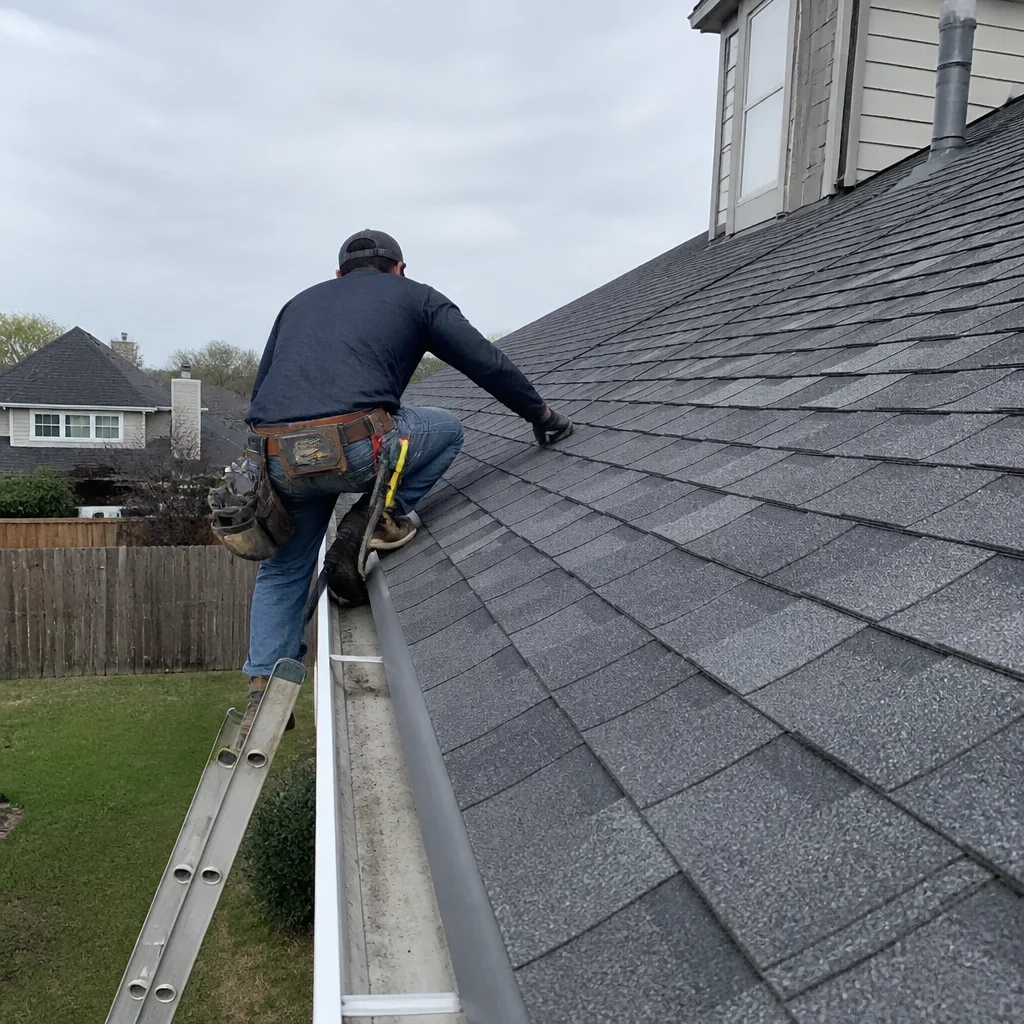 After
After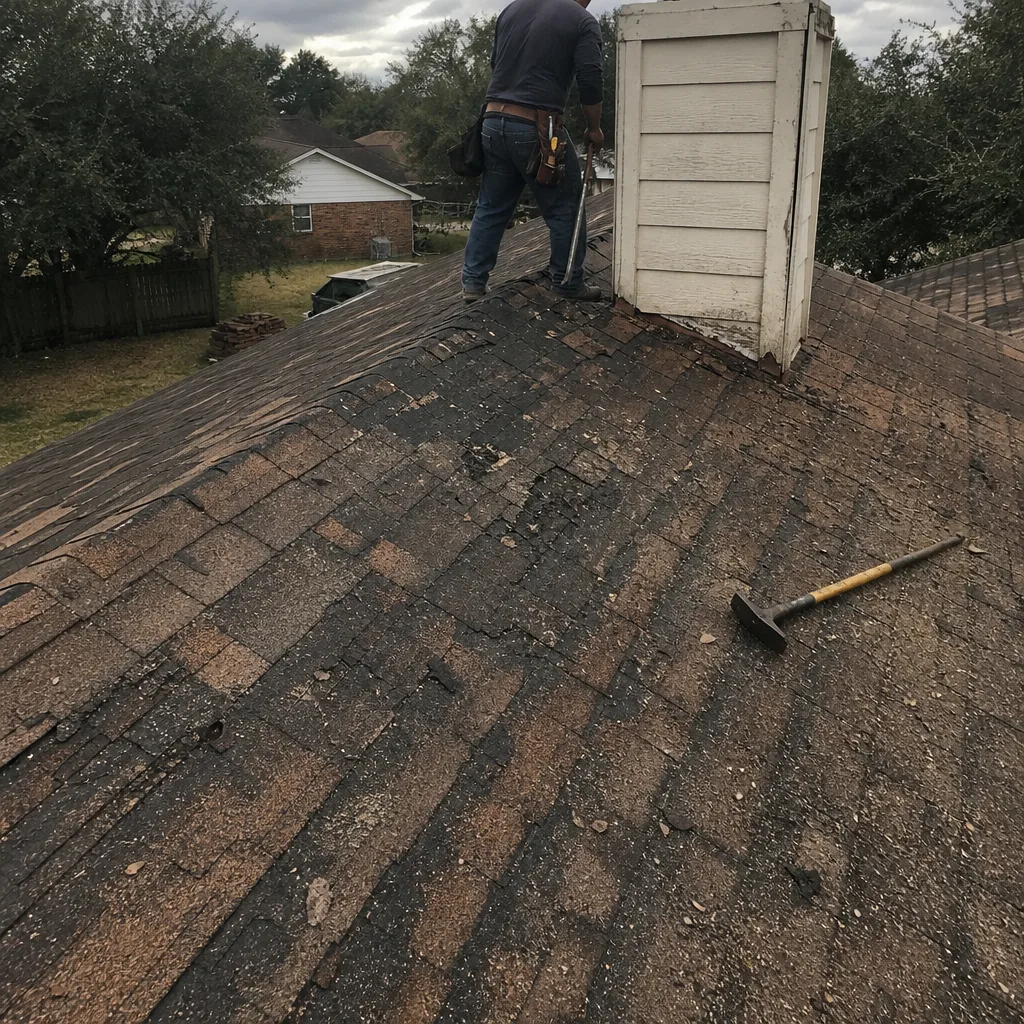 Before
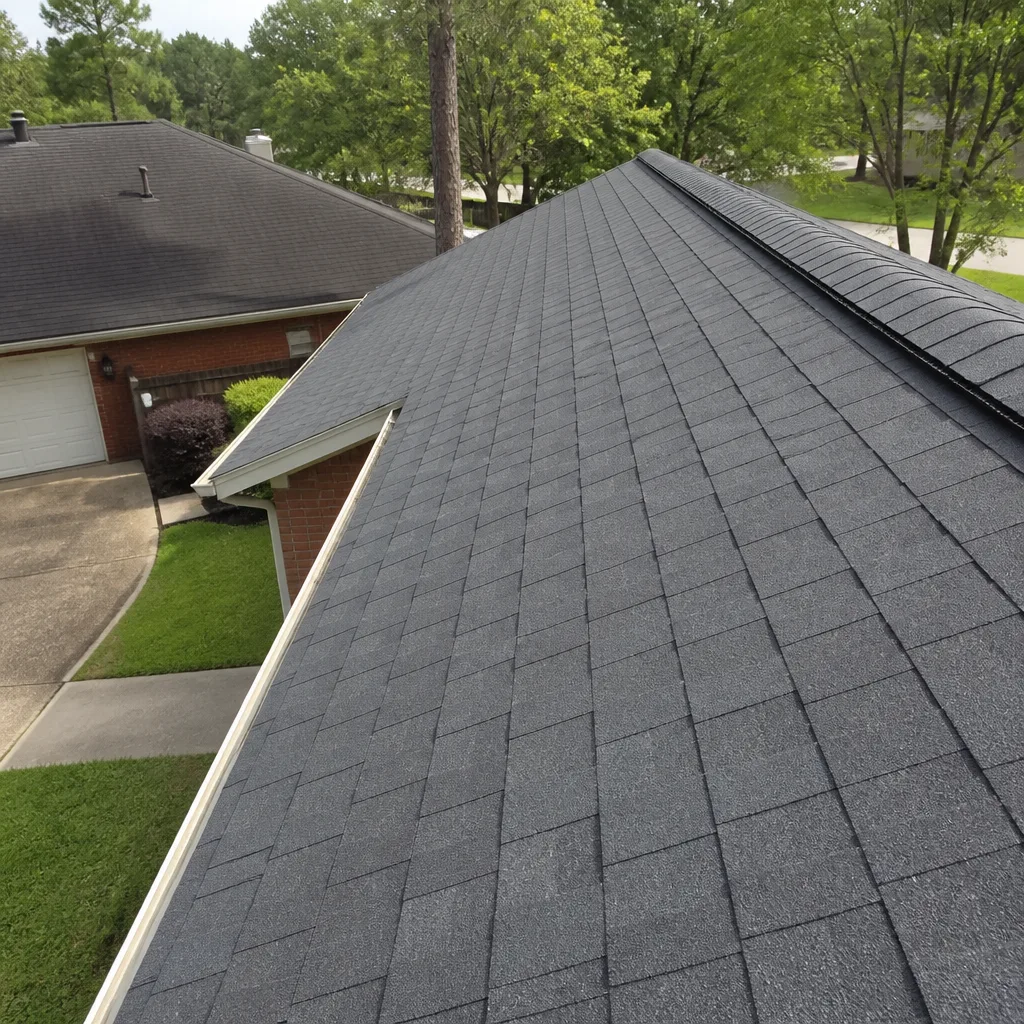 After
AfterWhen to Call a Professional
You should call a professional roofer in Houston when you see missing shingles, water stains on the ceiling, granules accumulating in the gutters, or daylight through the attic boards. Any of these signals means the roof has already begun to fail, and waiting does not make the repair cheaper. You should also call after any major storm, even if the roof looks fine from the ground. Houston wind and hail damage often does not show up for months, and by then the insurance claim window may have closed. Brennan Roofing Co Houston offers free estimates in Houston. Call (940) 461-8481 and we will put a written price in your hand before any work starts. For more on our approach, start at the Brennan Roofing Co Houston home page or read about our Roofing Company in Houston.
Frequently Asked Questions
A new asphalt shingle roof in Houston typically costs $380 – $650 per square, which puts a 2,200-square-foot replacement between $8,400 and $14,300 before decking repairs. The main variables are shingle quality, roof pitch, and the amount of tear-off work. For a specific number, call (940) 461-8481 for a free written estimate.
Most Houston roof replacements take two to five days, depending on the roof’s size, pitch, and condition. A simple asphalt shingle tear-off and replacement on a single-story home can often be finished in two days. Tile or metal roofs take longer. The City of Houston permit and inspection process adds a day or two on either end.
Yes. The City of Houston requires a building permit for roof replacement on residential properties. The contractor should pull the permit, schedule the inspection, and pass it before final payment. A roofer who suggests skipping the permit is putting you at legal risk.
Get the roofer’s inspection first. A written inspection report with photos gives you evidence to submit with your claim and prevents the insurance adjuster from undercounting the damage. In Houston, many roofing companies will meet the adjuster on-site. For Roof Inspection in Houston, call us and we will document what we find.
A legitimate workmanship warranty covers installation defects: leaks from improperly installed flashing, shingle failures from bad nailing patterns, and similar errors. It should state a specific duration, usually one year or longer, and explain what voids it. At Brennan Roofing, the 365-Day Done Right Promise is a written guarantee for one full year, with a free return visit if the work fails within that period.
The clearest signs are door-knocking within days of a storm, out-of-state license plates, a demand for a large upfront deposit, and a push to sign within 24 hours. Legitimate Houston roofers have local addresses, answer their phones, and let you take your time. If a roofer pressures you to decide immediately, that is the moment to walk away.
The Bottom Line
Hiring a roofer in Houston is not about finding the cheapest bid. It is about filtering out the operators who disappear after the check clears and finding a company that will still answer the phone in a year. The process is simple: verify the license and insurance, require a written itemized price, ask the five questions, check the references, and hold payment until the inspection passes. A contractor who balks at any of these steps is telling you something. One who welcomes them is likely the one you want on your roof. Roof Repair in Houston follows the same standard: written price, written warranty, live person on the phone. That is The Garrison Standard, and it has not changed since 2000.
Written by Travis Oakley, Owner at Brennan Roofing Co Houston, serving Houston since 2000.