
Last updated October 17, 2026
 Metal roofing
 Architectural shingles
 Tile roofing
 GAF
GAF Owens Corning
 Flat & low-slope
Free roof inspection with deck photos before we talk money - GAF and Owens Corning certified installation
Roofing Company Maintenance Checklist for Houston Homeowners
A roofing company in Minnesota told you to check for ice dams. You live in Houston. The checklist you need looks nothing like the one ranking on page one of Google right now. Houston roofs fail for two reasons that most generic guides never mention: relentless UV exposure from March through October that cooks shingles from the top down, and storm debris that sits in valleys and gutters for months, holding moisture against the decking. This guide is sequenced around Houston’s actual calendar, not a four-season template. You’ll learn what to check and when to check it, what you can safely inspect from the ground, how to document your roof for insurance, and when a small issue has already become a repair you shouldn’t patch.
Quick Answer
The Houston roof maintenance checklist runs on two inspections per year: one in early May before hurricane season and one in late October after summer UV exposure has peaked. From the ground, check for lifted or missing shingles, debris buildup in valleys, gutter overflow, and granule loss at downspout outlets. Hire a professional annually for a full walk-on inspection of flashing, pipe boots, and decking, which require ladder work and trained eyes. Document everything with dated photos for insurance claims.
Styles & brands we work with
Table of Contents
- The Houston Roof Calendar: Why May and October Matter
- What You Can Safely Inspect From the Ground
- What a Professional Roof Inspection Actually Covers
- Documenting Roof Condition for Insurance
- When Maintenance Crosses Into Repair Territory
- How Houston’s Climate Should Shape Your Material Choices
- How to Verify Your Roofer Actually Did the Work
- Common Mistakes to Avoid
- When to Call a Professional
- Frequently Asked Questions
The Houston Roof Calendar: Why May and October Matter
Houston does not have spring and fall the way other cities do. It has a storm season and a sun season, and the transitions between them are when your roof takes the most damage. The standard advice to “inspect your roof in spring and fall” is directionally right but misses what those seasons actually mean here. If you follow a Minnesota checklist in Houston, you’ll check for ice dams in March and miss the algae bloom on your north slope in July.
Here is the Houston-specific calendar we recommend to homeowners:
- Early May: Pre-storm inspection. Hurricane season starts June 1. Before the first named storm forms in the Gulf, you want every shingle sealed, every valley clear, and every gutter flowing. This is not the week to discover your flashing has been loose since January. May inspections catch problems while the weather is still dry enough to fix them properly.
- Late October: Post-summer UV inspection. Houston sun from March through October is brutal. Shingles bake at surface temperatures well above 140 degrees on an August afternoon. By October, the granule loss from a full summer shows up clearly: bare spots on shingles, granules washing out of downspouts, and small cracks that opened under thermal expansion. October is also before the winter rainy season, so repairs made then have months of dry weather ahead.
- After any storm with wind gusts above 60 mph. You don’t need a full inspection after every afternoon thunderstorm. But when the National Weather Service confirms high winds or hail, walk the perimeter and look up. Document what you see immediately, before the next rain hides the damage.
- Within 48 hours of standing water on the roof. Houston gets heavy downpours that overwhelm even clean gutters. If water ponds in the same spot after the rain stops, that’s a drainage problem, not a weather problem. It will get worse, and it will find a seam.
This calendar assumes you’re doing two walk-around checks per year yourself, plus a professional inspection annually. The professional visit fits naturally into the May slot, before storm season, but some Houston homeowners in older neighborhoods like Meyerland and Timbergrove schedule theirs in October instead, after the summer sun has done its worst. Either works. What doesn’t work is skipping the on-roof inspection entirely and relying on ground-level checks alone.
What You Can Safely Inspect From the Ground
You do not need to climb on your roof. In fact, for most homeowners, you shouldn’t. Walking a roof without training is how shingles get cracked and how homeowners end up in emergency rooms. Houston roofs are often steep, and the summer heat makes shingles soft enough to scuff. A ground-level inspection with binoculars, plus a walk around the perimeter, catches the majority of visible warning signs.
Here is what you can check safely from the ground:
- Missing or lifted shingles. Walk the perimeter of your house and look at each roof plane. After wind, lifted shingles read as dark shadows or visible edges flapping. If you see an obvious gap in the shingle pattern, that’s exposed decking, and water gets in fast.
- Granule loss at downspout outlets. This is one of the best early-warning signals Houston homeowners have, and almost nobody checks it. Go to the bottom of your downspouts after a dry spell and look at what washed out. A light dusting of granules is normal early in a roof’s life. A visible pile of coarse, colored grit means your shingles are shedding their UV protection, and the roof is aging faster than it should.
- Debris buildup in valleys. Valleys are the V-shaped channels where two roof planes meet. Houston’s live oaks, pines, and pecans drop leaves and needles constantly, and valley debris holds moisture directly against the shingles. From the ground, you can often see whether valleys look clogged with dark organic matter. If you can see debris sitting in a valley for more than two weeks after a storm, it needs to come out.
- Gutter overflow during rain. Stand outside during a heavy rain and watch your gutters. Water spilling over the sides, not out the downspout, means the gutter is clogged or the slope is wrong. Overflow water falls directly onto the fascia and often wicks up under the shingle edge. In Houston’s humidity, that damp fascia board becomes a rot problem within a season.
- Drip edge condition. The drip edge is the metal L-shaped flashing along the roof’s edges that directs water into the gutter instead of up under the shingles. From the ground, look for drip edge pulling away from the fascia, rust staining, or sections missing entirely. In Houston’s heavy rains, a missing section of drip edge drips water directly onto the wood behind the gutter.
- Algae or moss growth. Houston’s humidity and shade from mature trees create perfect conditions for algae streaking on north-facing slopes and under tree canopies. Algae itself is mostly cosmetic, but moss holds water and can lift shingle edges. If you see thick green moss along a shaded roof plane, clear the debris that’s feeding it and plan to have the area treated.
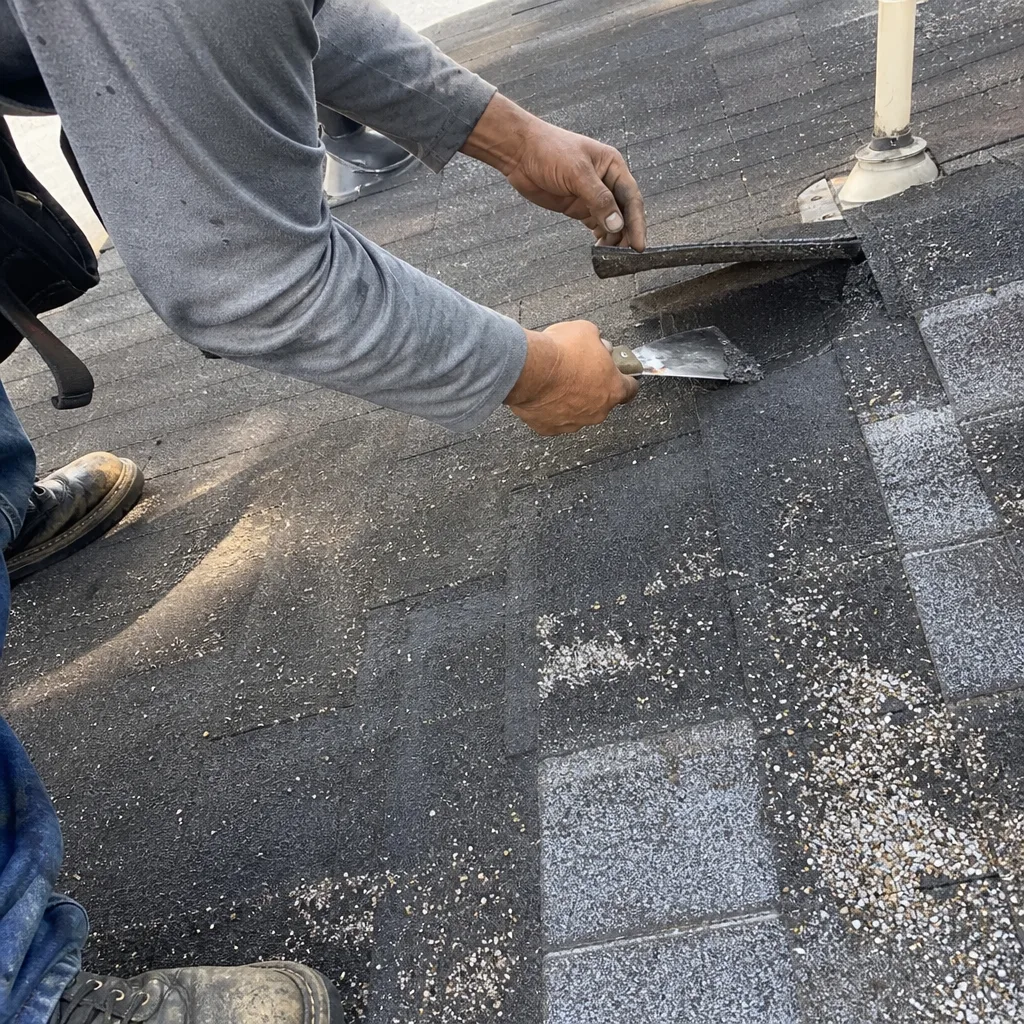
- Loose flashing at penetrations. With binoculars, look at chimneys, sewer vent pipes, skylights, and any pipe that comes through the roof. If the metal flashing around these penetrations looks bent, rusted, or separated from the roof surface, that’s an active leak risk. Pipe boots, the rubber gaskets around vent pipes, crack in Houston’s UV after three to five years. From the ground, a cracked pipe boot looks like a dark ring or gap around the pipe base.
If you do notice any of these signs, take a photo before and after the next rain. Photos taken in different conditions tell a repair technician more than a verbal description ever will. And if you’re not sure whether something is normal, a Roof Inspection in Houston will settle it in a single visit.
What a Professional Roof Inspection Actually Covers
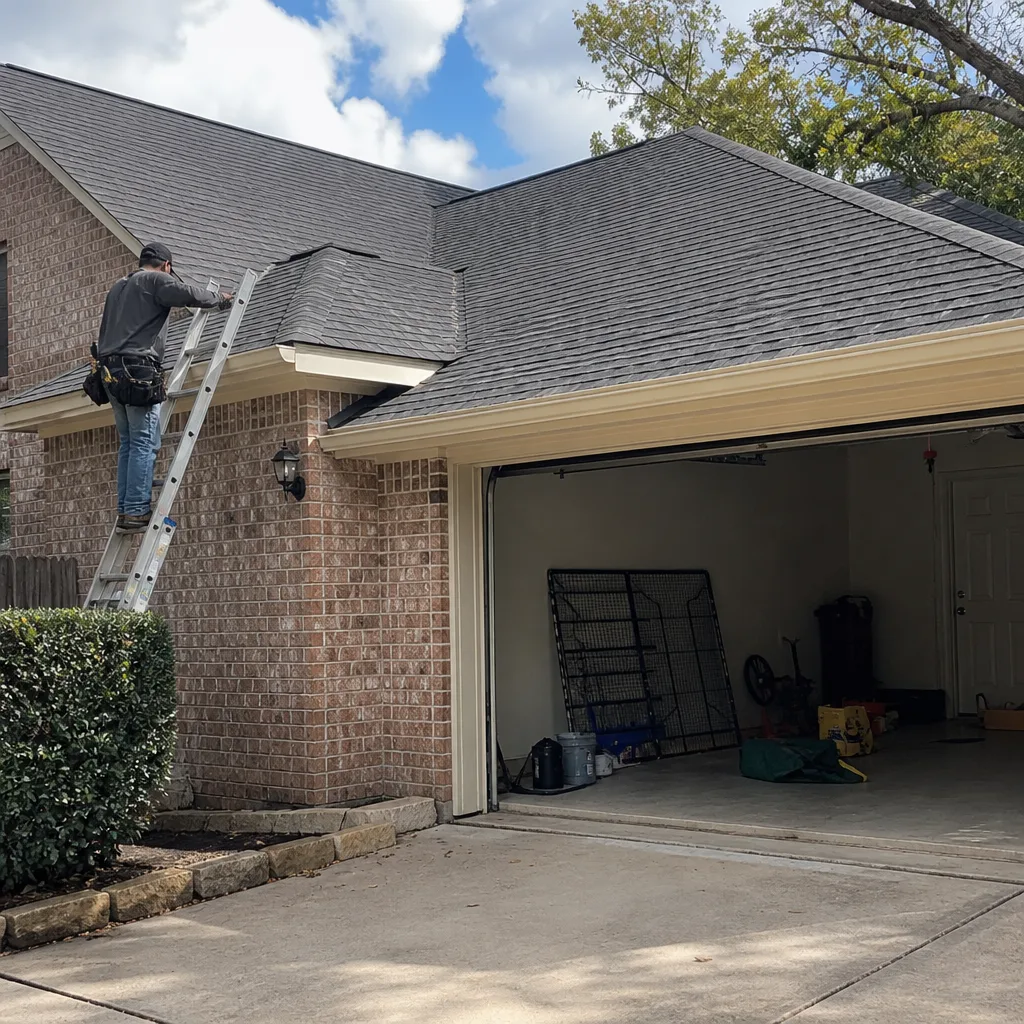
A competent roofer’s maintenance visit is not a hand-wave and a signature. It is a systematic walk of the entire roof surface, with findings documented in writing. Here is what we actually look at during a maintenance inspection in Houston, in order:
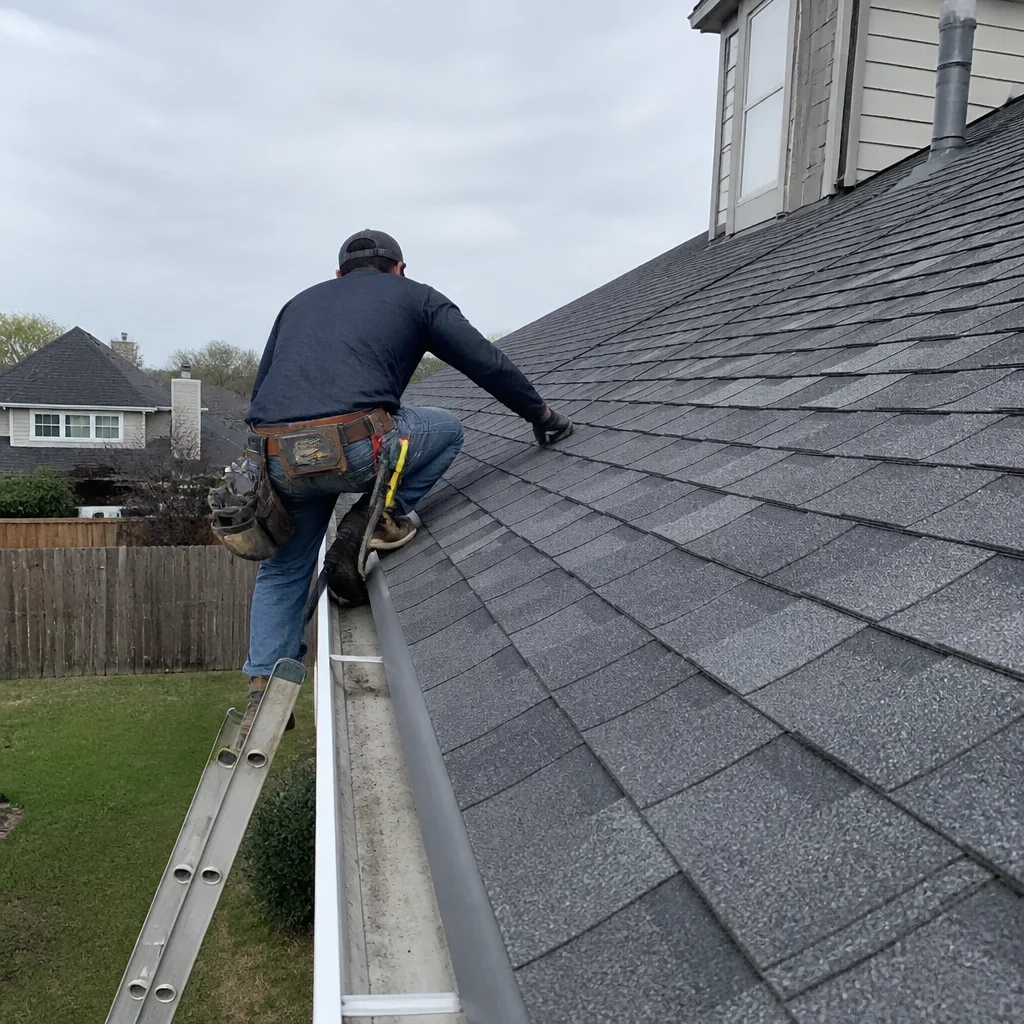
- Overall shingle condition. We walk every roof plane looking for cracked, curling, or blistered shingles. Houston sun causes a specific failure pattern: shingles on west and south-facing slopes curl at the corners first. We note how many shingles show this and where they’re concentrated.
- Granule retention. We look at the roof surface closely. Shingles that have lost their granules look bald and feel smooth. Granules are the shingle’s UV protection; once they’re gone, the asphalt underneath breaks down quickly in Houston’s sun. Our goal is to identify granule loss before it covers an entire slope, because by then the roof is on borrowed time.
- Flashing at every penetration and transition. Chimney flashing, pipe boots, skylight flashing, valley metal, and the flashing where roof meets wall. In Houston, the most common failure point is the pipe boot: rubber gaskets crack from UV exposure in three to five years. We lift the boot edge to check for cracks at the pipe collar, not just at the base.
- Decking condition from the attic side. We inspect the attic for dark stains, soft spots, or daylight coming through the decking. Water that gets under shingles often shows up in the attic months before it stains a ceiling. Houston attic inspections are particularly important because our humidity can hide active leaks; the attic air is so damp that fresh water damage doesn’t always show as clearly as it does in drier climates. We look for staining patterns that indicate slow, recurring intrusion.
- Ventilation check. Houston attics need powered or passive ventilation working correctly. An attic that doesn’t vent properly traps heat and moisture, which cooks shingles from below and causes decking to warp. We check intake vents at the eaves and exhaust vents near the ridge. A Houston attic without adequate ventilation can shorten a shingle roof’s life by years, not months.
- Gutter and downspout function. We check gutter slope, hanger spacing, and downspout flow. Clogged gutters in Houston don’t just overflow; they become mosquito breeding grounds after every rain. We also check that downspouts discharge at least three feet from the foundation.
- Valley and low-slope sections. Houston roofs often have complex geometry with valleys, dormers, and low-slope porch roofs. These areas hold water longer and fail first. We spend extra time on any roof section with a pitch below 4:12, because standard shingle installation rules change on low slopes and improperly installed shingles there fail quickly.
- Written findings report. Every inspection ends with a written summary: what we found, where it is, what it means, and what we recommend. If we recommend a repair, the price is on the same page, in writing, before any work starts. That’s part of how we operate under The Garrison Standard at our roofing company in Houston. You should never get a verbal “looks okay” with no paper trail.
This is the standard you should hold any Roofing Company services provider to. If a roofer spends ten minutes on your roof and hands you a carbon-copy “inspection passed” form with no specifics, you didn’t get an inspection. You got a sales call in disguise.
Documenting Roof Condition for Insurance
The step most maintenance checklists skip is documentation, and in Houston, skipping it costs homeowners real money. When a hailstorm hits your neighborhood and your insurer asks when the damage occurred, “uh, I think it was that storm in March” doesn’t hold up. Dated photos do.
Here is a documentation routine that takes five minutes twice a year and pays for itself the first time you file a claim:
- Take photos from all four corners. Stand at each corner of your house and photograph the two roof planes visible from that position. Shoot in landscape, not portrait. Capture the entire plane, not just the section that looks interesting.
- Photograph roof penetrations. Zoom in on chimneys, skylights, vent pipes, and any place where something comes through the roof. These are the most likely leak and wind-damage points.
- Photograph the valleys. Valley damage is what insurers dispute most often because debris hides it. A dated photo of clean, intact valleys before storm season is your baseline.
- Name files by date and location. Use a consistent format:
2026-05-01-east-plane.jpg,2026-05-01-chimney-flashing.jpg. Store them in a folder called “Roof Maintenance.” When an adjuster asks for documentation, you send the folder and look organized instead of scrambling. - Photograph after every severe weather event. Hail, wind above 60 mph, or a tornado warning in your zip code. Take the same four-corner set within 48 hours. The comparison to your baseline photos is what makes a claim credible.
- Keep inspection reports. If you have a professional inspection done, keep the written report. It’s a dated, third-party record of roof condition. When an adjuster says “that damage looks old,” a report from three months ago showing intact shingles is evidence the damage is new.
Houston homeowners deal with enough storms that insurance documentation should be automatic, like checking your car insurance card before a road trip. The homeowners who get claims approved smoothly are the ones who can show a timeline. The ones who get denied are the ones who hand the adjuster a single blurry photo from 2019.
When Maintenance Crosses Into Repair Territory
There is a line between “maintain this” and “repair this now.” Houston homeowners cross that line every day without realizing it, and each time they do, the repair gets more expensive. Here is how to know which side of the line you’re on.
Maintain it when:
- Shingles show light granule loss but no curling, cracking, or bald spots. Granule loss is normal aging; bald spots are not.
- Flashing is intact but dirty or slightly oxidized. Cleaning and resealing is maintenance.
- Gutters are overflowing because they’re clogged, not because they’re sagging or pulling away. Clean them and move on.
- Caulk or sealant around a skylight is cracked but the flashing beneath is solid. Resealing is a maintenance task.
- One or two shingles are cracked or lifted but the rest of the plane is sound. Targeted replacement is still in maintenance territory.
Cross into repair territory when:
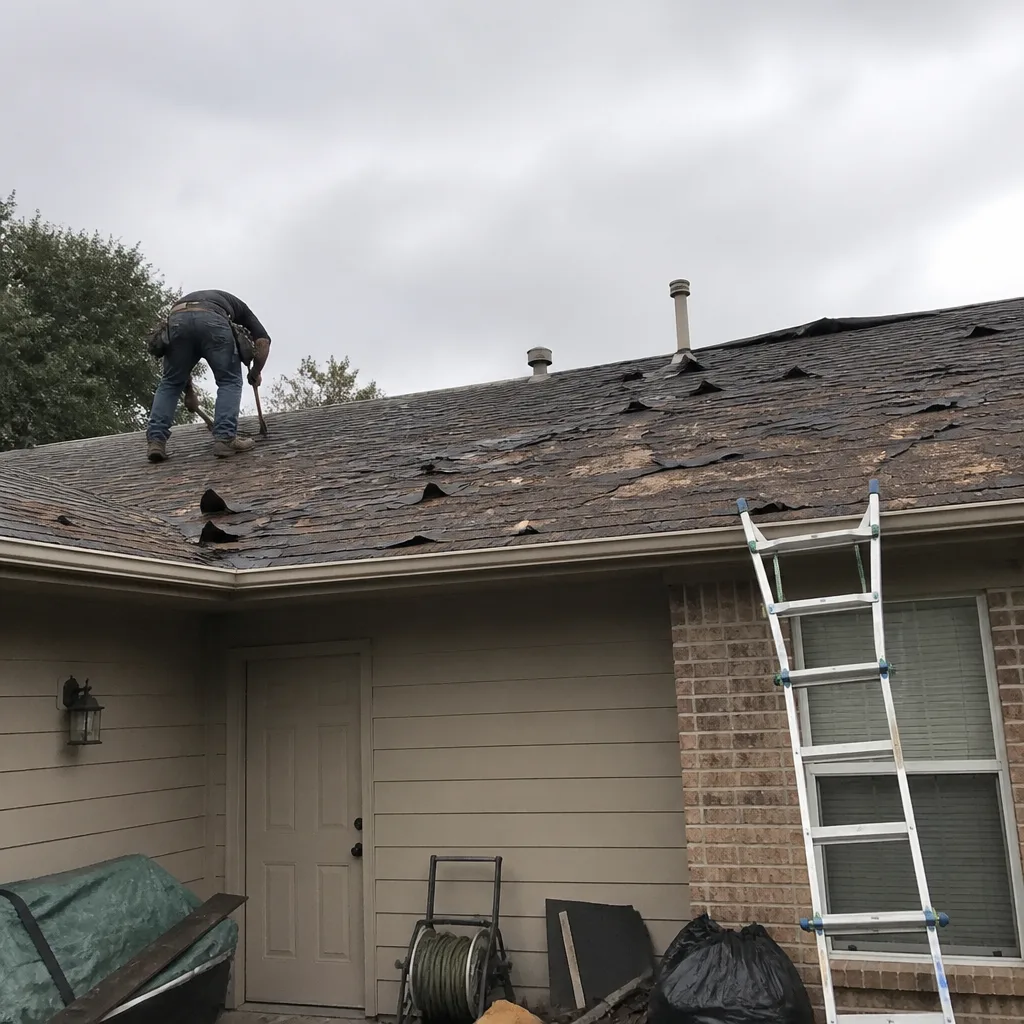
- More than 10% of a roof plane shows bare shingles or curling. At this point, the damage is systemic, and patching shingles is throwing money at a roof that’s already failed.
- Decking feels soft in the attic or shows water staining. Once the decking is compromised, you’re not maintaining surface materials; you’re repairing the roof structure.
- Flashing is rusted through, missing sections, or separated from the wall. Damaged flashing means water is already getting under the shingles at that penetration. Sealant on top of rusted flashing is a temporary bandage, and temporary bandages on Houston roofs become permanent leaks during hurricane season.
- You have active leaks during normal rain, not just during severe storms. If your roof leaks during a regular Houston afternoon shower, the waterproofing system has failed. That’s not maintenance; that’s a Roof Repair in Houston.
- Granules are washing out of multiple downspouts in visible quantities every time it rains. This is the roof telling you its UV protection is gone, and in Houston, a roof without granules degrades in two summers, not five.
Here is the dollar threshold most Houston homeowners find useful. If a section of roof needs more than $1,500 in patchwork repairs, you’re generally better off considering replacement. That’s not a hard rule, but it tracks with reality: when repairs cluster above that number, there’s enough underlying damage that the patches will keep coming. Most shingle roofs in Houston last 15 to 20 years, and if your roof is over 15 years old and needs multiple repairs, the math favors replacement. For a detailed look at pricing, see our Roofing Cost Breakdown: The Houston Homeowner’s Reference for 2026. A written, itemized quote for repair versus replacement, with both numbers on the same page, is how you make that decision without guessing.
How Houston’s Climate Should Shape Your Material Choices
Most roofing material advice online is written for a national audience, and it glosses over the fact that Houston summers are an endurance test. A shingle that lasts 25 years in Columbus, Ohio may last 15 here. The sun is stronger, the humidity is higher, and the storms are more frequent.
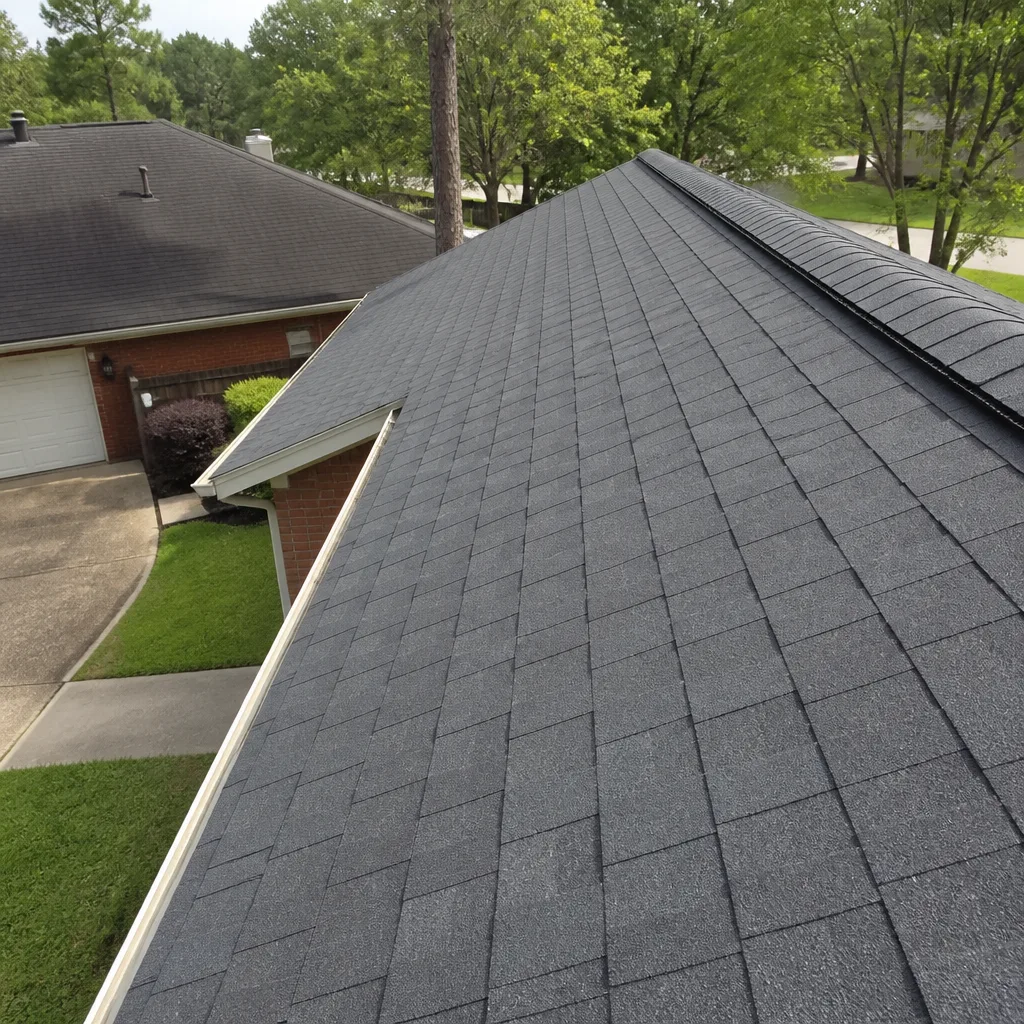
The single most important material property for Houston is UV resistance. Shingles with higher granule density and asphalt formulations designed for high-heat climates hold their granules longer under constant sun. Among major manufacturers, GAF’s Timberline line and Atlas’s StormMaster line are both rated for strong wind and high-heat performance, and we regularly install both in Houston. Atlas shingles in particular use a polymer-modified asphalt that holds up well in Gulf Coast heat. GAF’s Advanced Protection shingles include a granule coating designed to reflect more UV, which matters on south and west-facing slopes that take the direct afternoon sun. For homeowners who want a non-asphalt option, metal roofing performs exceptionally well in Houston’s climate: it reflects heat instead of absorbing it, and a properly installed standing seam roof can last 50 years with minimal maintenance.
Beyond shingles, Houston homeowners should insist on synthetic underlayment, not felt. Synthetic underlayment resists moisture and doesn’t wrinkle in humidity the way asphalt-saturated felt does. And because Houston roofs sit in a humid climate year-round, proper ventilation is not optional. An attic that reaches 140 degrees in August pushes heat up through the decking and cooks shingles from the underside. If you’re replacing a roof, insist that ventilation is part of the scope, not an afterthought. A roof is a system: shingles, underlayment, decking, flashing, ventilation. Half of Houston’s roofing failures happen because one component was downgraded or skipped.
How to Verify Your Roofer Actually Did the Work
Houston homeowners get burned by roofers who collect a check and never set foot on the roof. It happens more than anyone wants to admit, especially after big storms when out-of-town crews sweep through, take deposits, and disappear. The best defense is knowing what a complete job looks like before you pay for it.
Here is how to verify a roofer did the work you paid for:
- Ask for the written inspection report before they leave the driveway. If they can’t produce a written summary of what they found and what they did, the work didn’t happen. At Brennan Roofing Co Houston, every inspection and repair comes with a written report under The Garrison Standard. You get the price on paper before any work starts, and the report on paper before the technician leaves.
- Ask to see before-and-after photos. Any roofer who actually worked on your roof has the photos. Modern technicians carry phones; there’s no excuse for no photos. If a repair involved replacing flashing, ask for a photo of the new flashing installed. If they replaced shingles, ask for a photo of the finished section.
- Check the debris cleanup. A real roofing crew picks up after itself. Loose nails in the yard, shingle wrappers in the bushes, and old flashing dumped behind the shed are the signatures of a crew that rushed. Under The Garrison Code, our technicians are background-checked and uniformed, and they clean the site before they leave. It’s not a courtesy; it’s part of the job.
- Check the specific repair points they claimed to address. If the report says “replaced pipe boot at rear vent pipe,” walk around and look at that pipe boot from the ground. It should look new: bright rubber, tight seal, no cracks. If it looks the same as it did before the visit, ask for the photos.
- Ask what materials went onto the roof. Not “what brand” but “what exactly did you install.” Flashing gauge matters. Underlayment type matters. Sealant type matters. A roofer who can’t tell you what they installed didn’t install anything.
- Check the guarantee in writing. Every Brennan Roofing Co Houston job comes with the 365-Day Done Right Promise: if it’s not done right, we make it right, in writing, at no charge. Any repair or installation that fails within the guarantee period gets a free return visit. If your roofer’s guarantee is verbal, it doesn’t exist.
Travis Oakley, who leads Brennan Roofing Co Houston, puts it plainly: the roofer’s paperwork is the receipt for the work, and a receipt with nothing specific on it is worthless. You’re not hiring a roofer to look at your roof; you’re hiring them to inspect it, document it, fix what’s wrong, and prove it in writing. If they balk at any of those steps, the answer is no.
Common Mistakes to Avoid
- Skipping the October inspection because “summer is over.” October is when summer’s damage shows up. The UV heat of July and August causes shingle granule loss and small thermal cracks that don’t reveal themselves until the roof cools. By the time winter rains arrive, these small cracks become active leaks.
- Clearing gutters by blowing debris up onto the roof. It moves the problem instead of solving it. Debris blown onto the roof ends up in the valleys, where it holds moisture against the shingles. Bag it and take it down.
- Using a pressure washer on an asphalt shingle roof. Houston homeowners see algae streaks and reach for the pressure washer. Pressure washing strips granules off shingles and voids most manufacturer warranties. Algae is cosmetic; missing granules are structural.
- Ignoring the pipe boots because they’re small. Pipe boots are the most common leak source on Houston roofs, and they fail silently. A cracked rubber boot around a vent pipe lets water drip into the attic for months before the ceiling stains. Check them every inspection.
- Trusting a roofer’s verbal “everything looks fine” after a 15-minute visit. A real inspection takes 45 to 90 minutes and produces a written report. If the roofer didn’t go in the attic, didn’t photograph anything, and didn’t hand you a piece of paper, you didn’t get an inspection.
- Filing an insurance claim without baseline documentation. When the adjuster asks what the roof looked like before the storm, your answer determines the claim outcome. Homeowners who can produce dated, organized photos from before the storm get approved more often and faster.
When to Call a Professional
Any time you need to climb a ladder higher than you can safely reach from a step stool, call a roofer. That’s not overcautious; it’s basic sense. Houston roofs get slick with algae and morning dew, and a fall from even a single-story eave ends in surgery. Beyond the safety line, call a professional when you see sagging decking, repeated leaks in the same area, granule loss across more than one slope, or any flashing problem. Those are not maintenance issues; they’re repair issues, and repairing them wrong makes them more expensive. Brennan Roofing Co Houston home offers free estimates in Houston. Call (940) 461-8481 and we’ll put the price in writing before any work starts.
Frequently Asked Questions
Twice a year from the ground, and once a year by a professional. The professional inspection should happen in early May before hurricane season or in late October after summer UV exposure has peaked. Houston’s climate makes annual professional inspections more important than in drier cities, because small problems compound quickly in our humidity and heat.
Basic maintenance like gutter cleaning and debris removal runs $150 to $350 per visit. A professional roof inspection in Houston typically costs $200 to $450, though many roofing companies, including Brennan Roofing Co Houston, waive the inspection fee if you proceed with recommended repairs. Minor repairs like replacing a pipe boot or resealing flashing run $250 to $600. Call (940) 461-8481 for an exact written quote; estimates are free.
Yes. Stand at the ground level with binoculars and inspect each roof plane, all penetrations, valleys, and the drip edge line. Walk the perimeter and check downspout outlets for granule buildup. What you cannot do from the ground is inspect the actual decking, check attic ventilation properly, or feel for soft spots under the shingles. Those require a professional walk-on inspection.
Visible bare spots on shingles across more than 10% of a single roof plane, decking that feels soft or shows water staining from the attic, granules washing out of downspouts after every rain, and repeated leaks in the same area. If your roof is over 15 years old and needs more than $1,500 in scattered repairs, replacement usually makes more financial sense than continuing to patch.
Yes, in two ways. Humidity accelerates algae and moss growth on shaded roof planes, which holds moisture against shingles and lifts their edges. And humid attic air, when ventilation is poor, causes decking to warp and deteriorate from the underside. Houston roofs need proper ventilation year-round, not just in summer.
No. Homeowner’s insurance covers sudden, accidental damage from storms, fire, or falling objects, not routine maintenance or gradual wear. In fact, insurers can deny storm damage claims if they determine the roof was poorly maintained before the storm. Regular documented inspections and maintenance paperwork protect your claim eligibility. Call (940) 461-8481 if you need a professional inspection with the written report your insurer will ask for.
The Bottom Line
Houston roofs don’t fail on the day you notice the leak; they fail in the months before, when sun and debris and humidity work on them in silence. Your maintenance calendar should follow Houston’s real seasons: inspect in May before the storms and in October after the sun has done its worst. Document everything with dated photos. Know the line between maintenance and repair, and don’t cross it without honest numbers on paper. Hold your roofer to a written standard: a written report, written prices, and a written guarantee. For more guides & resources, explore our blog. Roof maintenance isn’t a chore you should outsource to guesswork. It’s a discipline, and in Houston, it’s the difference between a roof that lasts 15 years and one that lasts 25.
Written by Travis Oakley, Owner at Brennan Roofing Co Houston, serving Houston since 2000.
See the difference
 Before
 After
After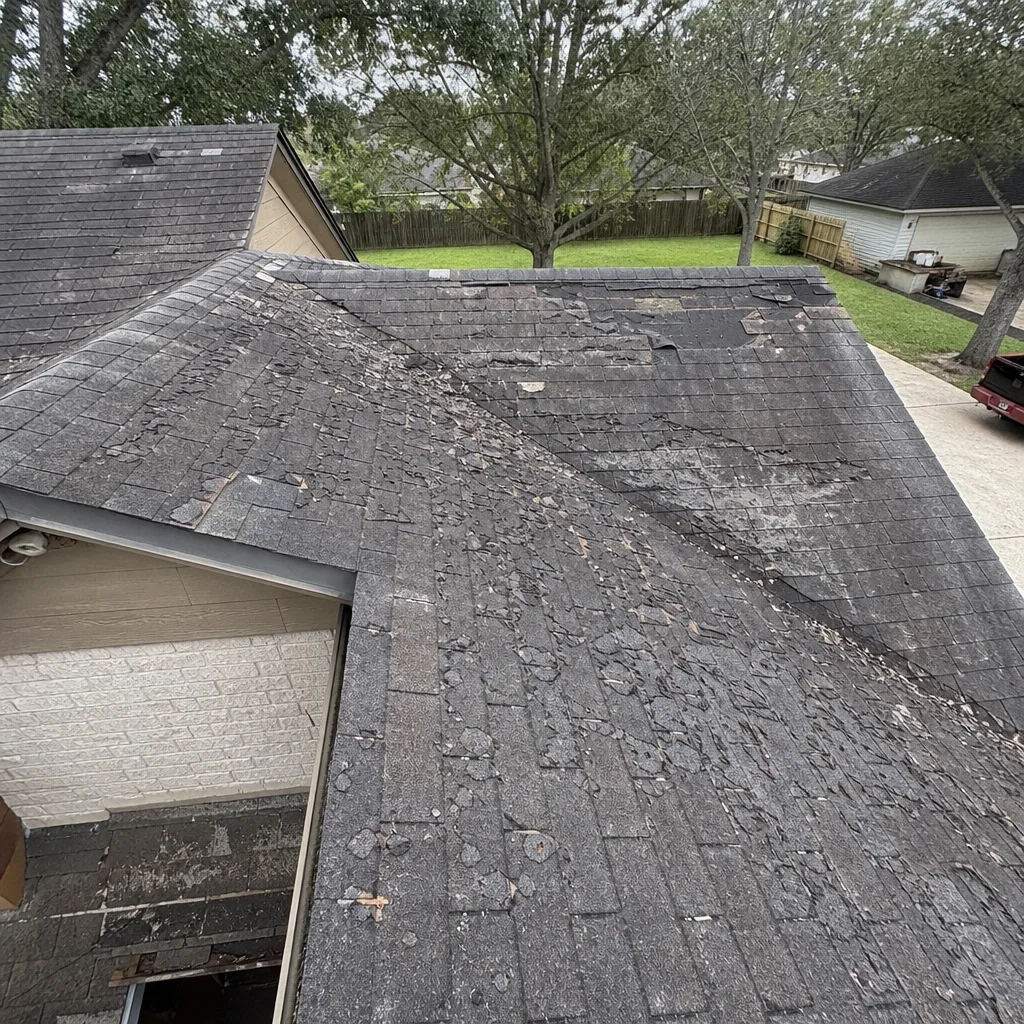 Before
 After
After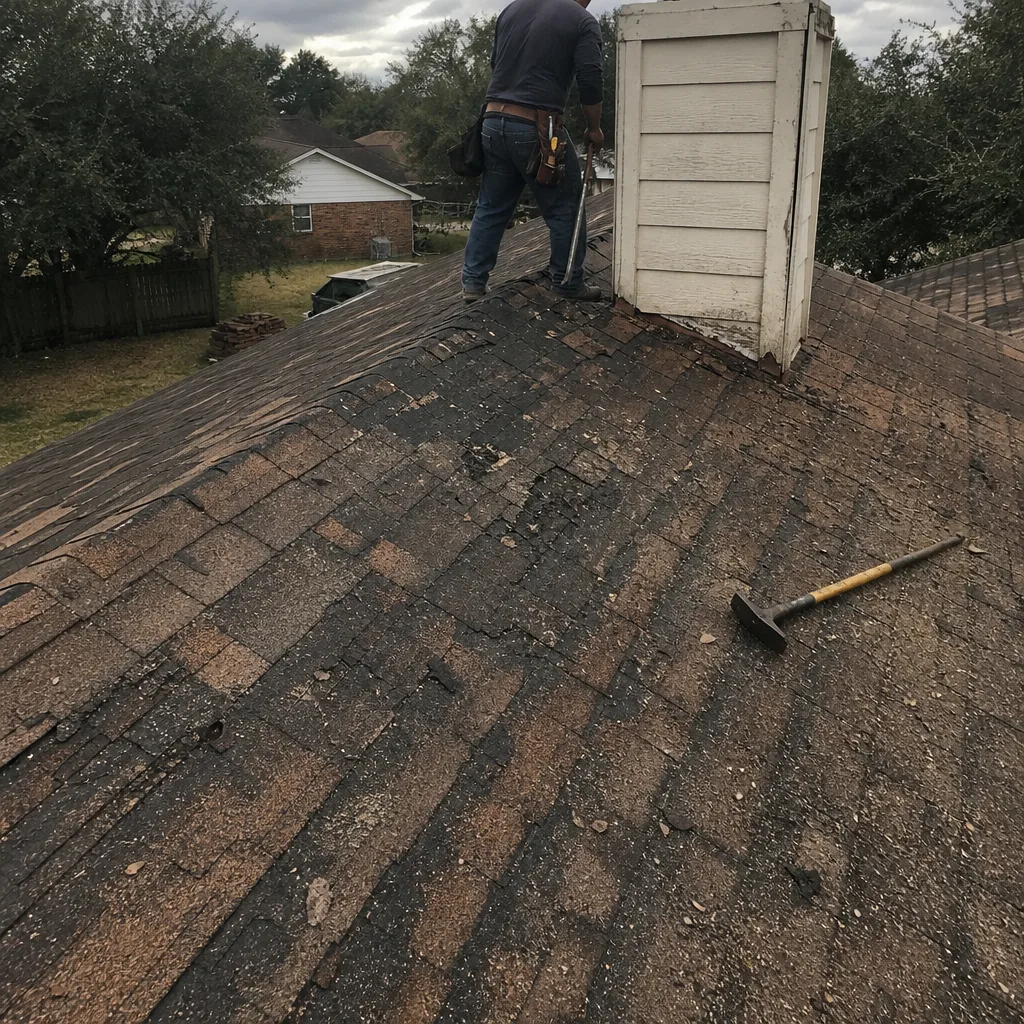 Before
 After
After