
Last updated October 17, 2026
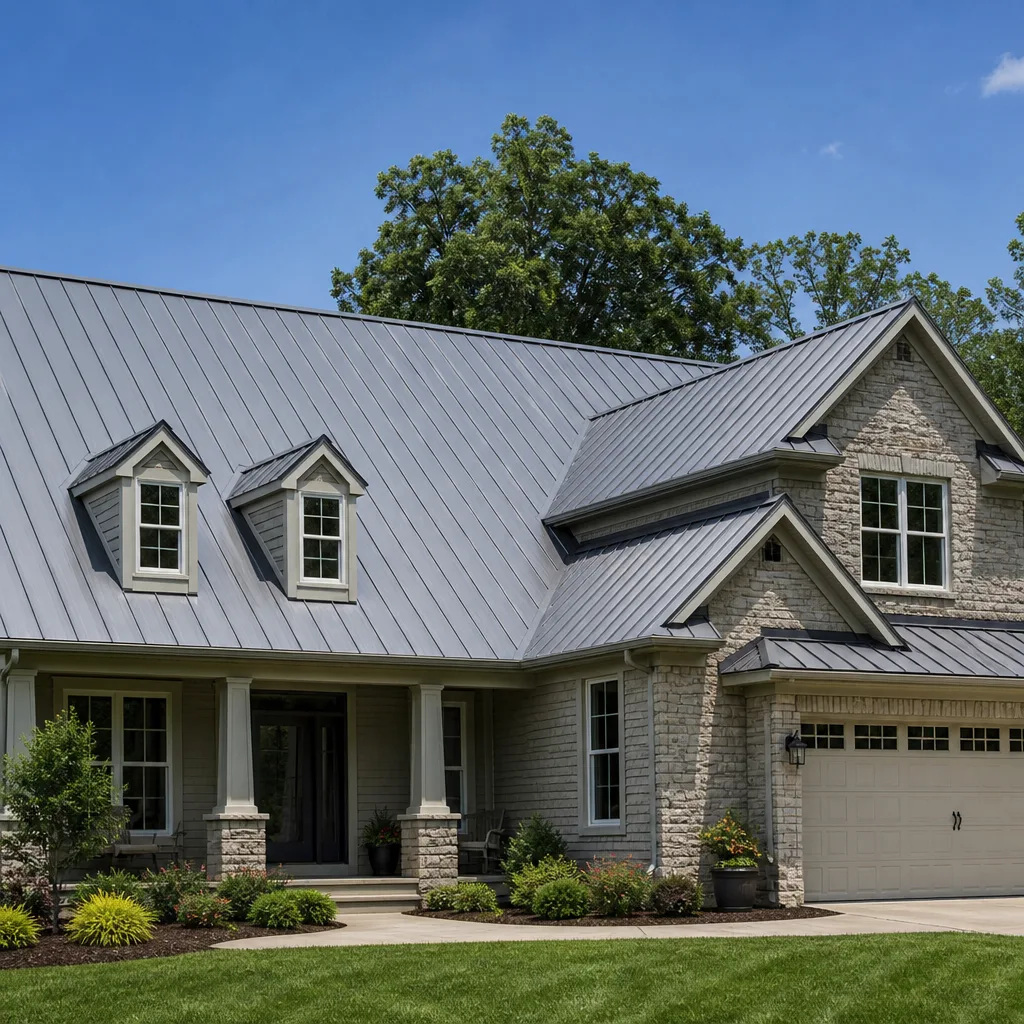 Metal roofing
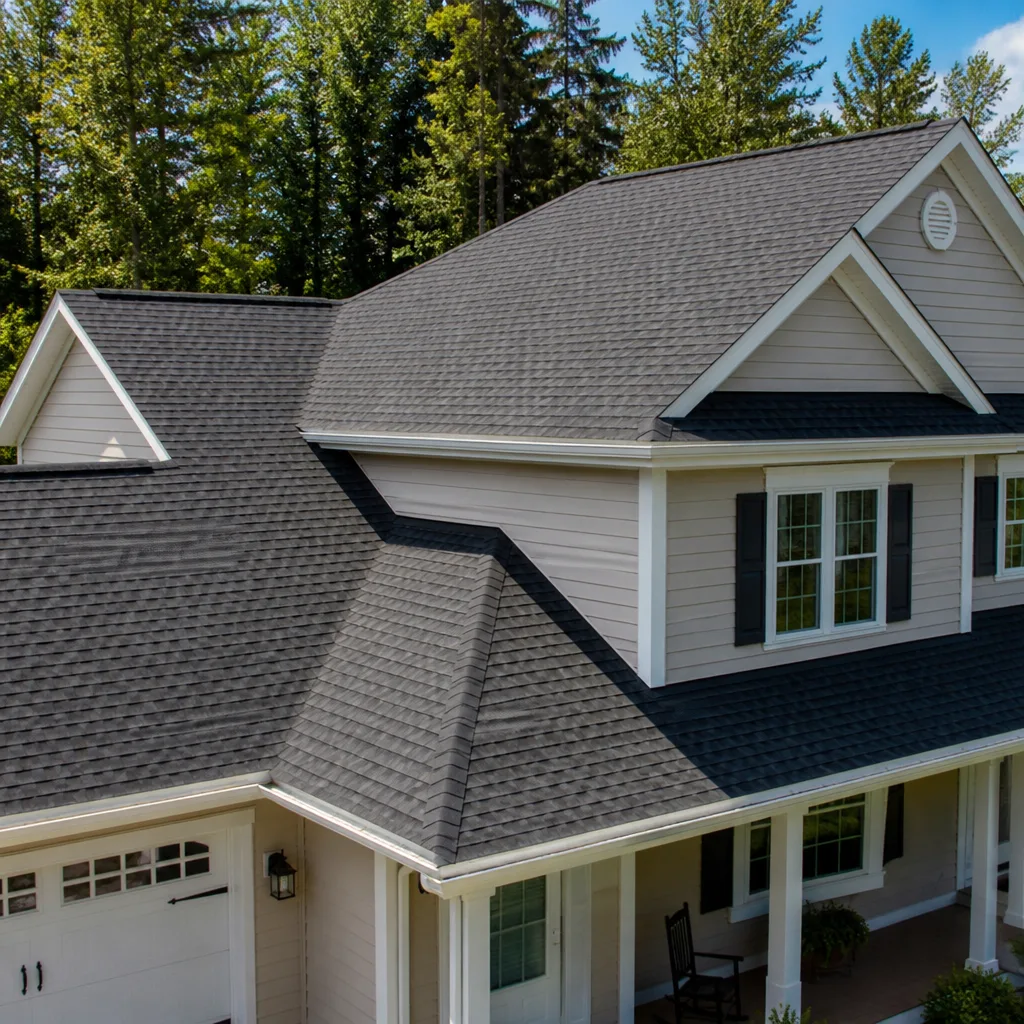
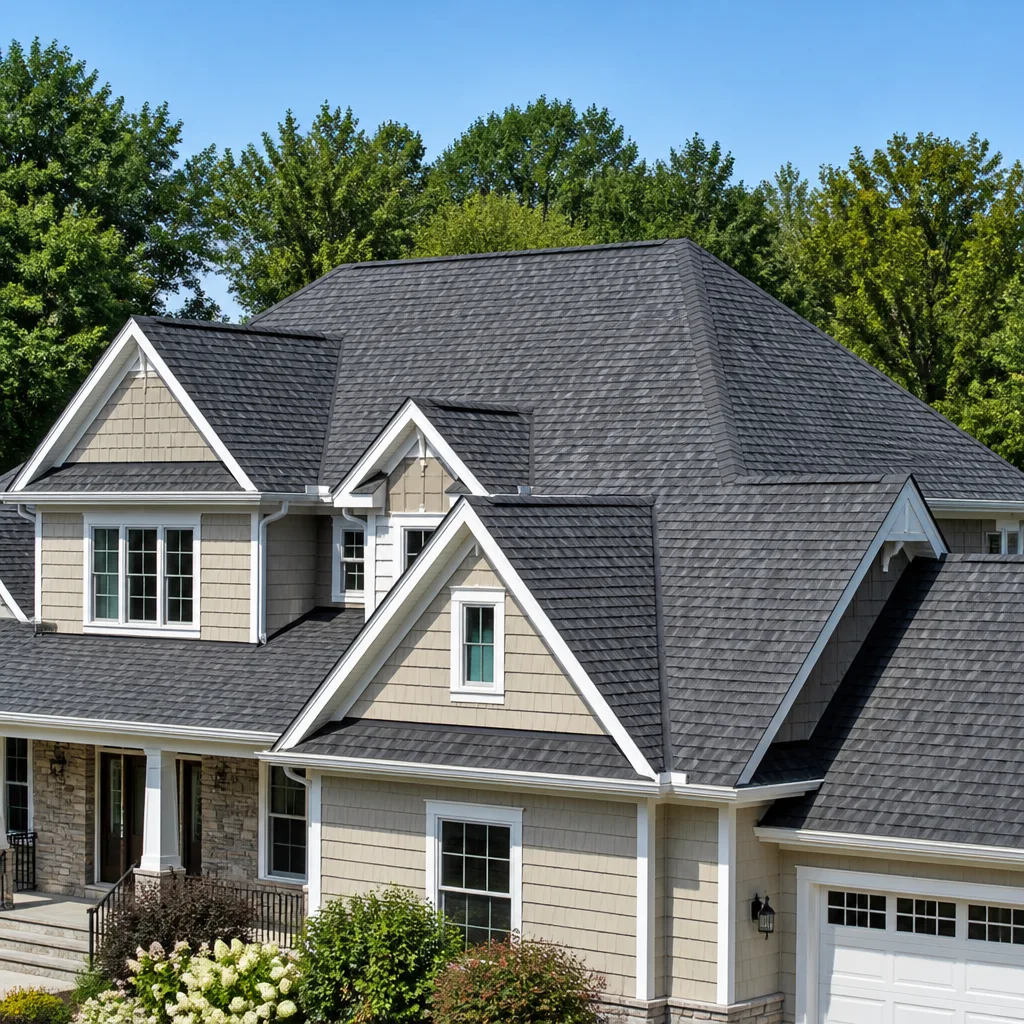 Architectural shingles
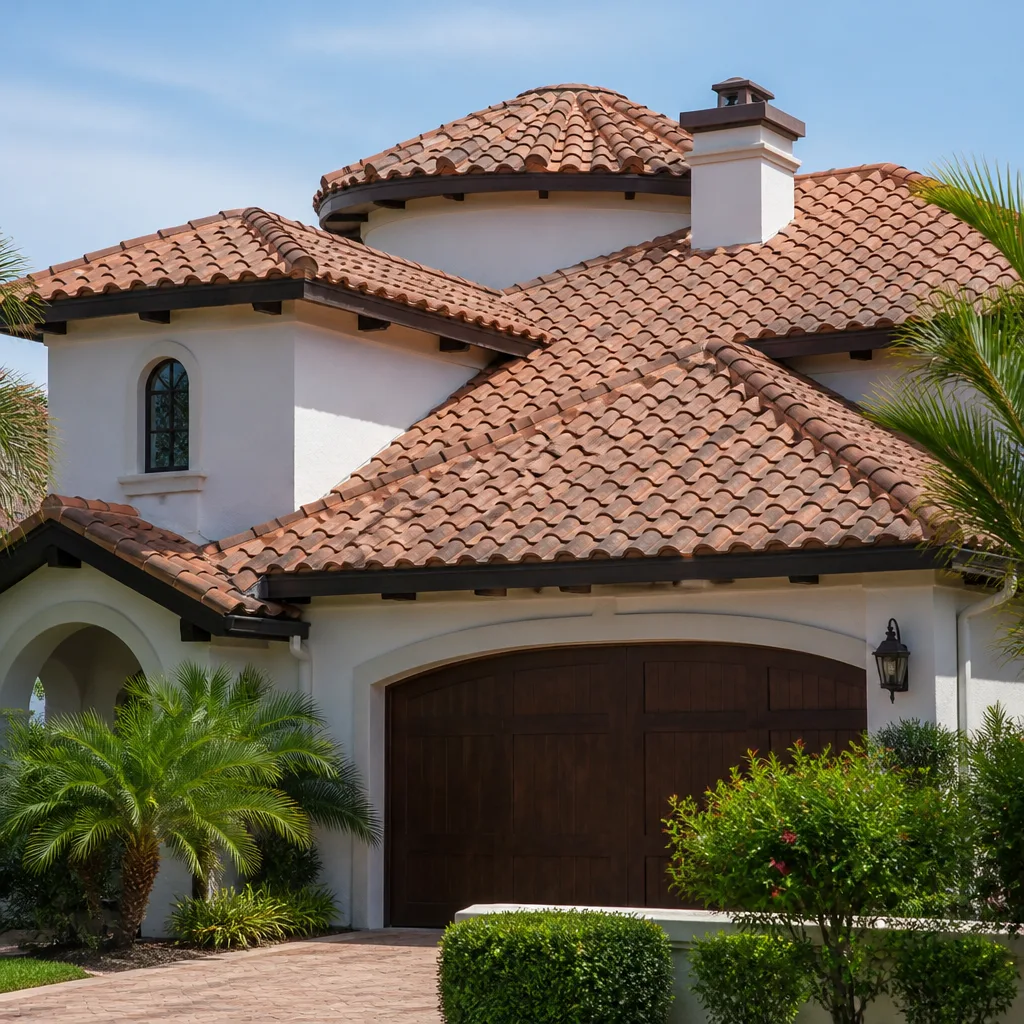 Tile roofing
 GAF
GAF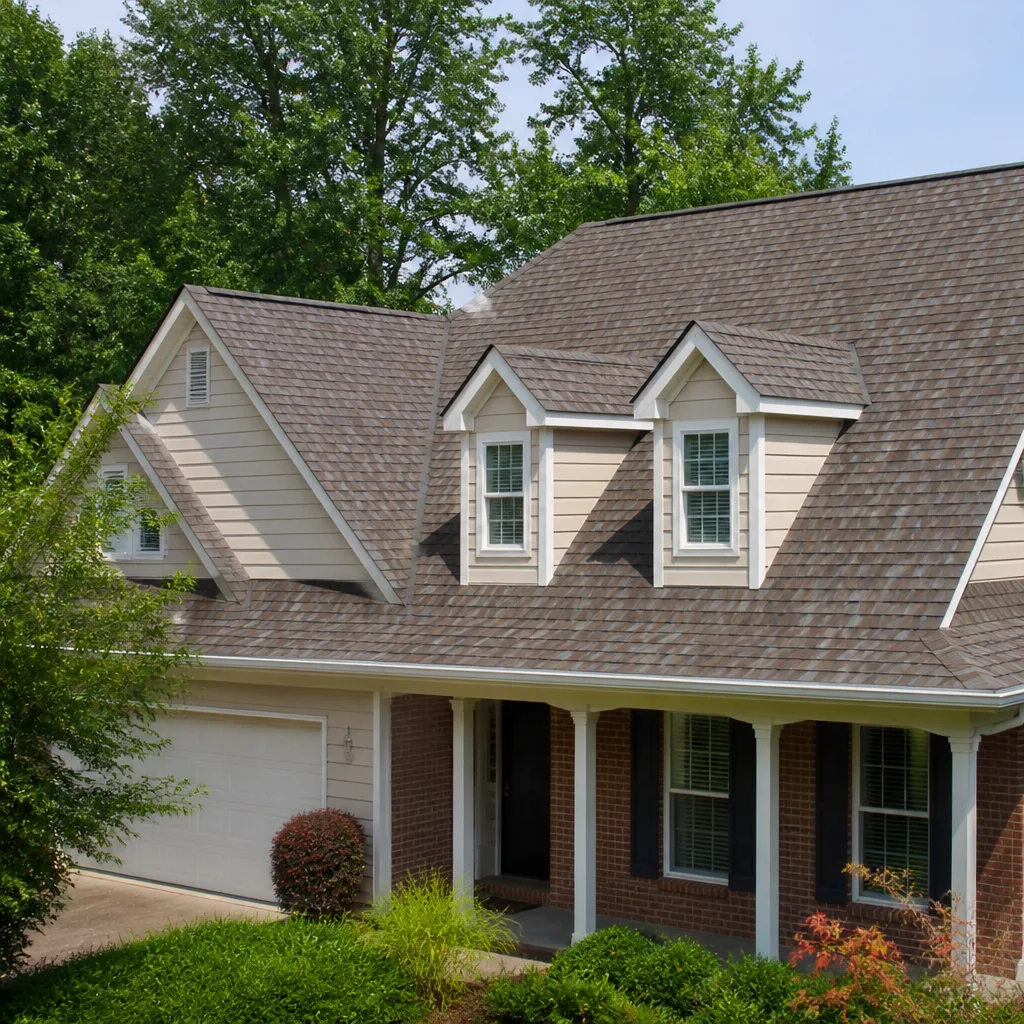 Owens Corning
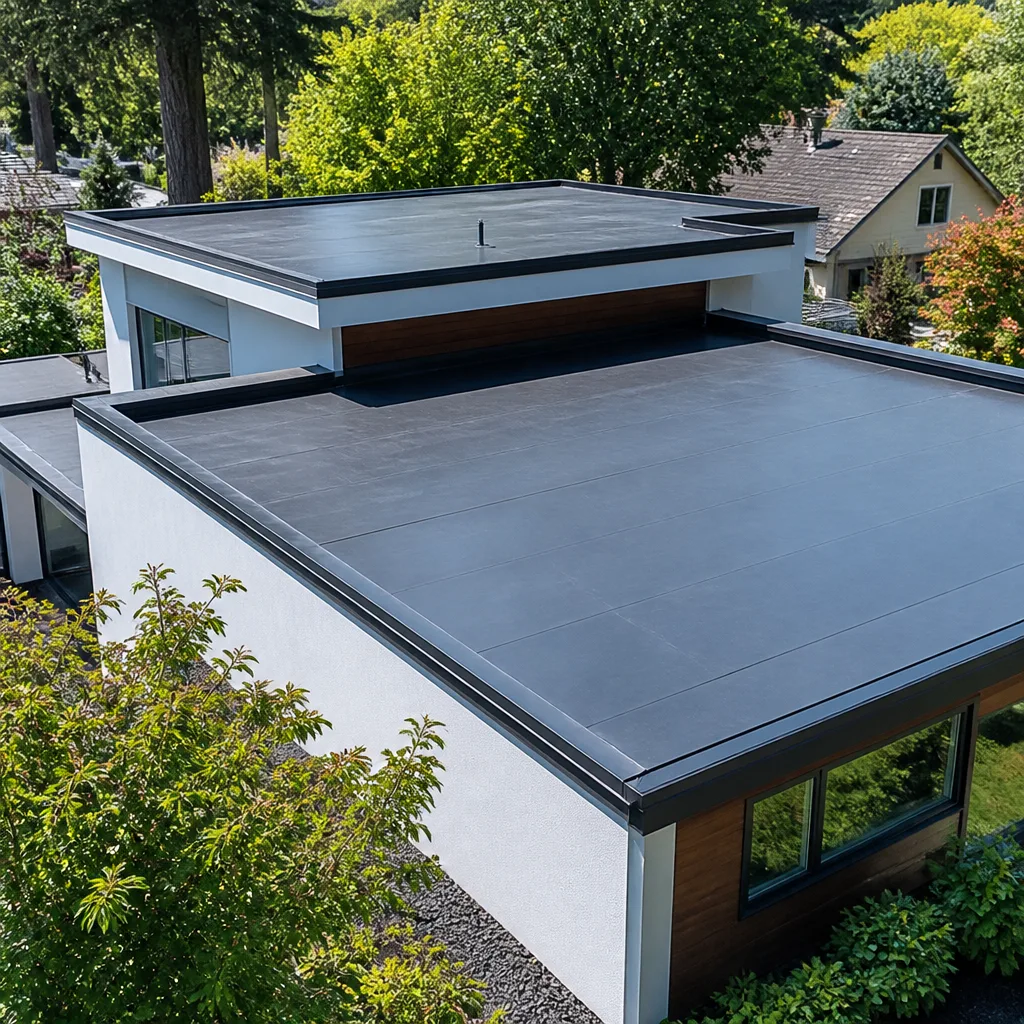 Flat & low-slope
Free roof inspection with deck photos before we talk money - GAF and Owens Corning certified installation
Roofing Cost Breakdown: The Houston Homeowner’s Reference for 2026
A new roof in Houston costs what it costs because of what is on your house and what is above it. The same 2,000-square-foot floor plan can differ by $8,000 depending on whether the roof is a simple gable in Katy or a low-slope modified-bitumen deck with tile accents in Garden Oaks. This guide breaks down a real roofing estimate line by line so you can evaluate a bid the way a contractor does, not the way a Google search result tells you to, and you can explore more guides & resources once you’ve mastered the basics. We’ll cover what each line item actually costs in the Houston market in 2026, why two identical-looking totals can represent very different scopes, and where low-bid roofers cut corners to win jobs they should not have won.
Quick Answer
Roof replacement in Houston in 2026 runs roughly $8,500 to $22,000 for a typical 1,800 to 2,500 square foot home, with most architectural shingle jobs landing between $10,500 and $16,500. That range reflects tear-off and disposal, decking repairs where needed, underlayment, shingles from major manufacturers, flashing work, permits, and labor. Roof repairs typically run $350 to $1,800 depending on the scope.
Styles & brands we work with
Table of Contents
- Line-by-Line: What a Houston Roofing Estimate Actually Contains
- Houston-Specific Factors That Move the Price
- 3-Tab vs. Architectural vs. Impact-Resistant: What the Upgrade Buys You
- Why Two $14,000 Estimates Can Be Completely Different Jobs
- Insurance Supplements, Explained Without the Spin
- Tile, Metal, and Modified Bitumen: Houston’s Other Roofing Systems
- Questions to Ask Any Roofer Before You Sign
Line-by-Line: What a Houston Roofing Estimate Actually Contains
A legitimate roofing estimate is not one number. It is a stack of line items, and every line item is a place where a contractor can either be honest or play games. Here is what a real Houston estimate looks like in 2026, broken down with dollar ranges our crews see on actual jobs in this market.
Tear-Off and Disposal: $1,800 to $3,200
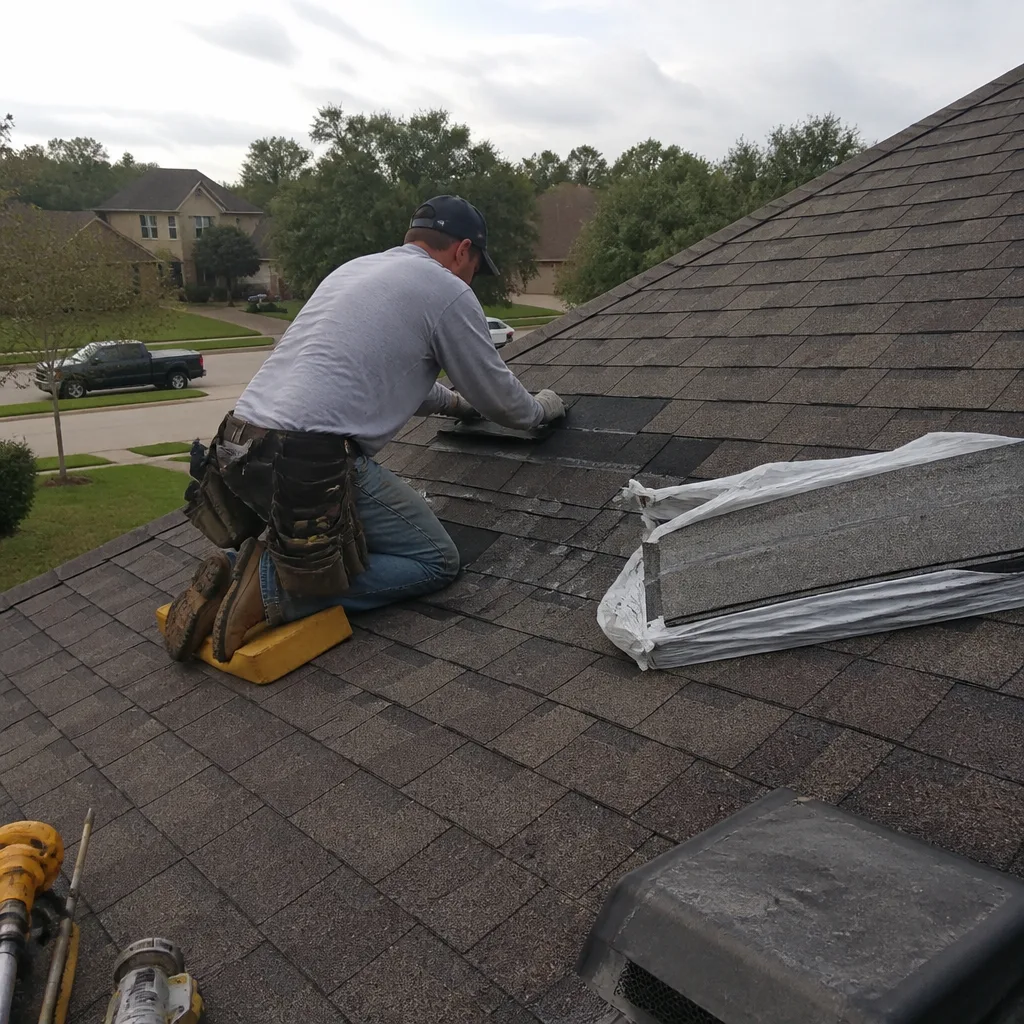
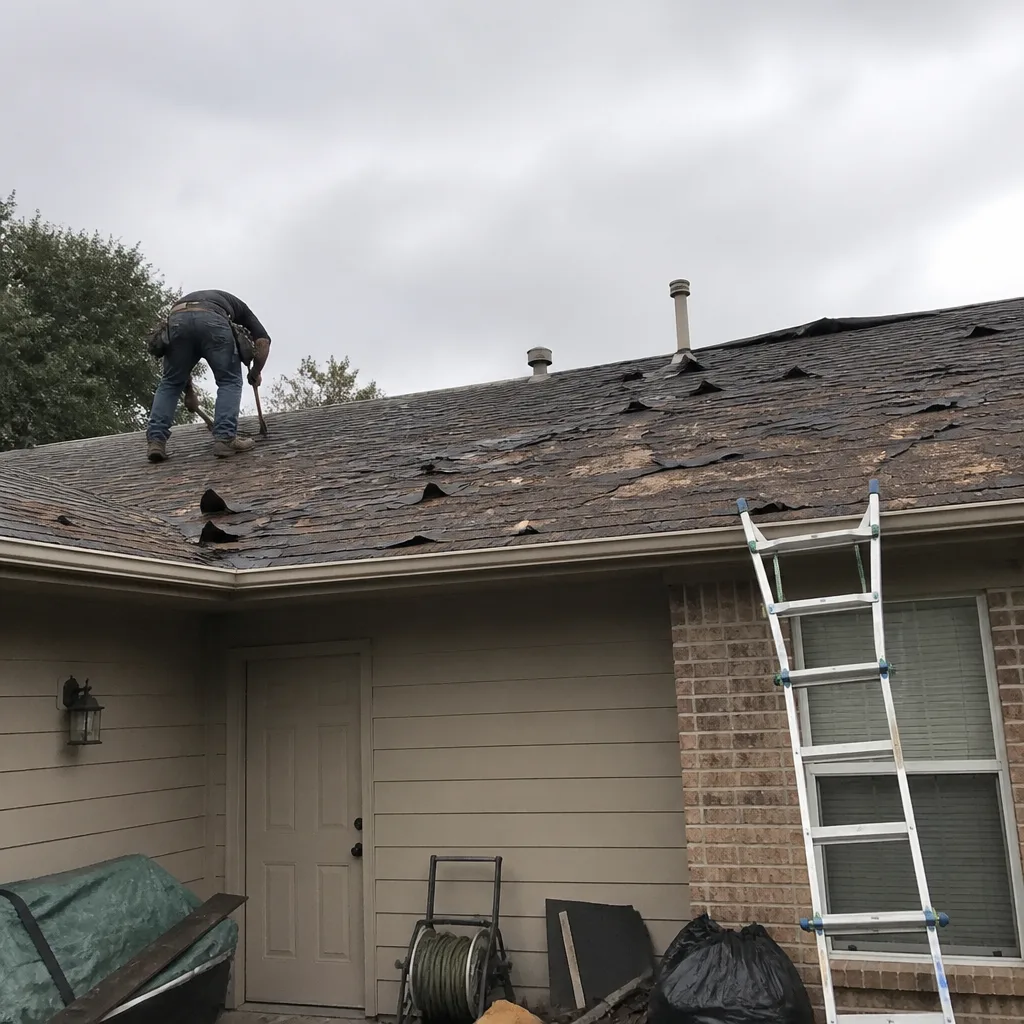
The old roof comes off first. In Houston, this means a crew of four to six people stripping shingles, felt, and old flashing down to the decking, then loading everything into a dump trailer or roll-off. On a single-story ranch with good access, tear-off runs $75 to $110 per square (a square is 100 square feet). On a two-story home in Meyerland or Bellaire where ladders and debris chutes slow the work, that climbs to $110 to $150 per square. Disposal fees at Houston area landfills typically add $350 to $600 to the job. If a bid shows tear-off at $40 per square, that bid is not paying for a crew that will show up.
Decking Replacement: $2,250 to $4,800 When Needed
Decking is the plywood or OSB sheet layer the shingles are nailed to. After tear-off, the crew inspects every sheet. Rotted, delaminated, or code-noncompliant sheets get replaced. In Houston, where summer humidity and hurricane-season rains work on decking for years before the shingles fail, we replace 15 to 25% of decking on the average roof. Replacement runs $75 to $110 per 4×8 sheet, material and labor. No honest roofer can tell you the decking cost before the old roof is off. What they can do, and what we do at Brennan Roofing Co Houston, is put the per-sheet price on the bid in writing before any work starts. If your estimate has no decking line item at all, ask what happens when the crew finds rot. A roofer who says “we’ll figure it out later” is guessing with your money.
Underlayment: $1,200 to $2,100
Underlayment is the water-resistant layer between decking and shingles. Houston code requires it, and the city’s windstorm provisions mean the cheapest felt paper is not always the smartest choice. Synthetic underlayment (the brand names you’ll see are from companies like Owens Corning and CertainTeed) runs $18 to $28 per square installed, versus $12 to $18 for traditional #30 felt. Synthetic costs more up front and resists tearing during installation and wind events. On a 2,000-square-foot roof, the upgrade is usually $300 to $500. We list a synthetic option on every estimate we write because Houston roofs sit in wind-driven rain more than the national average by a wide margin.
Flashing and Drip Edge: $900 to $1,800
Flashing is the metal that keeps water out at the corners, valleys, chimneys, skylights, and pipes. Drip edge is the metal strip at the roof perimeter that keeps water from wicking back under the shingle edge. A standard re-roof replaces pipe boot flashings (4 to 8 boots at $35 to $60 each), valley flashing ($8 to $14 per linear foot), and drip edge ($3.50 to $5.50 per linear foot). Homes with brick chimneys, skylights, or multiple vent stacks will be at the top of that range. Here is a place low-bid contractors cut: they reuse old drip edge or skip replacing it entirely. It is the cheapest metal on your roof and one of the first places a Houston roof fails in a hard rain.
Shingles: $4,200 to $8,900 for a Typical Home
Your shingle bill depends on product line and roof size. We’ll get into product tiers below, but the line item math is simple: an architectural shingle from Atlas, IKO, CertainTeed, or Owens Corning runs $110 to $160 per square for materials, with installation bringing the installed cost to $300 to $420 per square. A 2,000-square-foot house with a simple gable roof needs about 22 to 24 squares to account for waste. That makes the shingle line item $6,600 to $10,000 all-in on many homes, though we see it land between $4,200 and $8,900 once you account for roof geometry. The exact number is always on the written estimate.
Permits: $250 to $550
The City of Houston requires a permit for roof replacement, and inspections are part of the permit fee. Expect $250 to $550 depending on project value and scope. If a bid says “permit included” without a dollar amount, ask for the permit number line. Contractors who skip permits save themselves paperwork and leave you with an unpermitted roof that can complicate a future home sale. We pull permits on every replacement and pass every inspection before we consider the job done.
Labor: Woven into Each Line, But Worth Seeing Separately
Some Houston roofers lump labor into one number. We prefer separate labor by task because it makes the scope plain. Crew labor for tear-off and installation on a standard architectural shingle roof runs $150 to $220 per square. A dedicated labor line item is not a red flag; a missing one is not automatically a problem either. What matters is that the total is backed by a written scope that says exactly what gets done.
Houston-Specific Factors That Move the Price
A roof on a one-story ranch in Cypress is not the same job as a roof on a two-story colonial in River Oaks, even if the square footage matches. Here are the Houston-specific variables that push a bid up or down, and why they matter when you compare estimates.
Roof Pitch
Roof pitch is the angle of your roof. A 4/12 pitch (the roof rises 4 inches for every 12 inches of horizontal run) is easy to walk and cheap to roof. A 9/12 or 10/12 pitch requires safety harnesses, roof brackets, and a slower crew. Steep roofs can add $800 to $2,500 to a full replacement. In older Houston neighborhoods like the Heights and Montrose, steep gables and turret details are common, and those roofs are simply more labor than a suburban ranch.
Penetrations
Every pipe, vent, chimney, and skylight pokes through your roof, and every penetration is a chance for water to get in. A typical Houston house has 6 to 10 penetrations. Each one requires a flange or boot and careful flashing work. Homes with attic fans, gas appliance vents, plumbing stacks, and kitchen exhausts on the roof will be at the top of the range. Each additional penetration adds $60 to $150 in material and labor. It sounds small, but eight penetrations at $100 each pays for a full day of careful flashing work.
Valleys and Roof Complexity
Every valley (the angle where two roof planes meet) adds linear feet of valley flashing and slows the job. A simple rectangular gable has two valleys at most or none. A house with dormers, hips, and intersecting roof planes can have six or more. Valley flashing runs $8 to $14 per linear foot, and a single long valley can add $400 to $600. In master-planned communities like Sienna or Bridgeland, roof shapes tend toward the complex because builders know curb appeal sells. Those same shapes cost more to re-roof.
Second Story and Accessibility
A single-story home lets the crew set ladders directly against the eaves and walk debris to a trailer in the driveway. A two-story home means ladders get tied off, debris gets carried down through a chute or by hand, and every step takes longer. Two-story homes add $800 to $1,800 to a tear-off and re-roof purely due to labor and safety setup. If the home is in an older Houston neighborhood with narrow driveways, fence lines tight to the house, or power lines near the roofline, expect the bid to reflect that access cost.
Houston’s Building Code and Windstorm Requirements
Houston sits in a region where windstorm provisions affect how roofs get fastened. Nail patterns, shingle ratings, and underlayment requirements all feed into code compliance. A roof nailed for a 110-mph wind zone is a different installation than a roof nailed for a 90-mph zone, and Houston inspectors check. This is why a roofer who tells you they can match any price is often telling you they’ll cut corners on fastening you may never see until a hurricane makes landfall.
3-Tab vs. Architectural vs. Impact-Resistant: What the Upgrade Buys You
Shingle choice is the biggest single line item in a Houston roof replacement, and the differences are concrete. Here is what each tier actually gets you.
3-Tab Shingles: The Budget Floor
3-tab shingles are the flat, uniform rectangles most people picture when they think of a basic roof. They run $70 to $95 per square for materials, which sounds attractive until you understand what you’re buying. 3-tab shingles are thinner than architectural shingles, carry shorter warranties (20 to 25 years versus 30 to 50), and are more vulnerable to wind uplift. In Houston, where windstorm insurance offsets roof cost after named storms, the insurance savings from a more impact-resistant shingle often erase the 3-tab price advantage over the life of the roof. We install 3-tab only when a homeowner specifically asks for it, and we’re honest about what it means: a lower first cost and a shorter service life.
Architectural Shingles: The Houston Standard
Architectural shingles, also called dimensional shingles, are what most Houston homes should have. They run $110 to $160 per square for materials. They are thicker, carry 30- to 50-year warranties depending on the manufacturer and line, and they hold up better in wind. Lines like CertainTeed’s Landmark, Owens Corning’s Duration, IKO’s Dynasty, and Atlas’s Pinnacle all land in this category. The installed cost for architectural shingles on a typical Houston home is $9,500 to $16,000 depending on size and complexity. This is the right choice for most homeowners, and it is where the honest price conversation starts.
Impact-Resistant (Class 4) Shingles: The Insurance Answer
Impact-resistant shingles, often rated Class 4 for hail resistance, run $170 to $240 per square for materials. They are built around a modified polymer core that absorbs hail impact instead of cracking. In Houston, hail storms are frequent enough that many major insurers, including the large national carriers, offer premium discounts for Class 4 roofs. Those discounts vary widely, but 5% to 15% off the windstorm portion of a Houston homeowner policy is common. The premium and discount math usually favors Class 4 if you plan to stay in the house for 10 or more years, and a roof inspection in Houston can document the shingle class for your insurer. If you’re weighing this upgrade, ask your agent for the exact discount before you buy.
Why Two $14,000 Estimates Can Be Completely Different Jobs
You receive two bids. Both say $14,000. One roof leaks in three years; the other is still watertight at 15. Here is where the difference hides.
Decking Allowances
One bid includes a line item for decking replacement at a stated per-sheet price, capped at 20% of the deck surface. The other bid has no decking line item and a verbal promise to “take care of it.” The first bid has a defined ceiling; the second becomes a change order the moment the crew finds rot. In Houston, where rot is common, that second bid can grow by $3,000 within an hour of tear-off. The written price is the standard. The verbal promise is the risk. We put decking pricing on the bid before any work starts, every time, no exceptions. That is the Garrison Standard applied to the single most common surprise in roofing.
Underlayment Grade
One bid specifies synthetic underlayment from a named manufacturer. The other says “roofing felt as required.” Code minimum felt is legal, and it is cheaper. It also tears more readily during installation and fails faster in a Houston storm. The felt bid is not dishonest; it is simply a cheaper scope wearing the same total price. A bid that lists product names and grades lets you know what you are actually buying.
Flashing Scope
One bid says “reuse existing flashing where serviceable.” The other says “replace all pipe boots, valley flashing, and drip edge.” Reusing old flashing on a new roof is like putting new tires on bent rims. The metal may look fine from the ground and be cracked or corroded at the nail line. Replacement of all flashing on a typical Houston home adds $600 to $1,100. It is one of the first things a low-bid contractor omits to make the total look competitive.
Permits and Inspections
One bid includes the City of Houston permit fee and two scheduled inspections: the pre-cover inspection and the final. The other bid says “permit handled by homeowner” or omits it entirely. A roofer who skips permits saves $250 to $550 on paper, but they also avoid the inspector who checks fastening patterns and underlayment. That is not a favor to you. It is a way to bury code violations under a finished roof. Every roof we install at Brennan Roofing carries a permit and passes inspection before we call it done.
Cleanup and Site Protection
One bid includes magnet sweep for nails, dumpster or trailer disposal, and daily cleanup. The other says “roof debris removed.” That gap is worth $400 to $800 in labor and disposal cost, and it is the difference between a crew that leaves your driveway clean and one that leaves roofing nails in your lawn for your tire to find in July. Our crews run a magnet sweep on every job and haul their own debris. It is on the bid, in writing.
Insurance Supplements, Explained Without the Spin
An insurance supplement is a legitimate process that gets abused so often that many Houston homeowners are right to be suspicious. Here is what it is, when it applies, and how an honest contractor handles it.
What a Supplement Is
After you file a claim, your insurer sends an adjuster who writes an estimate for the repair or replacement. Sometimes that estimate is accurate. Sometimes the adjuster misses items: code upgrades required by the City of Houston, decking rot not visible at the time of the inspection, or additional flashing the crew finds during teardown. A supplement is simply a request from the contractor to the insurer to adjust the claim amount to match the actual scope of work. Most homeowners insurance policies contemplate supplements. It is a normal part of the process.
How an Honest Contractor Navigates Supplements
The honest process works like this. Tear-off happens. The crew documents everything with photos: rotted decking, missing flashing, code compliance items. The contractor writes those documented items into a supplement request with line-item pricing and submits it to the insurer. The insurer reviews, approves or declines, and the job moves forward. You, the homeowner, see every document. The supplement does not increase your out-of-pocket cost; it matches the insurance payout to the real-world scope. We handle supplements this way at Brennan, with photos and line items you can see, because a supplement is a paperwork exercise, not a strategy.
How a Roofer Abuses the Process
The abuse pattern is different. A contractor inflates the initial estimate with items not actually needed, submits a padded supplement, or tells you they can “get your deductible covered” by inflating the claim. That last one is insurance fraud, and it makes you, the policyholder, the person who signed the claim documents. A legitimate roofing contractor in Houston will never offer to “waive” or “cover” your deductible as a sales tactic. When you see that pitch, you are looking at someone who will cut corners on your roof the same way they cut corners on your paperwork. The roof repair in Houston price you get from an honest shop matches the work that is actually needed, not the number that wins the bid.
Tile, Metal, and Modified Bitumen: Houston’s Other Roofing Systems
Most Houston homes wear composition shingles, but the city’s mix of architectural styles means real percentage of homes have tile, metal, or low-slope sections. Each has its own cost structure.
Tile Roofing: $18,000 to $45,000
Clay and concrete tile is common in Houston’s Mediterranean and Spanish-style homes, particularly in neighborhoods like Tanglewood and Memorial. Tile is heavy: concrete tile weighs 900 to 1,100 pounds per square, which means the roof structure has to be built to carry it. Tile replacement runs $900 to $1,400 per square installed, and repair of a tile roof is often more about replacing broken tiles and re-bedding ridges than a full tear-off. Tile roofs last 50+ years when maintained, but the underlayment beneath the tile wears out long before the tile itself does, and that underlayment replacement is a full job: $12,000 to $25,000 on the average Houston tile roof.
Metal Roofing: $16,000 to $38,000
Standing-seam metal and metal shingle systems have gained ground in Houston because they shed rain efficiently and last 40 to 60 years. Installed cost runs $750 to $1,150 per square. The premium over architectural shingles is significant, but the service life and the insurance profile (metal roofs frequently earn hail-resistance credits) close some of the gap over time. Metal is not a budget choice. It is a longevity choice.
Modified Bitumen and Low-Slope Sections
Low-slope sections are everywhere in Houston: porch roofs, carport covers, flat sections on mid-century homes in Glenbrook Valley and Oak Forest. These sections cannot wear shingles; the slope is too low for shingles to shed water. Modified bitumen, a rolled asphalt product torched or adhered to the deck, is the standard answer. Modified bitumen runs $450 to $700 per square installed for a tear-off and recover. A small porch roof replacement is $1,800 to $3,500. These sections need their own flashing details at the transition where the flat roof meets the shingle slope, and that transition is a common leak point on Houston homes.
Questions to Ask Any Roofer Before You Sign
Here are the questions that separate a disciplined roofing company from a crew with a truck and a bid. Ask every one of them, in order.
- Is the decking price on the bid, in writing, as a per-sheet number? If the answer is no, the bid is not the price. The bid is the floor.
- Who pulls the permit? The answer should be “we do.” If the roofer suggests you can save money by skipping it, end the conversation. Houston requires permits, and an unpermitted roof is a liability when you sell.
- What underlayment is specified, by manufacturer and product line? “Felt” is not a specification. A named synthetic product is.
- Are all flashings replaced, or will existing metal be reused? You want a bid that replaces every boot, every valley, and the drip edge. It is the cheapest part of the job and the most common failure point.
- What does the cleanup include? A magnet sweep, debris hauling, and daily site cleanup should be on the bid. If it is not listed, it is not promised.
- What is the guarantee, and is it in writing? At Brennan, the answer is the 365-Day Done Right Promise: every repair and installation guaranteed in writing for one full year, with a free return visit at no charge if it fails in that period. If a contractor will not put their guarantee in writing, they do not have one.
Common Mistakes to Avoid
- Choosing a bid without reading the line items. Two identical totals can contain wildly different scopes. Compare decking allowances, underlayment grade, flashing scope, and permit inclusion before you compare price.
- Failing to ask about decking rot before signing. Houston humidity rots decking quietly. A roofer should have a written per-sheet price for replacement, not a vague “we’ll handle it.”
- Treating the deductible as negotiable. Any contractor who offers to “cover” or “waive” your deductible is proposing insurance fraud. That is not a favor.
- Skipping the permit to save money. The permit is $250 to $550 and the inspection protects you from a roof that was never checked against Houston code. It is the cheapest insurance you will ever buy.
- Ignoring the underlayment line. Shingles get the attention because you see them. The underlayment is what keeps water out when wind drives rain sideways, and cheap felt fails faster than synthetic in Houston storms.
- Hiring based on a door-knock after a storm. Storm chasers follow hail. A local Houston roofing company with a phone number answered by a live person and a written standard of work is a different risk profile than an out-of-state crew with a rented ladder.
- Not reading the guarantee. “One year workmanship warranty” is a phrase, not a document. Ask for the guarantee in writing before you sign, and know exactly what it covers and for how long.
See the difference
 Before
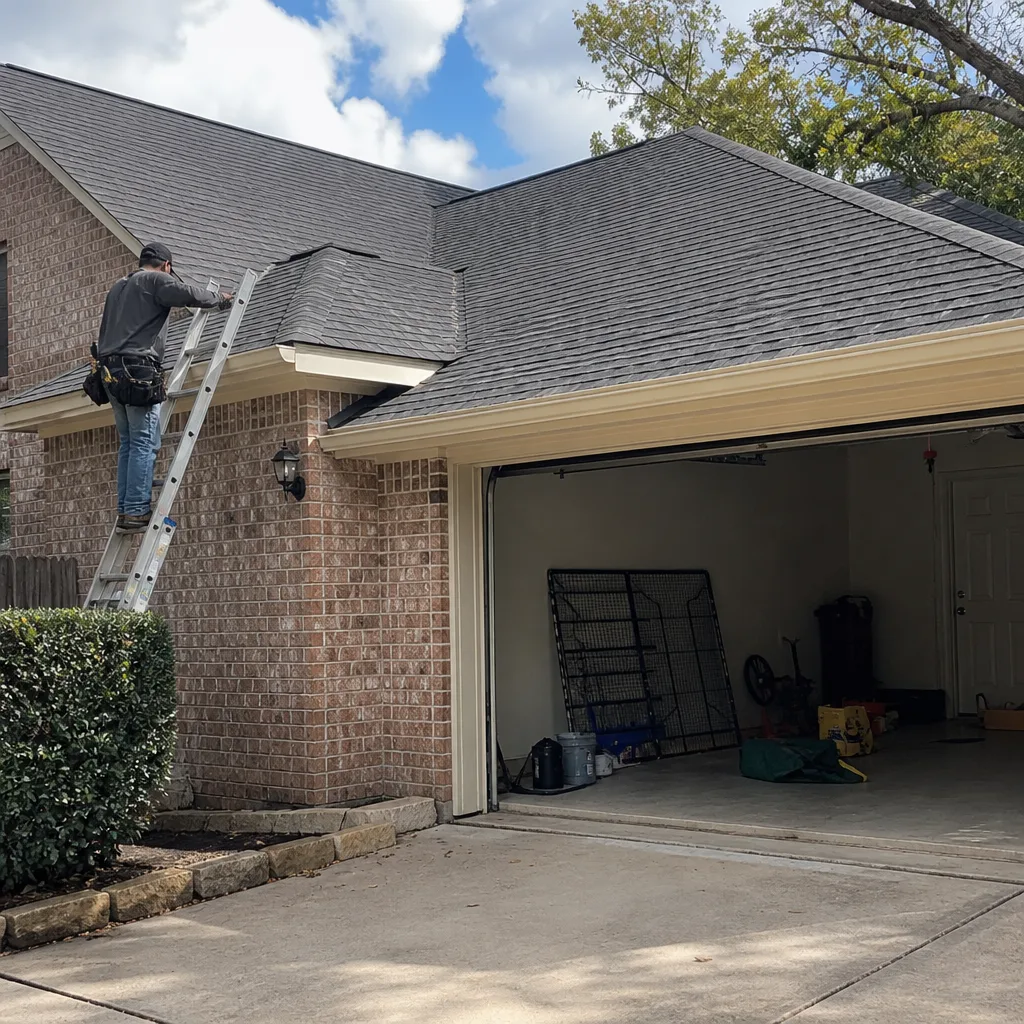 After
After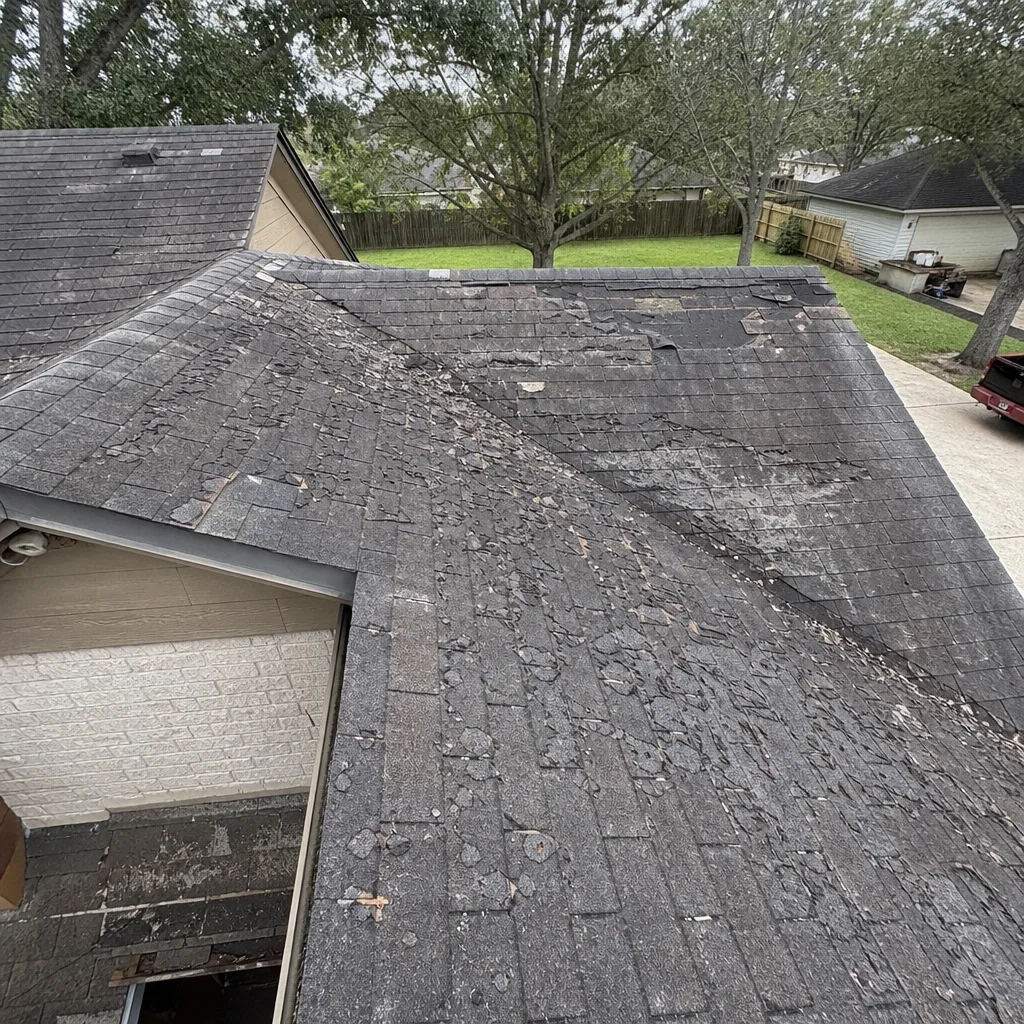 Before
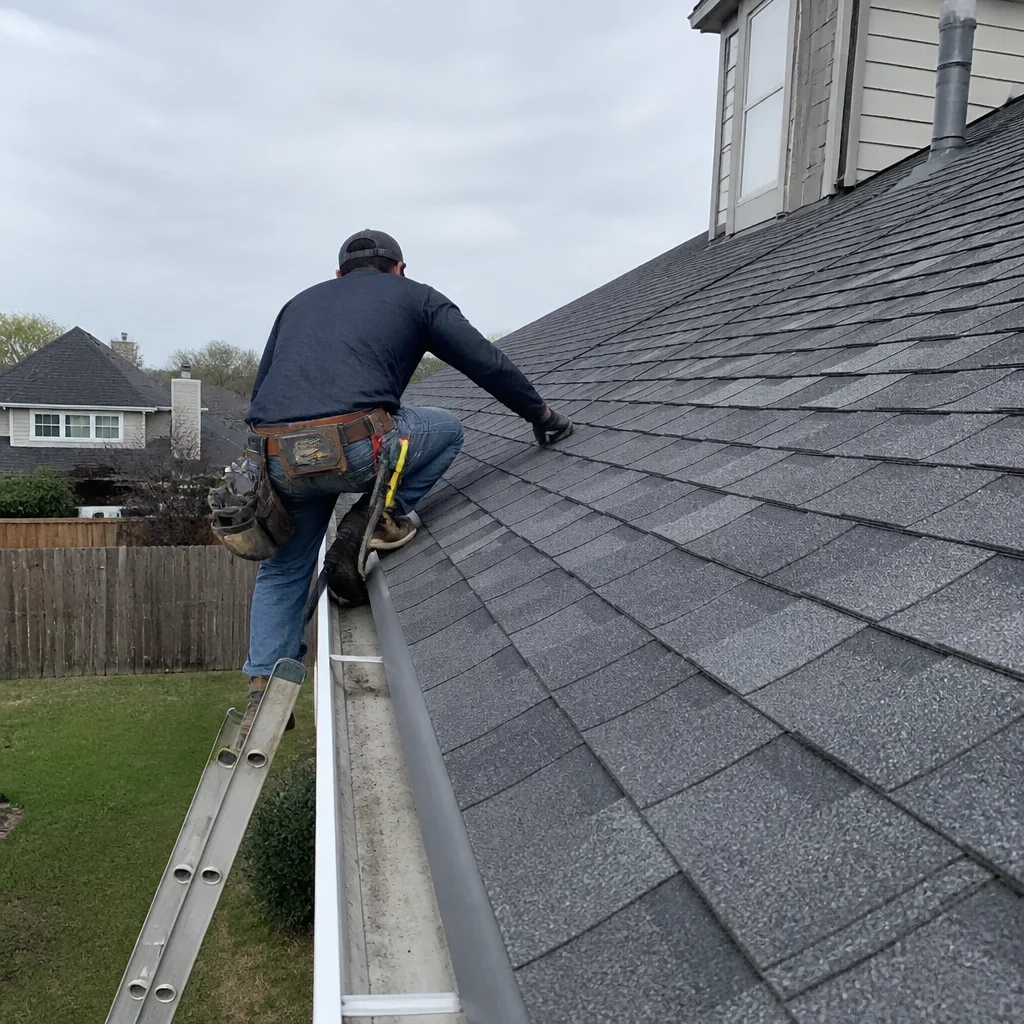 After
After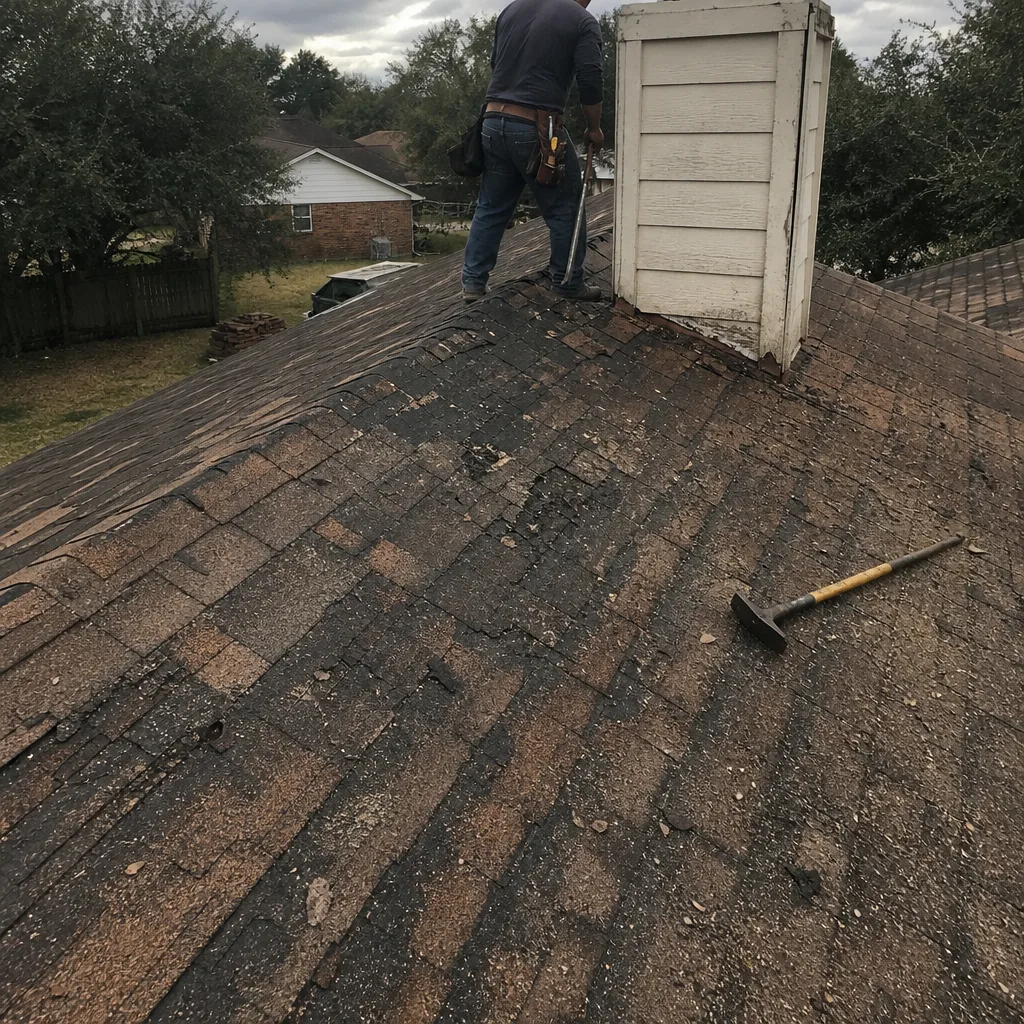 Before
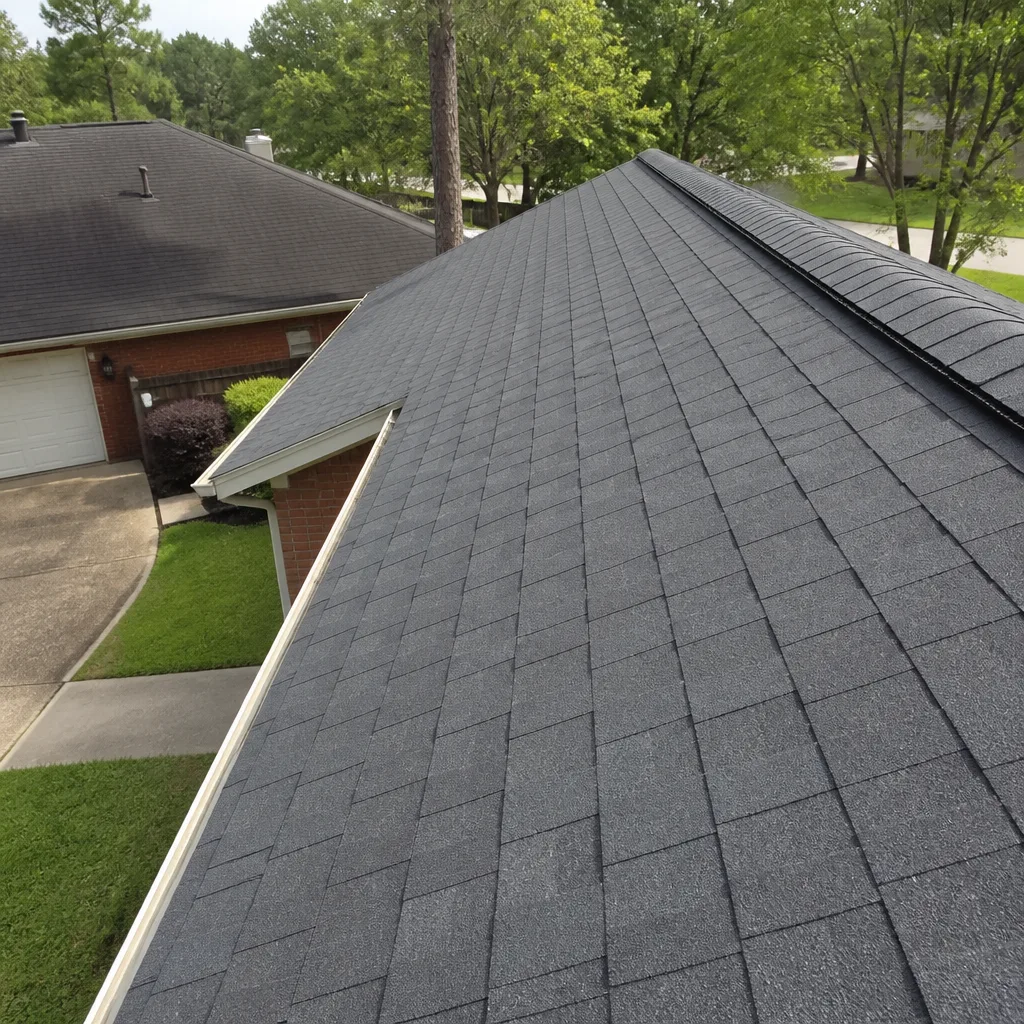 After
AfterWhen to Call a Professional
Roof leaks, missing shingles after a storm, and water stains on ceilings are not DIY territory. A roof is a system, and a failed flashing at a pipe boot can look like a missing shingle from the ground. Call a roofer when you see granule loss in your gutters, shingles in the yard after wind, water staining inside, or when your roof passes 15 years without an inspection. You do not need to know the problem to make the call. You need someone who can diagnose it and put the fix in writing before the work starts. Brennan Roofing Co Houston offers free estimates, and every job begins with a written price in hand. Call (940) 461-8481 to schedule yours.
Frequently Asked Questions
A new roof in Houston in 2026 runs $8,500 to $22,000 for a typical home, with most architectural shingle replacements landing between $10,500 and $16,500. The spread depends on roof size, pitch, complexity, decking condition, and shingle choice. Call (940) 461-8481 for a written line-item estimate specific to your home.
A standard tear-off and architectural shingle re-roof on a typical Houston home takes 1 to 3 days, weather permitting. Tile, metal, or homes with extensive decking rot can extend that. The estimate should state a timeline, and that timeline should include cleanup and inspection.
It should not, provided the decking replacement is priced in writing up front. The legitimate variable is decking: no one can see what is under the shingles until the old roof is off. A disciplined roofer puts the per-sheet price for decking on the bid before any work begins, so the cost is known even if the quantity varies. At Brennan, the price goes on paper before any work starts, and that written price is the price we work to.
We pull permits on every replacement at Brennan, and we pass every Houston inspection before we consider the job complete. The permit and inspection are part of the bid, not an optional add-on, and they are not a line item we offer to skip.
Roof repair in Houston runs $350 to $1,800 for typical work: replacing a pipe boot, patching a small leak, repairing flashing, or replacing a few shingles after wind damage. Repairs involving decking replacement, valley rebuilds, or multiple penetration points run higher. Every repair we quote comes with a written price before work starts and the 365-Day Done Right Promise in writing afterward.
The 365-Day Done Right Promise covers every repair and installation in writing for one full year from the date of completion. If the work fails within that period, we return and make it right at no charge. It is not a verbal assurance; it is a written guarantee, and it is part of every job we do.
The Bottom Line
A Houston roof replacement is a set of line items, not a single number, and the only way to evaluate a bid is to read every line. Tear-off, decking, underlayment, flashing, shingles, and permits are the framework. Houston’s climate, code, and roof geometry set the price range. Two identical totals can hide very different scopes, and the difference shows up in the line items a low-bid contractor omits: decking allowances, flashing replacement, synthetic underlayment, and permits. The discipline is in the written scope. At Brennan Roofing Co Houston, every job begins with a written price on paper, and every job ends with the 365-Day Done Right Promise in writing. Call (940) 461-8481 for a free estimate on your Houston roof.
Written by Travis Oakley, Owner at Brennan Roofing Co Houston, serving Houston since 2000.