
Last updated October 17, 2026
 Metal roofing
 Architectural shingles
 Tile roofing
 GAF
GAF Owens Corning
 Flat & low-slope
Free roof inspection with deck photos before we talk money - GAF and Owens Corning certified installation
Roofing Warning Signs: A Houston Homeowner’s Reference Guide
By the time you see a water stain on your ceiling, the damage behind your drywall has typically been accumulating for six to eighteen months. The stain is not the warning sign, it’s the bill. Houston’s combination of high humidity, intense UV exposure, and sudden downpours punishes roofs faster than most climates in the country, yet the earliest and most expensive failures rarely announce themselves from the outside. They start in the attic, at the flashing, and along the decking, months before any visible interior damage. This guide covers the warning signs that actually prevent a five-figure repair, the ones most Houston homeowners never think to look for until it’s too late. For a broader overview, see The Complete Guide to Roofing in Houston.
Quick Answer
The most reliable early warning signs of roof trouble in Houston are attic-based: dark decking streaks from ventilation failure, rust on exposed nail heads, and a hot or musty attic on mild days. Outside, watch for algae streaks that don’t wash away, ridge lines that dip between rafters, and soffit staining that returns after cleaning. Any one of these signals means you should call for a professional inspection in Houston within 30 days. A visible interior stain means damage is already advanced.
Styles & brands we work with
Table of Contents
- The Attic Inspection Sequence: Catching Roof Failure Before It Reaches the Ceiling
- Houston-Specific Warning Signs You Won’t Find in Generic Guides
- Cosmetic vs. Structural: How to Tell the Difference Without Calling a Contractor
- Interior Warning Signs Most Homeowners Don’t Connect to the Roof
- The Decision Tree: Monitor, Inspect Within 30 Days, or Call Today
- Flashing and Penetrations: Where Houston Roofs Actually Leak
- Common Mistakes to Avoid
- When to Call a Professional
- Frequently Asked Questions
The Attic Inspection Sequence: Catching Roof Failure Before It Reaches the Ceiling
Most Houston roof failures show up in the attic first. The sequence below walks you through what to check, in order, and what each signal means. You’ll need a bright flashlight and about fifteen minutes. Do this in the late afternoon, when the attic is warm enough to reveal ventilation problems.
- Check the ridge line from inside. Stand in the middle of the attic and look up at the highest point. If the ridge beam runs straight and true, that’s what you want to see. If it sags between support points, or if you notice the decking pulling away from the ridge beam, that’s movement. In Houston, clay-heavy soils expand and contract with seasonal moisture swings, and that movement transfers up through the framing. A ridge line that dips is a structural signal you should not ignore.
- Inspect the decking for dark streaks. The decking is the plywood or OSB layer that sits under your shingles. Look for dark, water-stained streaks running down the underside. These stains mean water has penetrated the underlayment and is pooling or running along the decking before it ever reaches your ceiling. A single isolated stain might be old, but clustered streaks near a ridge vent, a valley, or a pipe boot mean active water intrusion.
- Look at the exposed nail heads. Every nail that protrudes through the decking into the attic should be bare, clean metal. If you see rust circles around nail heads, or nails that look black and corroded, that’s condensation. Warm, moist air is settling on the nails at night when the attic cools. Over time, rusted nails lose their grip and the decking begins to separate from the rafters. This is a ventilation failure, not a shingle failure, and it accelerates in Houston’s climate.
- Check the underside of the ridge vent and soffit vents. Put your hand near the vent openings. On a warm day, you should feel air moving. If the air is still, or if you see dust deposits caked around the vent openings, airflow is blocked. Houston attics need aggressive ventilation to push out the humidity that builds from the Gulf air. Blocked vents turn an attic into a kiln, and shingle temperatures climb fast enough to cook the adhesive strips on the underside of the shingles.
- Smell the air. A sharp, musty smell in the attic is not normal. It means mold or mildew has established somewhere in the decking or insulation. That requires moisture, and in an attic, moisture means either a leak or condensation. Both get worse the longer they go untreated in a Houston summer.
This sequence takes less time than it takes to read this guide, and it shows you problems that a roof inspection from the ground cannot see. We’ve walked into attics in Houston where the decking was spongy underfoot and the homeowner had no idea anything was wrong, because the ceiling below was still dry. The decking had been absorbing water for years.
A note on safety: attic decking that has been weakened by water can fail under your weight. Walk only on the rafters or the ceiling joists, never on the decking itself, and bring a flashlight you trust. If you smell gas in the attic or see exposed wiring near water stains, come down and call a professional in Houston. This is a place for a trained eye, not a casual look. For a full walkthrough of what a professional check includes, see our Roof Inspection in Houston page.
Houston-Specific Warning Signs You Won’t Find in Generic Guides
Generic roofing articles tell you to look for missing shingles and ceiling stains. Those are the last things to appear. Houston has its own set of warning signs driven by the climate, the soil, and the way this city’s houses are put together. Here’s what to watch for that most national guides never mention.
Algae Streaks That Don’t Wash Away
Those black or dark green streaks running down your roof are algae, specifically Gloeocapsa magma. It feeds on the limestone filler in asphalt shingles. In Houston’s humidity, algae spreads quickly across entire roof slopes. But here’s the part most guides miss: algae does not simply sit on top of the shingle. The same conditions that let algae thrive, constant moisture and heat, also accelerate the loss of the ceramic granules that protect the asphalt from UV radiation. When you see heavy algae colonization, you are looking at a shingle surface that is actively losing its protective layer. The algae itself doesn’t destroy the shingle, but it’s a reliable marker that the granules are already on their way out. On a GAF or CertainTeed architectural shingle, that granule layer is the difference between a roof that lasts twenty-plus years and one that fails in twelve.
Ridge Line Dips Between Rafters
Stand across the street and look at your roof’s ridge line against the sky. It should be dead straight. If you see a soft dip between two points toward the center of the house, that’s not an optical illusion. Houston sits on expansive clay soil. The shrink-swell cycle from wet winters to dry summers moves foundations enough that framing settles unevenly. When framing settles, the decking flexes, and the ridge line dips. That dip opens gaps at the ridge cap shingles and breaks the waterproof seal along the highest point of the house. A visible ridge dip is a structural signal, not a cosmetic one.
Soffit Staining That Returns After You Clean It
Soffits are the underside of the roof overhang. In Houston, they take constant exposure to wind-driven rain and condensation. If you clean a brown or gray stain off your soffit and it comes back within a year, that stain is not from airborne dust. It’s from water moving through or around the roof edge. Common sources: missing drip edge, a backup of debris in the gutter that lets water wick backward, or attic humidity condensing on the underside of the soffit at night. Soffit staining that returns is an early indicator of a roof edge failure that will eventually rot out the fascia board behind the gutter.
Granule Deposits at Gutter Downspouts Months After a Storm
Finding granules in your gutters after a storm is normal. New shingles shed excess granules for the first year or so, and a heavy hail storm can knock some loose. But if you’re finding tablespoon-sized deposits of granules at the bottom of your downspout in October, and the last big storm was in May, that’s not storm damage. That’s ongoing UV degradation. The asphalt shingle surface is breaking down and granule loss is continuous. Left alone, this condition leads to blistering and cracking within two to three more Houston summers. Atlas and Tamko architectural lines are engineered to resist this better than budget three-tab shingles, but no shingle is immune to the combination of Houston heat and humidity without proper attic ventilation underneath it.
These are the signs that show up on Houston roofs years before a leak. If you see any of them, take a closer look at the Roof Repair in Houston options available before the damage moves further down into the house.
Cosmetic vs. Structural: How to Tell the Difference Without Calling a Contractor
Not every visual imperfection on a Houston roof is a problem. Homeowners waste money on inspections for things that are completely normal, and they also ignore things that matter because they can’t tell the difference. The guide below separates cosmetic signals from structural signals.
Granules in the Gutters: Storm Shedding vs. UV Breakdown
Cosmetic: You find granules in the gutters after a storm, especially a storm with hail. The granules are mixed in with small twigs and leaf debris. When you pick them up, they feel gritty and bright. This is normal shedding. New shingles, especially from Boral and GAF product lines, shed excess surface granules during their first year of service. Some shedding after storm impact is also expected.
Structural: You find small piles of granules at the base of a downspout in dry weather. The granules feel dull and soft, and there’s a fine black dust mixed in with them. Look up at the shingles above the downspout. If you see areas where the shingle looks shiny or bald in patches, the granule layer is gone and the asphalt underneath is directly exposed to the sun. This is UV deterioration, and it will not stop on its own.
Rust Stains on the Roof Surface: Nail Head Bleed vs. Flashing Oxidation
Cosmetic: Small, isolated rust dots or streaks on shingles near the roof edge. These usually come from a single nail that was exposed after a shingle cracked. The rust stains the shingle but does not create a hole. As long as water isn’t pooling at the nail site, this can be monitored.
Structural: Broad, continuous rust lines or orange staining along the base of a chimney, a vent pipe, or a wall intersection. That means the flashing itself, the sheet metal that carries water around penetrations and transitions, is corroding through. Flashing failures leak, and they leak into areas that are hidden from view for months. In our experience, flashing failures are the single most common source of hard-to-find leaks in Houston homes.
Wavy Shingle Lines: Hot-Attic Curling vs. Decking Failure
Cosmetic: Shingles that curl at the edges, especially on south-facing slopes. The curl is uniform and consistent across a large area. This is the shingle reacting to heat and age. It looks bad, but the roof is still shedding water. It’s a sign that the roof is in its final years, not an emergency.
Structural: A visible wave or dip that runs across several shingles in a line, following the pattern of the rafters. This means the decking below has softened, warped, or separated from the framing. The shingles are just following the shape of the surface below them. This condition requires attention, and it will not improve. Walking on a roof with failed decking is dangerous, so this is one to evaluate from the ground or from a ladder at the eave.
Dark Spots on the Ceiling: Old Stain vs. Active Leak
Cosmetic: A dark spot with a clearly defined edge, no discoloration at the center, and no texture difference when you run your hand over it. If it doesn’t grow after the next heavy rain, it’s an old stain from a previous problem that may have been repaired or dried out. Mark it with a pencil and check it after the next big Houston storm.
Structural: A stain that spreads, changes color, or shows a ring pattern. If the drywall feels soft or spongy when you press on it, water is still moving through. An active leak is a structural problem. The water is doing more than staining the ceiling; it’s weakening the drywall, inviting mold, and compromising whatever is in the ceiling cavity.
The line between cosmetic and structural comes down to one question: is this condition changing, and is the change tied to water? A stable, dry condition can be monitored. Anything that involves ongoing moisture movement, from anywhere, is a structural problem. The Roofing Company in Houston page has more detail on how we assess these conditions during an estimate visit.
Interior Warning Signs Most Homeowners Don’t Connect to the Roof
Some of the earliest roof failure signals in Houston appear inside the house, far from any ceiling stain. Homeowners treat them as HVAC problems, or humidity problems, or just quirks of the house. They are roof problems.
Attic Temperature Spikes on Mild Days
If the upstairs thermostat reads 78 but the upstairs hallway feels 85 by 4 p.m., the attic is overheating. That heat does not stay in the attic. It radiates down through the ceiling insulation into the living space. A properly ventilated attic in Houston should not be more than 15 to 20 degrees warmer than the outside air on a sunny day. When the ridge and soffit vents are blocked or undersized, the attic becomes a pressure cooker. The shingles bake from below and above. The decking dries, cracks, and loses its structural integrity over time. An attic that spikes over 130 degrees in August is actively shortening the life of the roof. The fix is not a bigger AC; it’s ventilation.
A Musty Smell on the Upper Floor That Comes and Goes
Houston closets and bathrooms develop a musty odor from time to time, especially in humid months. But a persistent musty smell in an upstairs hallway, bedroom, or closet that gets stronger after rain is a signal of a slow roof leak somewhere above. The water may not travel straight down to the ceiling below. It often runs along a joist or the underside of the decking and collects in a wall cavity or an interior partition. The smell is mold or mildew feeding on the damp insulation and wood. By the time a stain shows up, the colony has been growing for months. If you trace the smell and it’s strongest near an exterior wall or a closet ceiling, get a roof inspection scheduled. This is a sign, not a guess.
HVAC Running Longer Than Expected
If your HVAC runs for noticeably longer cycles than it did the same month last year, check the attic insulation first. Wet insulation loses its R-value. A roof leak that drips onto the attic insulation will compress it and soak it, turning a proper R-30 layer into something closer to R-8. The air conditioner has to run longer to hold the same temperature. Most homeowners call an HVAC company, and the HVAC tech tells them the unit is fine but the attic is wet. That’s a roof problem. And a wet attic also means the AC ducts are sweating, which reduces efficiency further. A roof leak is an HVAC problem waiting to be diagnosed.
We’ve seen this pattern repeat in Houston neighborhoods across the metro, a homeowner replaces an AC system, and the house still won’t cool properly. The problem was never the AC. It was a failed pipe boot flashing or a ridge vent that leaked into the attic floor. The first line of defense against an unexplained HVAC decline is a long look at the roof.
If you are seeing any of these interior signs, start at the top. Get a professional assessment of the Brennan Roofing Co Houston home services available, including full roof condition reports.
The Decision Tree: Monitor, Inspect Within 30 Days, or Call Today
Most homeowners freeze when they find a roof issue. They don’t know if it’s urgent or if they can wait. The decision tree below gives you a clear path based on what you find. Use it honestly, and remember the stakes: water in the attic never waits for a convenient time in Houston.
Monitor These Signs
- Granules in the gutters that appear only after storms and are mixed with leaf debris
- A single old ceiling stain with a defined edge that doesn’t grow after rain
- Isolated rust dots on shingles from exposed nail heads with no soft decking underneath
- Mild surface algae that doesn’t change from one year to the next
- Slight granule loss on shingle edges on a roof that’s less than eight years old
For these, note the date, take a photo, and check again after the next major Houston storm or after three months. If nothing changes, you’re in monitoring mode. If anything grows or spreads, move it to the next category immediately.
Get an Inspection Within 30 Days
- Dark streaks on attic decking that follow a pattern near a pipe boot, valley, or ridge vent
- Rust on exposed nail heads in the attic, especially if it’s widespread
- A ridge line dip visible from the street
- Algae streaks that have doubled in coverage in one season
- Soffit staining that returned after cleaning
- A musty smell on the upper floor that’s stronger after rain
- HVAC running longer than expected with no change in outdoor temperature patterns
These signs do not require an emergency call at midnight, but they should not wait for the next storm season. A 30-day window in Houston is enough time to schedule an inspection, get a written report, and make a decision while the weather is cooperative. Delaying pushes you into the category below, usually on a Friday evening when a thunderstorm rolls in. Houston does not pause its rain for your schedule.
Call Today
- Active water entering the house, visible as a drip, a wet spot, or a spreading ceiling stain
- Soft or spongy decking in the attic
- A sagging ridge line with visible separation at the ridge cap
- A skylight, chimney, or pipe flashing that’s visibly rusted through or lifting away from the roof surface
- Shingles torn off in a storm with bare decking exposed
- A tree limb that came down on the roof and penetrated the shingle surface
- Any sign of mold growth in the attic or on upper-floor ceilings
Active water intrusion is not a monitoring situation. Water moving through a roof system migrates to the lowest point, and over hours it spreads far from the entry point. What was a small leak at a vent pipe on Tuesday becomes a kitchen ceiling failure on Thursday. The repair that might have been a $400 flashing replacement becomes a $7,000 ceiling, insulation, and decking restoration. The Houston math is simple: the earlier you act, the smaller the number. If you’re in this category, we invite you to call Brennan Roofing Co Houston at (940) 461-8481. We answer with a live person, around the clock, and we come out to give you a written assessment. No pressure, just a clear picture.
Flashing and Penetrations: Where Houston Roofs Actually Leak
Homeowners watch the shingles. Water watches the flashing. The vast majority of roof leaks in Houston don’t start in the open field of shingles. They start at the places where the shingle surface is interrupted: the chimney, the plumbing vent pipes, the HVAC curb, the skylights, the wall intersections, and the valleys where two roof planes meet. These are called penetrations and transitions, and they’re protected by flashing, thin sheets of metal, usually galvanized steel, aluminum, or copper, that direct water around and off the interruptions.
Flashing fails slowly. It rusts through from years of sitting in contact with wet shingles. It lifts when the sealant underneath dries and cracks in Houston’s heat. It separates when a foundation shift moves the chimney slightly relative to the roof. It gets damaged by hail and by contractors who walk on it during unrelated work. And when it fails, it doesn’t fail loudly. Water enters behind the flashing, runs down the roof deck, and spreads out over a wide area before it ever finds a path to the ceiling. That’s why flashing failures are expensive: by the time you see the damage, the water has been traveling for months.
The most common penetration points on a Houston house:
- Plumbing vent boots: The rubber boot that seals the pipe to the roof surface cracks and splits after about ten to fifteen years in direct sun. Fastening-style boots with a stainless steel clamp base hold up longer than all-rubber boots, but neither lasts forever.
- Chimney flashing: Two-part flashing, step flashing against the brick and counter flashing embedded in the mortar joint, must overlap correctly. When mortar joints crack from thermal expansion, the counter flashing loosens and water gets behind both layers.
- Valley flashing: The V-shaped channel where two roof slopes meet is the highest-volume water path on the roof. If the valley metal is nailed through the exposed part, or if it’s folded too tight, water backs up and runs sideways under the shingles.
- Roof-to-wall intersections: Anywhere a roof slope meets a vertical wall, step flashing must be woven into the shingle courses. Rotted step flashing on a dormer wall or a second-story sidewall is a leak that runs inside the wall cavity and never shows on the ceiling at all.
- HVAC curb flashing: The metal curb that holds the air conditioning unit on the roof has a gasket at the base. That gasket dries and cracks in Houston’s heat, letting water run down the curb sides into the attic.
We walk these transition points first on every roof inspection we do in Houston, because we know from experience that the open shingle field is rarely the problem. The flashing is. And it’s the place where a disciplined contractor makes their money: getting the overlap right, using the right metal for the climate, and not hiding a sloppy patch under a layer of tar. The Roofing Company in Houston page explains our process for these transition points in more detail.
Common Mistakes to Avoid
- Ignoring a small stain because the roof “looks fine from the street.” Roof leaks rarely correspond to visible shingle damage. The entry point for a water leak is often ten or fifteen feet away from the interior stain, at a flashing point invisible from the ground. A street-level visual check tells you almost nothing about a roof’s condition.
- Power-washing algae off an asphalt shingle roof. High-pressure water strips granules and forces water under the shingle edges. The algae comes off, and so does two years of the roof’s life. Professional soft-wash treatments with a detergent solution are the appropriate method, and even then, care is needed. The granule layer is what protects the shingle; once it’s gone, it doesn’t grow back.
- Sealing a small leak with caulk or spray sealant from inside the attic. Water is not coming from where it drips. It’s coming from above and running down. A dab of sealant on the underside of a leak traps water in the decking and rots the wood faster. The fix has to happen at the entry point, on the roof surface, and it has to be done from above.
- Delaying a roof inspection because the realtor’s inspection “passed” when you bought the house. A standard property inspection does not include a full roof diagnostic. It’s a visual check from the ground and maybe a ladder at the eave. We’ve inspected roofs in Houston that “passed” a real estate inspection six months earlier and had active decking rot at the ridge. A roof-specific inspection is not the same thing.
- Replacing only the damaged shingles on a roof that is past its service life. Patching a fifteen-year-old Houston roof is a holding action, not a repair. The new shingles sit on a deck and an underlayment that are failing underneath. Within two years, you’ll be back for another patch, and you’ll have spent a quarter of a new roof’s cost on temporary fixes. Know the age of your roof and plan for replacement when the decking is tired.
- Treating a musty upstairs smell with air fresheners and dehumidifiers. A dehumidifier masks the symptom. It does not stop the water entering the attic. Mold grows behind the wall, away from the dehumidifier’s reach, and the structural damage continues. The source of the moisture is the issue, not the moisture that’s already inside. Find the source. The source is usually the roof.
- Assuming homeowner’s insurance won’t cover roof damage and not filing a claim. Houston homeowners often eat the cost of storm damage because they assume the deductible makes a claim pointless. Storm damage, especially hail and wind damage, is covered under standard Texas homeowners policies. The claim process starts with a documented inspection from a roofer who knows how to write an insurance scope. Don’t assume your claim won’t pay. Get an inspection and let the insurer tell you what they’ll cover.
When to Call a Professional
Call a professional the day you see active water, a spreading stain, or any sign of mold in the attic or on upper-floor ceilings. Call within a week if you find dark decking streaks, rusted nail heads in the attic, a ridge dip, or a flashing point that’s visibly rusted or lifting. Call within a month if you find recurring soffit stains, rapid algae expansion, or persistent granule loss in dry weather.
Brennan Roofing Co Houston offers free estimates in Houston and the surrounding metro. Every visit starts with a written price before any work starts, and all work is backed by the 365-Day Done Right Promise in writing for one full year. Call (940) 461-8481. We’ll schedule a time, our background-checked technician will arrive in uniform, and you’ll know exactly what you’re dealing with.
Frequently Asked Questions
A standard roof inspection in Houston typically costs $150 to $350 when performed by a licensed roofing contractor, depending on the size and complexity of the roof. Many companies credit the inspection fee toward the cost of repairs if you proceed with the proposed work. Brennan Roofing Co Houston provides free estimates for roof evaluation, including attic checks, flashing assessment, and written findings. Call (940) 461-8481 to schedule a visit and get your exact numbers on paper before any work starts.
The most common cause of roof leaks in Houston is failed flashing at pipe penetrations, chimneys, and wall intersections. Flashing material expands and contracts with Houston’s temperature swings, the sealant underneath dries out, and water enters behind the shingle surface. These leaks run through the attic and spread out before appearing on the ceiling, which is why they’re expensive to ignore.
You should do a basic ground-level visual check twice a year, once before the spring storm season and once after the summer heat begins. For a month-by-month breakdown, read our Seasonal Roofing Care for Houston: Year-Round Homeowner’s Guide. A full attic inspection that includes decking, ventilation, and framing should be performed annually. After any hail storm, wind event, or hurricane threat, have a professional in Houston do a storm damage assessment. Houston’s climate is hard on roofs, and an annual check catches problems a full year before a leak appears.
You can patch a roof yourself if the damage is a single shingle that you know how to replace safely, but most roof leaks in Houston are not in the open shingle field. Not sure whether to DIY or call a pro? Read our DIY vs Professional Roofing: The Houston Homeowner’s Decision Guide. They occur at flashing points and require working with sheet metal, sealants, and heights. If you’re not comfortable on a ladder with tools in hand, this is not the place to learn. The risk of a fall is higher than the money you save on the patch. A licensed roofer finds the actual entry point and fixes it from above, not from the attic below.
Balding or shiny shingles mean the ceramic granule layer has worn away and the asphalt underneath is directly exposed to UV radiation. In Houston, this same condition appears alongside algae growth, which traps moisture and accelerates deterioration. The shingles will crack, lift, and eventually fail. This condition is structural, not cosmetic, and it means the roof has entered its final service years. Depending on the age and condition of the decking below, a roof replacement is the appropriate course.
Ask for a written price before any work starts, and ask whether the price can change at the door. Ask whether the technicians are background-checked and whether they arrive in uniform. Ask what the warranty covers and in what writing. Ask which shingle manufacturers the company installs and whether the company is an independent local business or a national sales operation. Ask how they handle permits for a full replacement. A contractor who hesitates on the written price or the background-check question is telling you something. Get the answers in writing, and if they won’t, walk away. At Brennan Roofing Co Houston, the garrison standard means written pricing upfront, background-checked uniformed technicians, and a one-year written guarantee on every job.
If your question wasn’t covered here, call our Houston office at (940) 461-8481 and ask for Travis. He’ll give you a straight answer.
The Bottom Line
Roof failure in Houston is not a surprise. It’s a sequence of signals that start in the attic, move across the flashing, and only reach the ceiling after months of accumulating damage. The homeowners who catch problems early are the ones who know what to look for and look twice a year. The ones who don’t are the ones who discover a $12,000 decking replacement where a $600 flashing repair could have done the job. This guide gives you the look-first sequence, the Houston-specific signs, and the decision tree for whether to monitor, schedule an inspection, or call today. For more guides & resources, visit our blog. The difference between those three outcomes is usually just the act of looking. If you find something you don’t like, call Brennan Roofing Co Houston at (940) 461-8481 for a free written assessment. We’ll show up, look hard, and hand you a price on paper before any work starts. No pressure, just the information you need.
Written by Travis Oakley, Owner at Brennan Roofing Co Houston, serving Houston since 2000.
See the difference
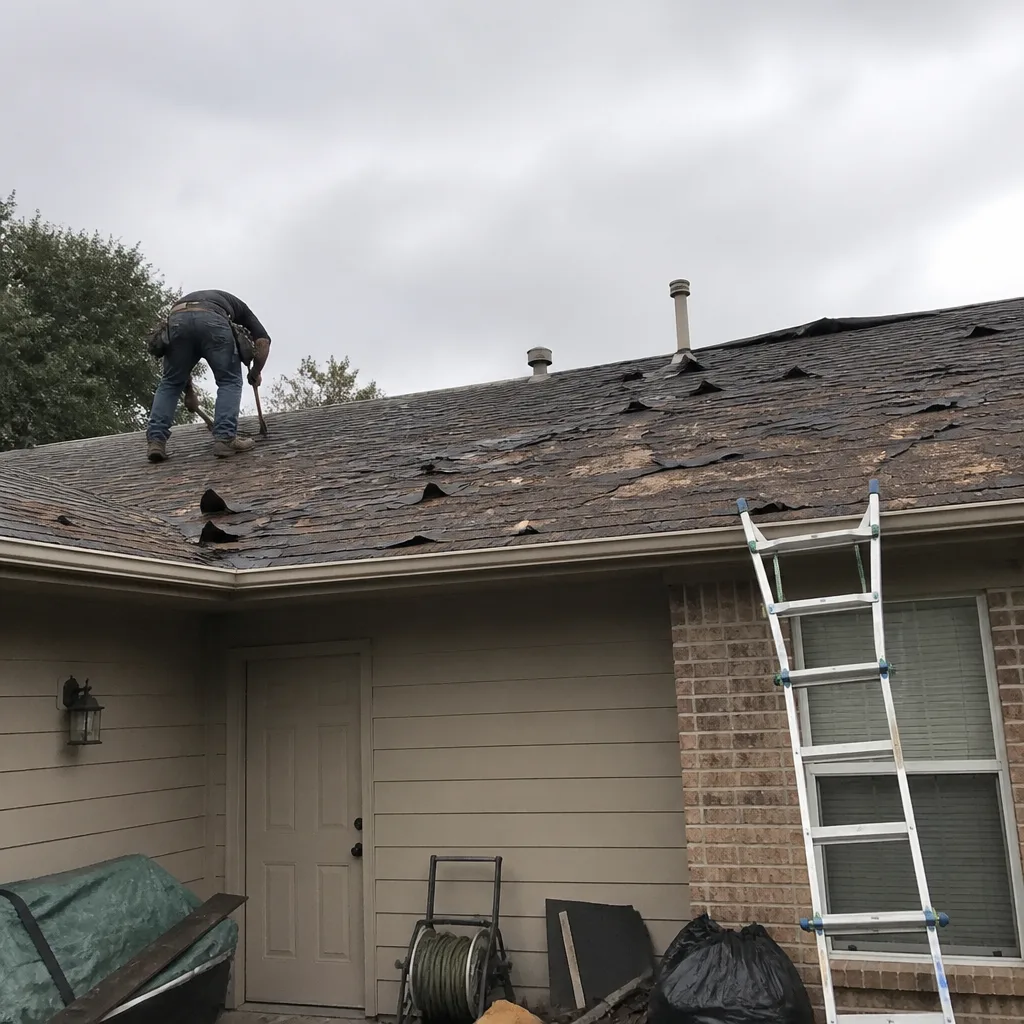 Before
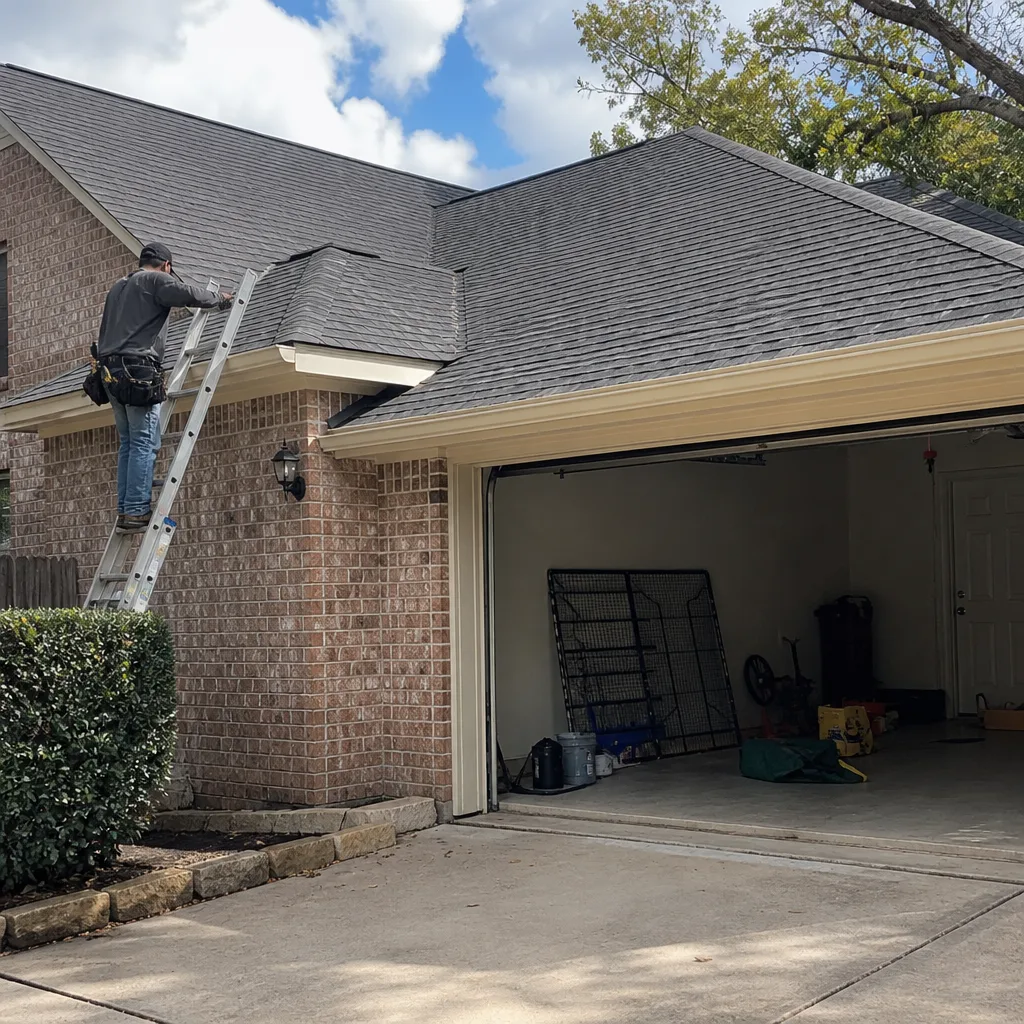 After
After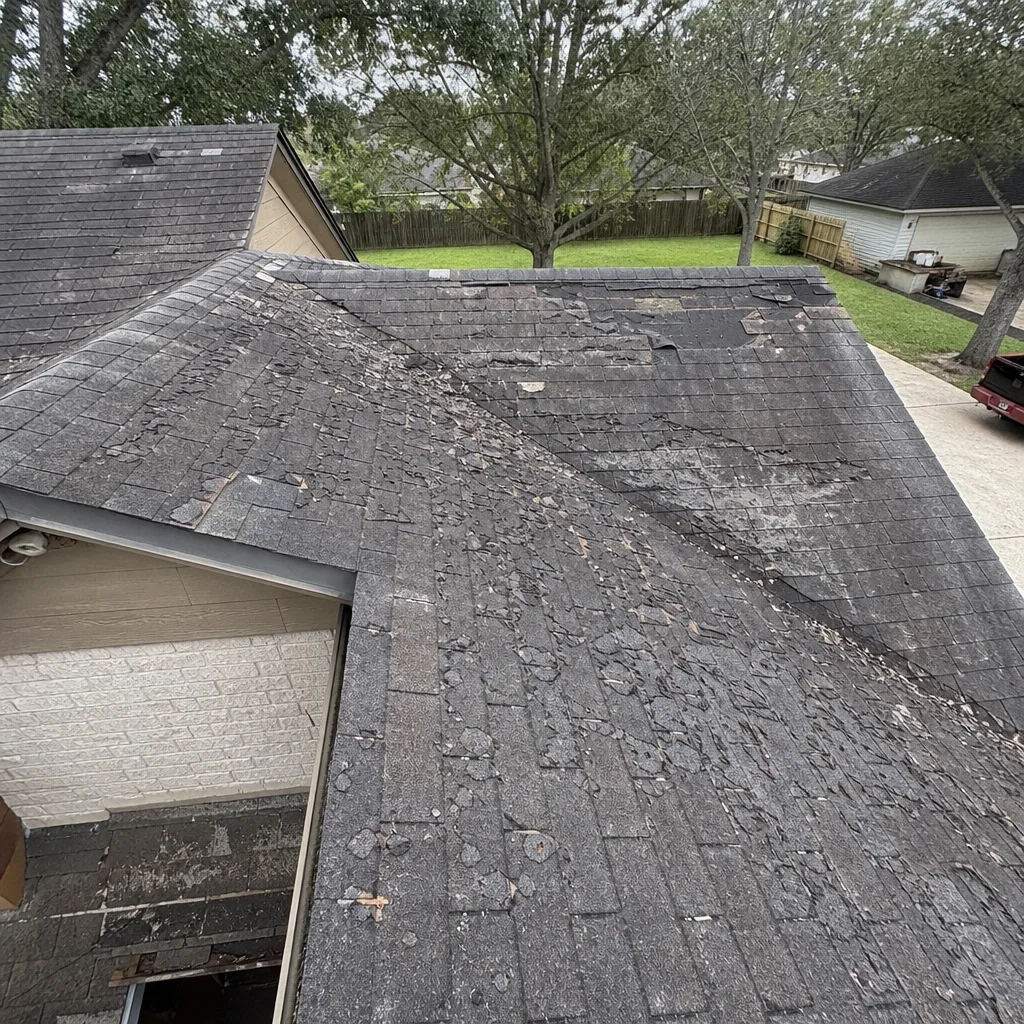 Before
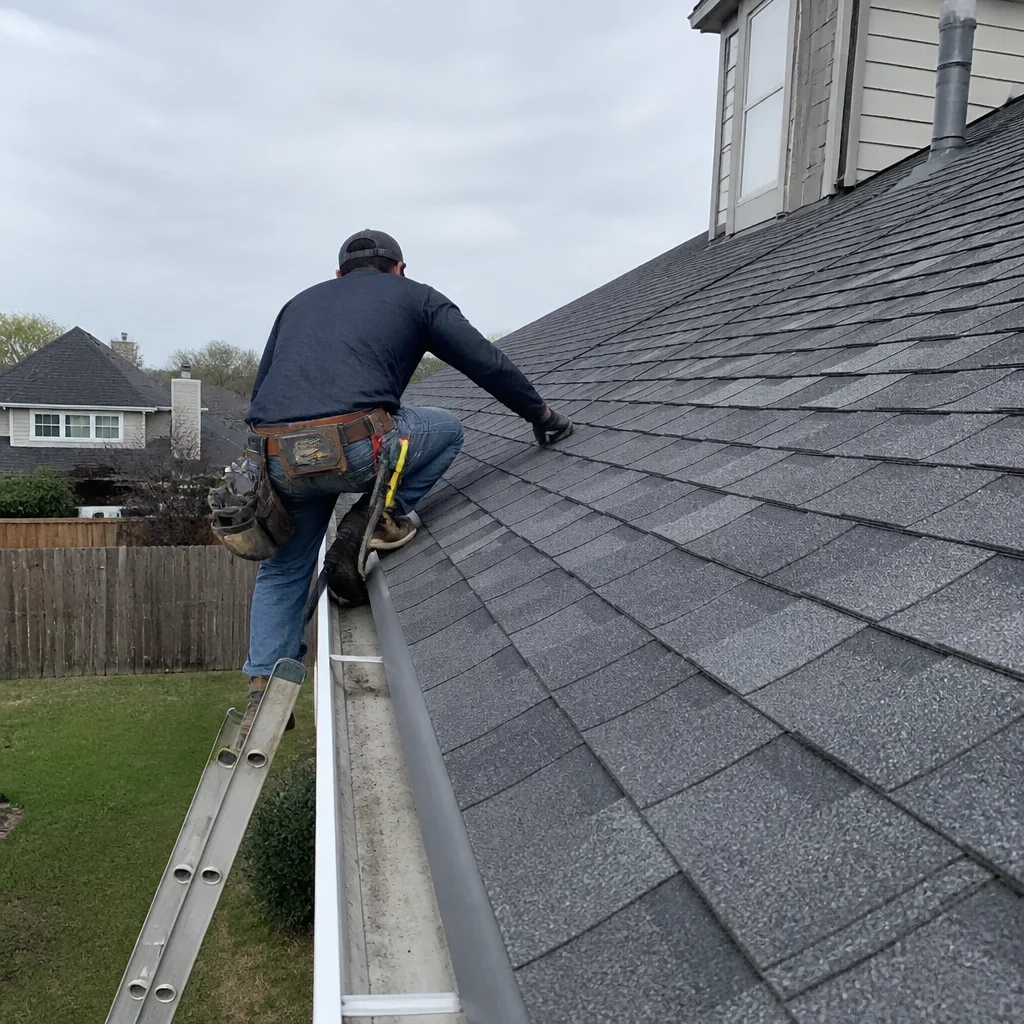 After
After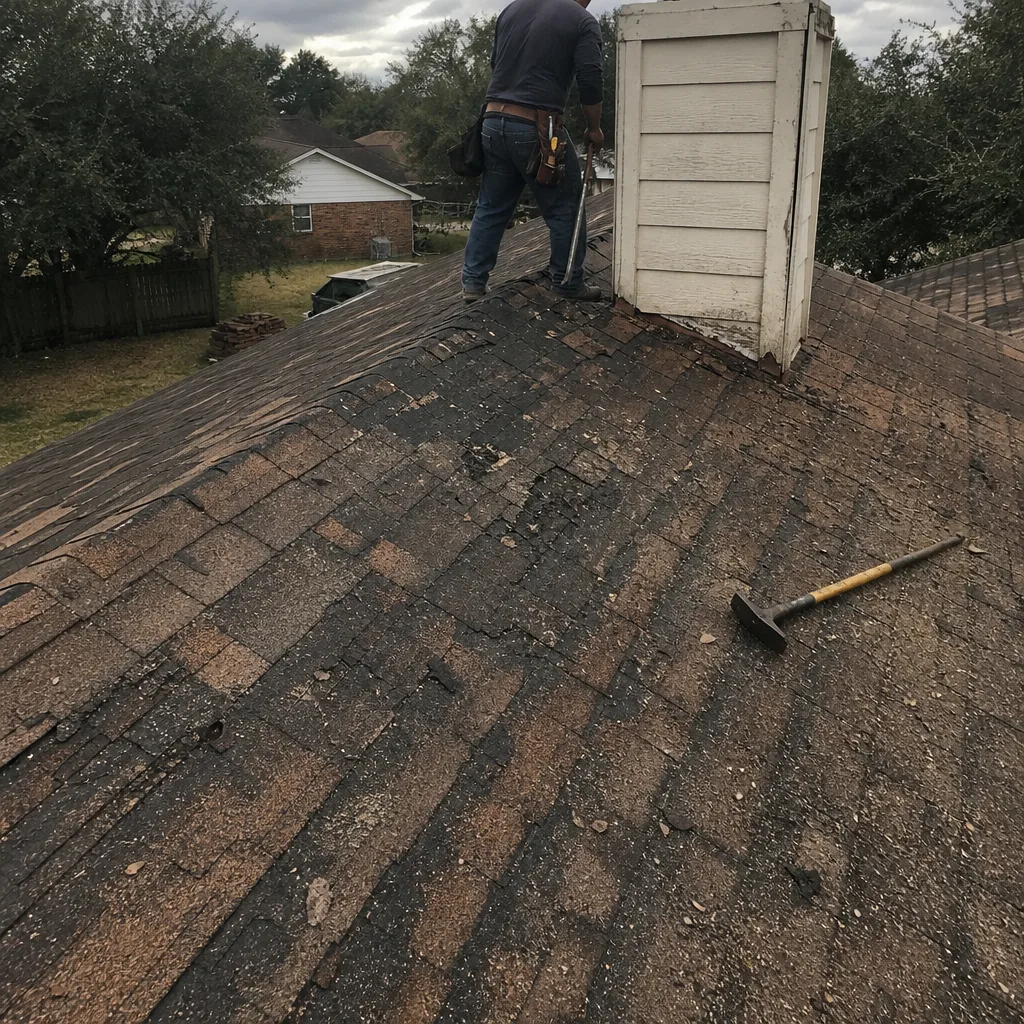 Before
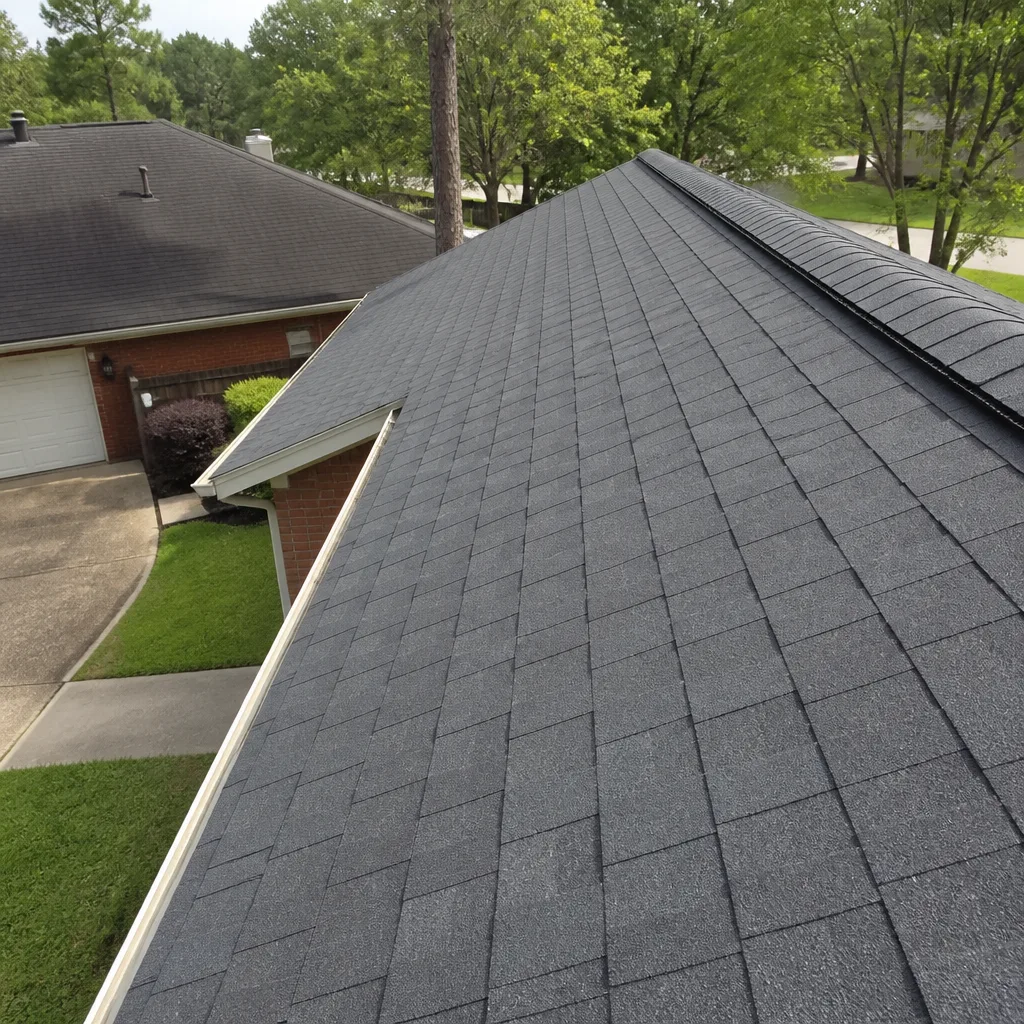 After
After