
Last updated October 17, 2026
 Metal roofing
 Architectural shingles
 Tile roofing
 GAF
GAF Owens Corning
 Flat & low-slope
Free roof inspection with deck photos before we talk money - GAF and Owens Corning certified installation
Seasonal Roofing Care for Houston: Year-Round Homeowner’s Guide
Houston’s mild winters are the most neglected roofing window of the year. From October through February, the city gets its longest stretch of dry, temperate weather, and frankly, almost nobody uses it. Most homeowners wait until a named storm tears through or a leak shows up on the bedroom ceiling. That’s backwards. In the next few minutes, you’ll learn the two-season framework that actually fits Houston’s climate, what to check before hurricane season, why January is the smartest month to book non-emergency repairs, and how to read your shingles after a storm without falling for scare tactics. This guide is written from the ground here in Houston, where we deal with this exact cycle every single year.
Quick Answer
Houston doesn’t have four roofing seasons. It has two: storm season (May through September) and recovery season (October through February). The right care calendar for Houston homeowners is simple: inspect and repair before May, document and triage after any named storm, and use the dry winter window for any non-emergency work you’ve been putting off. Do that, and you’ll spend less money over the life of your roof than the homeowner who ignores it until water is coming through the ceiling.
Styles & brands we work with
Table of Contents
- The Two-Season Framework: Why Houston’s Roof Care Calendar Looks Different
- May Pre-Hurricane Season Checklist: What to Do Before the First Named Storm
- Houston’s UV Problem: How June – September Sun Ages Your Shingles Faster Than Rain
- Post-Storm Triage: What to Document, What to Tarp, What Not to Touch
- Storm Granule Loss: Cosmetic or Structural? How to Tell the Difference
- The January – February Window: Why the Quiet Months Are the Best Time to Repair
- Routine Roof Maintenance Tasks by Season: A Working Checklist
- What Seasonal Roofing Care Costs in Houston: Real Numbers on the Page
The Two-Season Framework: Why Houston’s Roof Care Calendar Looks Different
Any roofing guide that tells you to “prepare for winter” was probably written for Minneapolis or Boston. Houston sits at 29.7 degrees north latitude, about 50 miles from the Gulf of Mexico. Our winters are short and mild. Our summers are long, wet, and hot. The average annual rainfall in Houston is around 49 inches, and most of that falls between May and October, often in concentrated bursts associated with tropical systems or afternoon thunderstorms. The idea of a four-season maintenance calendar doesn’t match the reality of roofs here.
The two-season model works because it aligns with two facts: first, that the vast majority of roof damage in Houston happens during Atlantic hurricane season, which runs from June 1 through November 30, with peak activity from mid-August through late September. Second, that the driest, most predictable stretch of weather in Houston is roughly October through February, when monthly rainfall averages drop and the punishing heat relents. That’s the recovery window, and it’s also the window most homeowners waste.
Think of it this way: storm season is when your roof takes damage. Recovery season is when you fix it. The homeowner who treats those as two distinct phases, and acts accordingly, will get more years out of their shingles than the homeowner who treats roof care as a one-time event after a storm. Here is what each season demands of you.
Storm season (May – September, sometimes into October): Your job is prevention and rapid response. You want the roof sealed, flashed, and secured before the first tropical system forms in the Gulf. Once a storm passes, your job shifts to documentation and triage, which we address in the post-storm section below.
Recovery season (October – February): Your job is scheduling. The weather is dry, demand is lower, and crews have open capacity. This is when you get the non-emergency repairs done, replace a roof that’s nearing end-of-life, or address small issues you flagged during storm season. You don’t need to wait for a leak to justify the work.
This framework comes from years of working on Houston roofs, including neighborhoods like Meyerland, Kingwood, and Clear Lake, where the same cycle repeats annually. The homeowners who book inspections in April and repairs in January are the ones who avoid the August panic.
For a deeper look at repair timing and pricing specific to this market, see our page on Roof Repair in Houston.
May Pre-Hurricane Season Checklist: What to Do Before the First Named Storm
Every year, homeowners in Houston tell us the same thing after the first big storm: “I was going to get that looked at in June.” May is the month to act. The Gulf water temperatures are already climbing, and the National Hurricane Center’s forecast for any given season is irrelevant to the basic principle: a named storm is a question of when, not if, in this part of the Texas coast. Here is a six-step pre-season checklist you can complete in a single weekend.
Step 1: Walk the perimeter and look up. From ground level, check for shingles that are visibly lifted, curling, or missing. Look at the roof’s edges, ridges, and valleys. You’re not doing a full inspection from the ground, but you are looking for obvious failures. Anything you see from the yard is a problem that a storm will make worse.
Step 2: Clear debris from valleys and gutters. Houston’s live oaks and pecan trees drop leaves and twigs year-round. When gutters and valleys clog, water backs up under the shingle edge and finds its way into the decking. A clean gutter is not cosmetic; it’s the roof’s drainage system working as designed.
Step 3: Check all flashing points. Flashing is the metal material that seals the roof where it meets a vertical surface: chimneys, vent pipes, skylights, and wall intersections. Caulk and sealant around flashing degrades under constant UV exposure. If you see cracked caulk or exposed nail heads, those are entry points for wind-driven rain, and wind-driven rain is exactly what a hurricane delivers horizontally.
Step 4: Inspect the drip edge. The drip edge is the metal strip along the roof’s perimeter that directs water into the gutter instead of letting it run down the fascia and behind the gutter. Loose or missing drip edge sections allow water to wick into the roof deck edge over time. It’s a $30 part that prevents a $3,000 repair.
Step 5: Check attic ventilation. Go into the attic on a warm day. If it feels like a sauna, your ventilation is inadequate. Proper intake and exhaust vents keep the attic temperature closer to the outside temperature, which prolongs shingle life in Houston’s heat. Look for blocked soffit vents, a ridge cap that’s been painted over, or simple absence of exhaust. This is not a job to address in August.
Step 6: Schedule a professional inspection if anything above is unclear. A Roof Inspection in Houston from Brennan Roofing Co Houston runs on the same principle as everything else we do: you get a written price before any work starts, and the inspection is straightforward. If the roof is healthy, you’ll hear that. If it’s not, you’ll know exactly what it costs to fix before storm season arrives, not after.
If you want a single number to focus on: complete this checklist by the last week of May. Not June. May.
Houston’s UV Problem: How June – September Sun Ages Your Shingles Faster Than Rain
Most homeowners think rain is the enemy of a roof. In Houston, it’s actually the sun. From June through September, Houston’s average daily UV index sits between 9 and 11, which the EPA classifies as “very high” to “extreme.” For asphalt shingles, that means the granules, which protect the asphalt layer from direct sunlight, are getting baked daily. The asphalt underneath dries out, becomes brittle, and loses the flexibility that lets shingles expand and contract. Over time, the shingles crack, curl, or shed granules at an accelerated rate. Houston’s summers degrade asphalt shingles faster than nearly any other U.S. metro outside of Phoenix or Las Vegas.
Here’s the practical implication for timing: the best time to inspect a roof in Houston is not after the hottest stretch of the year, but before it begins. An April or early May inspection gives you a baseline before the thermal stress of the summer sets in. If you wait until September, the inspector is looking at damage that has already occurred. You can’t undo UV damage by “watering” a roof. What you can do is catch a shingle that’s starting to degrade before it becomes a leak.
We see this pattern consistently in Houston neighborhoods with full southern exposure. A roof on a home in West University that takes direct afternoon sun from June through August will age visibly faster than the same shingle on a home shaded by mature live oaks in The Heights. That’s not manufacturer variance; that’s thermal load.
The brands that hold up best under Houston’s sun are those with higher granule adhesion ratings and asphalt formulations designed for high-heat climates. We install materials from leading manufacturer lines including GAF, Atlas, and CertainTeed, and we explain the differences plainly. A shingle rated for northern Illinois winters isn’t the right choice for a Houston July, regardless of what a big-box store display says. The right product for Houston is the one designed for heat and high humidity, not the one with the prettiest color swatch.
If your roof is over 10 years old and has never had a full inspection by a professional, start with our roof inspection service. It’s the cheapest dollar-per-year decision you’ll make on this house.
Post-Storm Triage: What to Document, What to Tarp, What Not to Touch
After a named storm passes through Houston, the impulse is to climb a ladder and start fixing things. That’s the wrong order. The right order is document, triage, tarp, then wait. Here’s the step-by-step process we recommend to every Houston homeowner after a significant wind event or tropical system.
- Photograph everything before moving anything. Walk the property and photograph the roof from every angle you can reach from the ground. Document lifted shingles, exposed decking, damaged flashing, and any debris on the roof. Use your phone’s timestamp feature. If you have a drone, use it. These photos become the baseline for your insurance claim. Without them, you’re arguing from memory.
- Check the attic for water intrusion. Look for wet insulation, water stains on the underside of the decking, or drips around penetrations. Mark the location of every stain with painter’s tape. This is the evidence that links a roof failure to interior damage, and adjusters need that link.
- Document ceiling stains inside the home. Same process. Photo, timestamp, mark the perimeter of the stain with a pencil so you can track whether it’s growing. A stain that grows after the storm means active water intrusion; a stable stain means the leak stopped and the roof has dried.
- Tarp only what is actively leaking. A tarp is triage, not a repair. It prevents further water damage while you wait for the adjuster and contractor. Do not tarp a hole that isn’t leaking. Do not nail a tarp over a vent pipe or chimney. Only tarp the area that is taking on water.
- Do not remove any damaged material until the adjuster has seen it. This is the rule that costs Houston homeowners thousands every year. If you tear off the damaged shingles and throw them in the dumpster before the adjuster documents them, the insurance company has no obligation to pay for that section. Leave the evidence in place. Let the adjuster photograph what the storm did.
- Call your insurance company before you call a roofer. File the claim first. Get the claim number. Then call the roofer. The order matters because the adjuster’s scope of work is what determines what gets covered. We’ve seen claims denied or reduced because a contractor started work before the adjuster visited, and the insurance company couldn’t verify the damage.
One more note: after a severe storm, be wary of door-knocking contractors. A legitimate Houston roofer does not need to canvas the neighborhood the day after a hailstorm to find work. The Brennan Roofing Co Houston home page explains our standard in detail: written price before any work starts, background-checked uniformed technicians on every job, and no surprises at the door. That standard doesn’t change just because a storm created urgency.
Storm Granule Loss: Cosmetic or Structural? How to Tell the Difference
Every asphalt shingle sheds granules over time. That’s normal wear, like tire tread wearing down on a car. After a hailstorm or a violent wind event, however, granule loss can accelerate suddenly, and homeowners are often told by contractors that any visible granule loss means the roof needs replacement. That’s not always true. Here’s how to tell the difference between cosmetic loss and real remaining-life reduction.
Cosmetic granule loss shows up in the gutters as a light sprinkling of granules after a storm. The shingles themselves still have full granule coverage across the surface. Look at the shingle from ground level: if the asphalt underneath is not visible, the shingle is still doing its job. The granules protect the asphalt from UV radiation, but a minor loss doesn’t immediately compromise that function. You’ll also see a small amount of granule accumulation in your gutters every single year in Houston, storm or no storm. That’s ordinary wear.
Structural granule loss is different. Look for bald patches on the shingle surface where the black asphalt layer is exposed and visible. Look for granules accumulating in specific zones of the gutter, especially under valleys or below roof penetrations, rather than a light even distribution. And check the shingle edges: if the edges are curling or the matting underneath is visible through the surface, the shingle has lost its protective layer and its remaining life is measured in months, not years.
There’s a simple test you can do from the ground with a pair of binoculars: look at the roof on a sunny morning after it has rained. If sections of the roof appear shiny or glassy in direct sun where other sections appear matte, those shiny sections are granule-depleted. Water is sitting directly on asphalt. That’s a structural concern, not a cosmetic one.
The other factor is hail size. NOAA storm data for the Houston area shows that hail under 1 inch in diameter rarely causes functional granule loss on a shingle that’s in good condition. Hail 1.25 inches or larger is where you should start taking the possibility of genuine damage seriously, especially on a roof that’s already 10 years old or older. If you’re not sure which category your roof falls into, this is exactly what a roof inspection is for. We’ll tell you if the granule loss is cosmetic or whether the roof has measurably less life left in it, and the written assessment is the same either way.
The January – February Window: Why the Quiet Months Are the Best Time to Repair
Houston has a seasonal pattern in the roofing industry that works in the homeowner’s favor if you know it exists. From March through September, roofing companies are booked solid, working through heat, thunderstorms, and whatever the Gulf decides to send. From October through February, demand drops. The phone rings less. Crews have open days. And here’s the part most homeowners don’t realize: the pricing doesn’t change because the calendar says February. A repair in January costs the same as a repair in July, but you’re getting a very different experience.
In our experience at Brennan Roofing Co Houston, January and February are the optimal months to schedule non-emergency work for four reasons. First, scheduling is flexible. You can pick a day that works for you, not take the first available slot three weeks out. Second, the weather is cooperative. Dry, cool days mean the crew is not fighting heat exhaustion or afternoon thunderstorms that shut down the job at 2 p.m. Third, materials are typically in steady supply from manufacturer lines like Tamko, Atlas, and Boral, because the post-storm spike in demand hasn’t started yet. And fourth, a repair done in January is one less thing that can fail when the first tropical system forms in June. You’re not buying a repair; you’re buying time.
The homeowner who calls us in February with a slightly lifted shingle or a small flashing crack gets that fixed in days. The homeowner who waits until a named storm has knocked out power across three counties gets put on a list. The job is the same. The timing is not.
This is not an argument for unnecessary work. If your roof is healthy, an inspection will say so, and you should keep your money. But if you know there’s a small issue and you’ve been waiting for the “right time,” the right time is the slow season. It’s the only season in Houston where you control the schedule instead of the weather controlling it.
Need a ballpark of what repairs actually cost here? Our Roof Repair in Houston page breaks down real dollar ranges for common repair types, in writing, before any work starts.
Routine Roof Maintenance Tasks by Season: A Working Checklist
Here is the entire maintenance framework in checklist form. Print it. Save it. Run through it in April and again in October, and you’ll catch most problems before they become emergencies.
April / May (Pre-Storm Season):
- Clear gutters and downspouts of winter debris.
- Visually check for lifted, cracked, or missing shingles.
- Inspect flashing around chimneys, vents, and skylights for cracked sealant or exposed fasteners.
- Check drip edge for loose or missing sections.
- Verify attic ventilation is working; ensure soffit vents are not blocked by insulation.
- Trim tree branches that hang within 6 feet of the roof surface.
- Schedule a professional inspection if this is the first check in 12+ months.
June through September (Storm Season, Active Monitoring):
- After any hailstorm or wind event, do the granule loss check described above.
- Photograph the roof immediately after any significant storm.
- Check gutters monthly; Houston’s summer storms drop leaves and twigs faster than you think.
- Look for water stains on ceilings after heavy rain, especially around penetrations.
- If a leak appears, tarp the affected section and call your insurer before any repair work.
October through February (Recovery Season, Active Repair):
- Schedule any repairs you identified during storm season but didn’t address.
- Perform a full post-season inspection, including attic and decking check.
- Consider replacement if the roof is 15+ years old and showing granule loss, curling, or multiple repair points.
- Book the work for January or February to take advantage of the slow season.
- Document everything in writing before any work starts.
This is a maintenance schedule, not a panic schedule. The whole point is to replace the cycle of “react to problem, scramble for contractor, pay expedited pricing” with “inspect, flag, schedule, fix.” That’s what The Garrison Standard is built around: written price before any work starts, background-checked uniformed technicians who show up inside the promised window, and a full-year written guarantee on every job. The standard doesn’t change with the season.
What Seasonal Roofing Care Costs in Houston: Real Numbers on the Page
You should not have to call a roofer just to get a ballpark. Here are the real dollar ranges we see in Houston for common seasonal roofing tasks, based on the local market in 2025. These are ranges, not quotes. Your exact price depends on roof pitch, access, and materials, but this gives you a working number before you ever pick up the phone.
- Professional roof inspection: $150 – $350. We do these in writing, with photos, and the price is confirmed before the appointment.
- Gutter cleaning (single-story, typical suburban home): $150 – $300. Steeper or larger roofs run higher.
- Small shingle repair (a few lifted or missing shingles, no structural damage): $250 – $500.
- Flashing repair or replacement (chimney, vent pipe, or wall intersection): $350 – $850 depending on the type and location.
- Drip edge replacement (partial section): $300 – $600.
- Full roof replacement (asphalt shingle, average Houston home): $9,000 – $18,000 depending on size, pitch, and material line. Premium lines like GAF or CertainTeed with upgraded underlayment run toward the higher end.
- Storm tarp installation (emergency, post-storm): $300 – $600 same day, depending on roof access.
These numbers matter because they let you plan. If a January inspection turns up a flashing issue that costs $450 to fix, you can write that check without stress because you know it’s a fair number for Houston. The alternative, waiting until that flashing failure becomes a leak that rots decking and stains ceilings, turns a $450 repair into a claim or a multi-thousand-dollar repair. Seasonal care is not about spending money; it’s about spending the right amount at the right time. Brennan Roofing Co Houston is a Roofing Company in Houston that puts the price on paper before any work begins, every time, no exceptions. That’s the starting point for any conversation we have about your roof.
Common Mistakes to Avoid
- Waiting until “a problem” means a visible leak. By the time water is coming through the ceiling, the roof has already failed at multiple points. A leak is the last symptom, not the first. In Houston’s climate, small flashing failures and granule depletion can sit unnoticed for months before the first interior stain shows up.
- Ignoring the January – February window and then paying summer prices for the same work. The work costs the same in January as it does in July, but the scheduling, the crew attention, and the availability of materials are all better in the slow season. You’re paying the same price for a worse experience by waiting.
- Climbing on the roof to “fix” a lifted shingle yourself. A steep Houston roof with morning dew or post-rain moisture is a falling hazard, and the ridge and edge shingles are often more damaged than they look from the ground. And never, under any circumstances, attempt to work on a roof after a storm when surfaces are wet and unpredictable. That’s a job for a professional with the right safety equipment.
- Signing with a door-knocking contractor the day after a storm. Legitimate Houston roofers don’t canvas neighborhoods. The contractor who knocks on your door after a hailstorm is working on volume, and the quality of the work reflects that. The Garrison Standard exists specifically because homeowners kept getting burned by exactly this model.
- Deleting photos before the adjuster visit. Those time-stamped photos you took the day after the storm are the single most valuable piece of evidence in your claim. If you wait two weeks and then photograph the roof, the insurance company will argue the damage happened after the storm date. Document immediately.
- Assuming “a little granule loss” is always harmless. Sometimes it is. Sometimes it’s the early signal of a shingle that’s lost its UV protection and has two or three more Houston summers before it cracks through. The only way to know is to look at the roof as a whole, not one spot in the gutter.
- Skipping the May inspection because “nothing happened last year.” Houston didn’t get a direct hit last year, which is exactly why this year is more dangerous. The roof that survived two quiet seasons is now six months older and hasn’t been checked in 18 months. Time is not on the side of an unmaintained roof in this climate.
See the difference
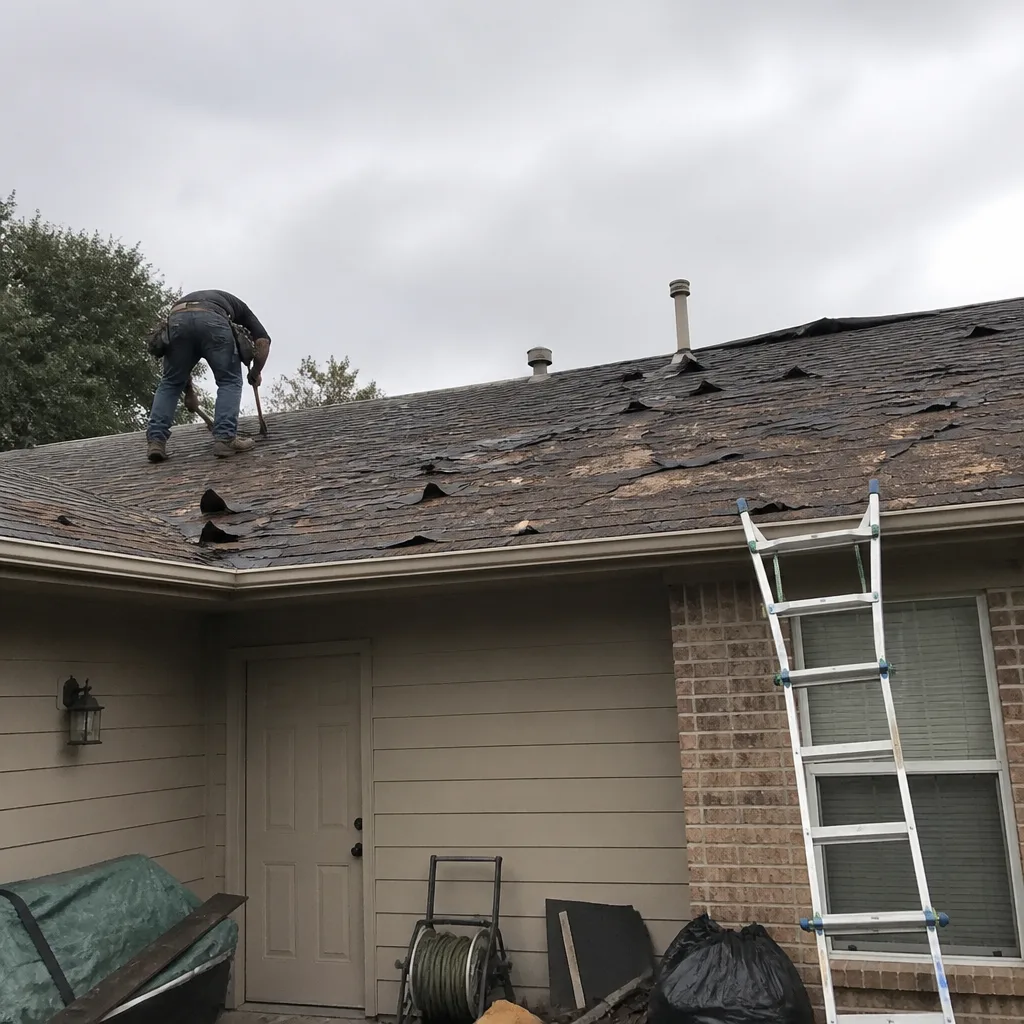 Before
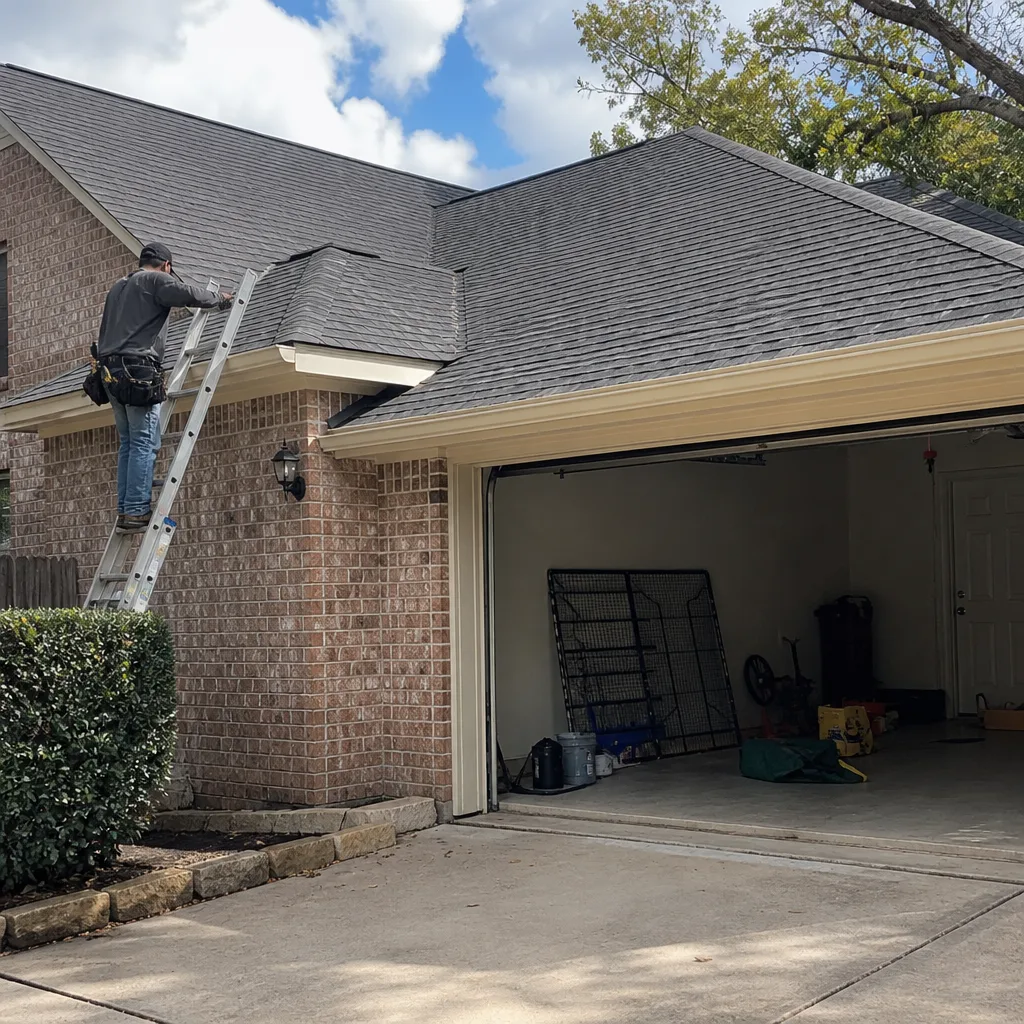 After
After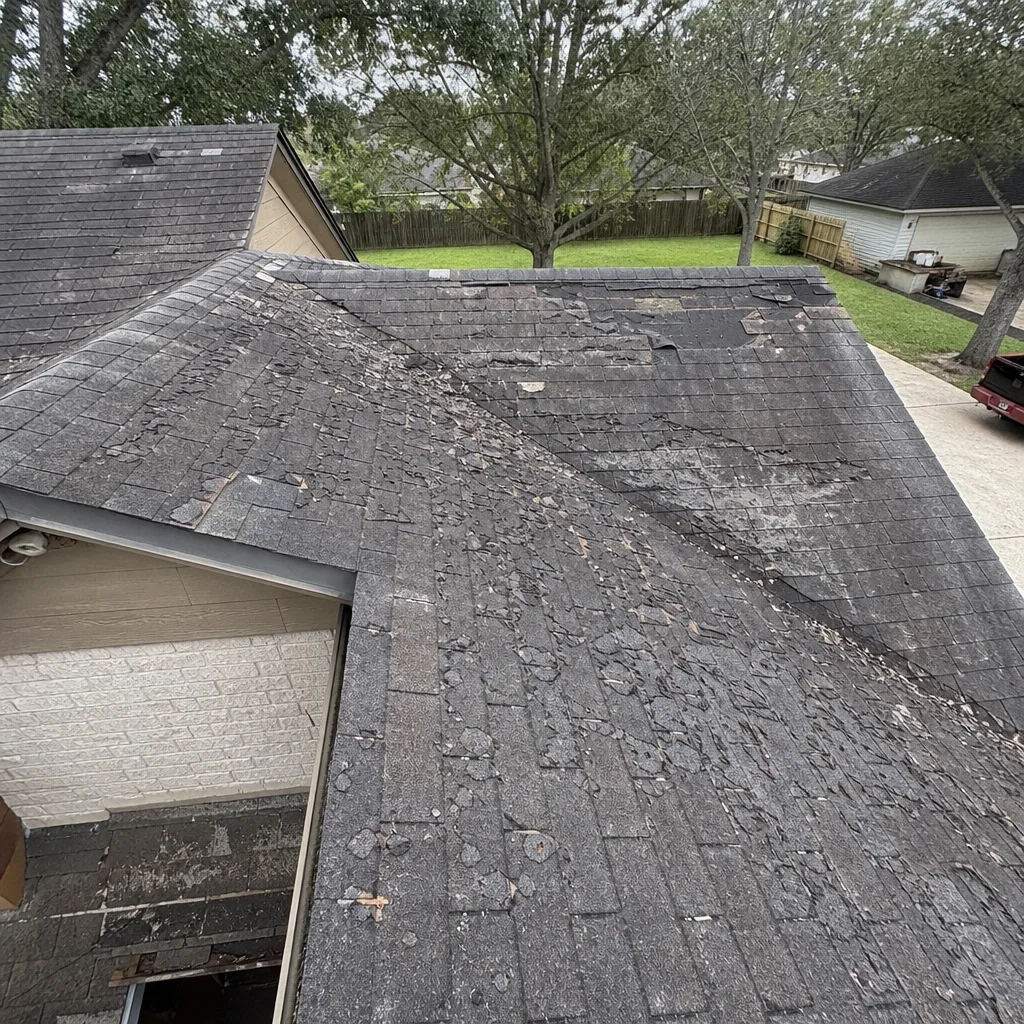 Before
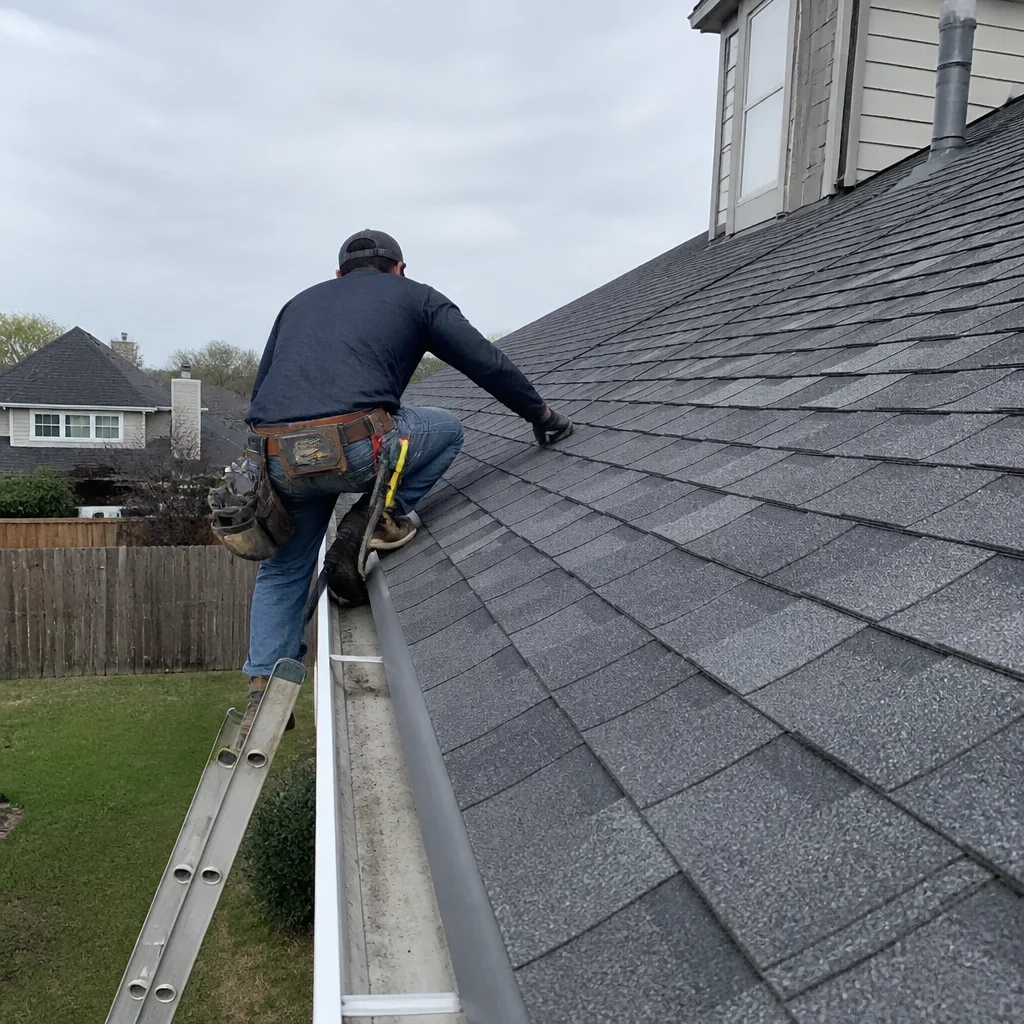 After
After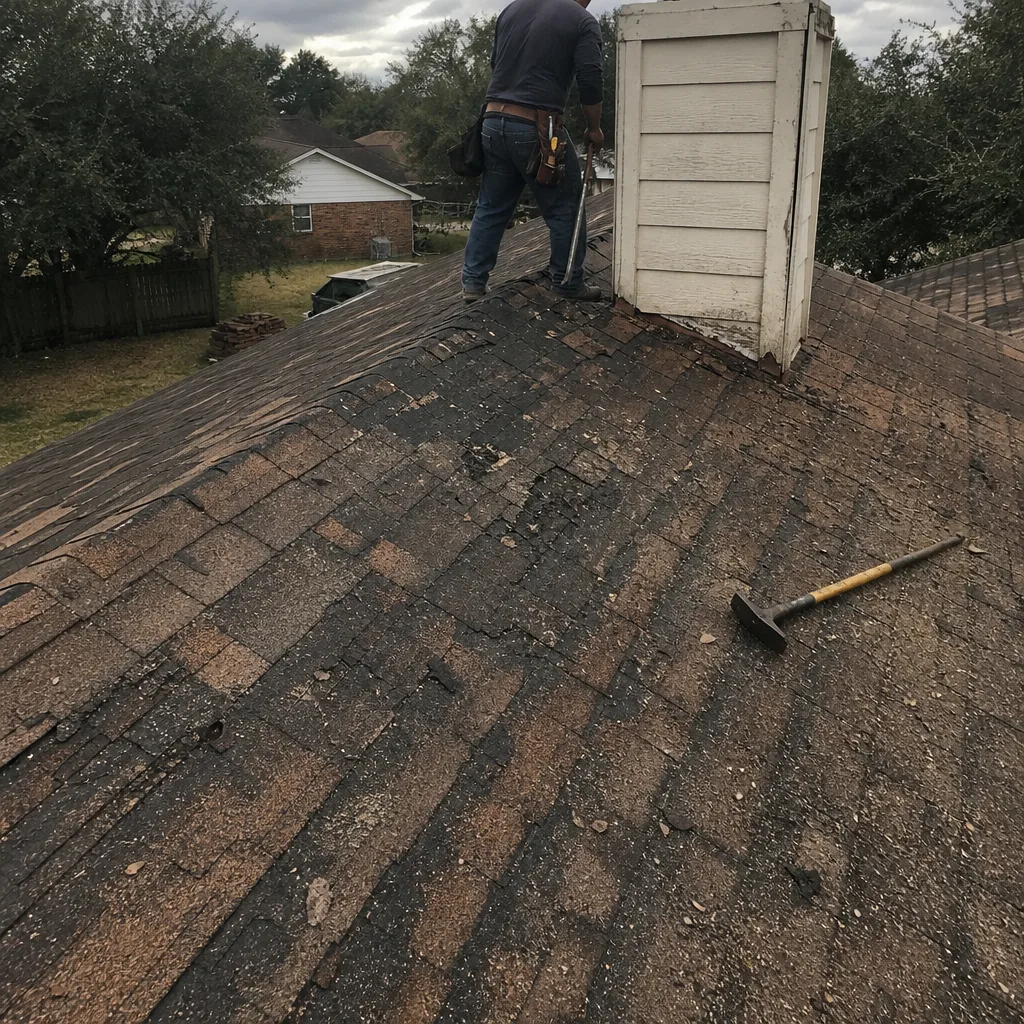 Before
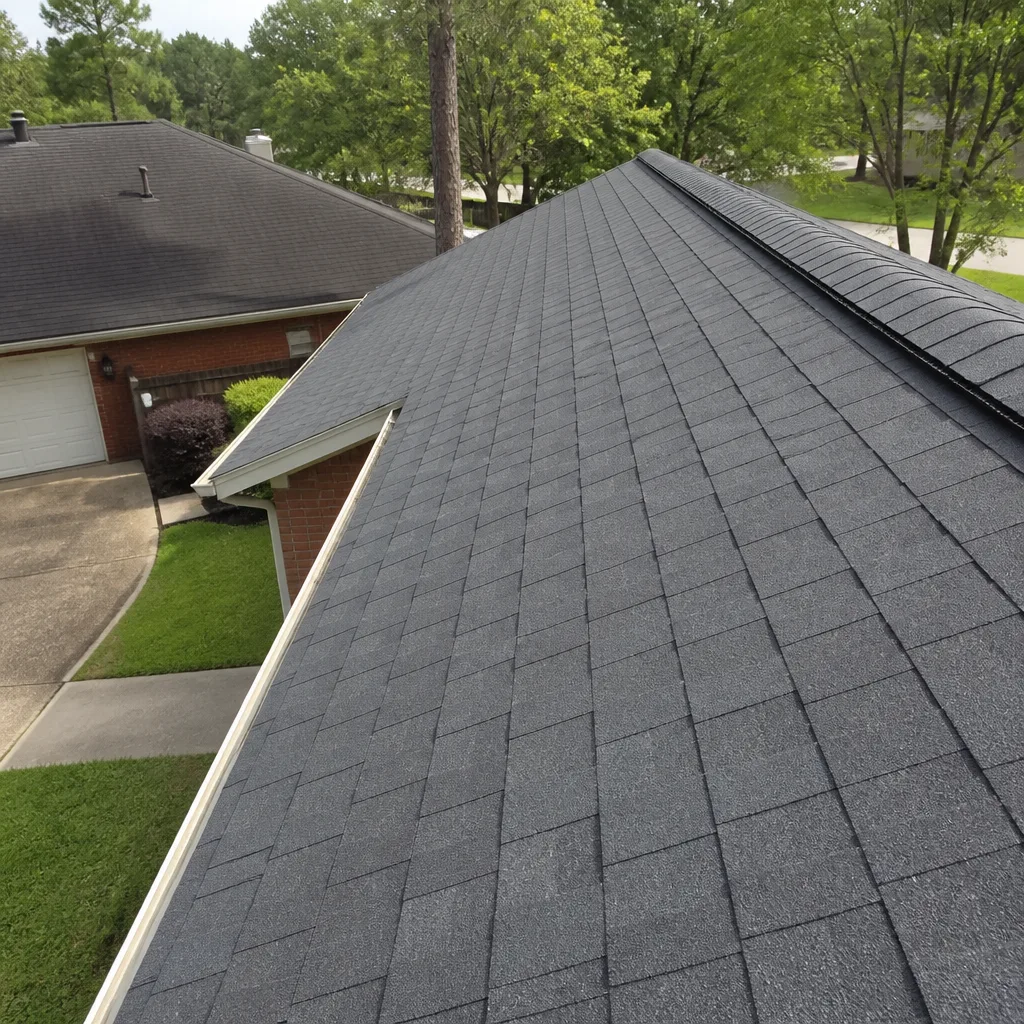 After
AfterWhen to Call a Professional
Call a professional when you see any of the following: water stains on the ceiling after rain, lifted or missing shingles visible from the ground, persistent granule accumulation in a single area of the gutter, cracked sealant around flashing, daylight visible through the attic decking, or a roof that’s 15 years old and has never had a full inspection. Also call after any storm with hail over 1 inch or winds over 60 mph, even if nothing looks obviously wrong from the yard. The damage after a Houston storm often hides in the flashing and the decking, not in the shingles you can see from the driveway. Brennan Roofing Co Houston offers free estimates in Houston, and you’ll get a written price before any work starts. Call (940) 461-8481 to schedule one.
Frequently Asked Questions
In Houston, once per year is the right cadence for most homes, with the inspection scheduled in April or early May before the summer heat and hurricane season begin. If your roof is over 10 years old, or if you live in an area with heavy tree cover or full southern exposure, twice per year is not excessive. An annual inspection catches flashing failures and granule loss before they become leaks, and a written inspection report gives you a baseline to compare year over year.
January and February are the best months for roof repair in Houston. The weather is dry and cool, roofing demand is at its lowest, and crews have open schedules. The price for a repair in January is the same as a repair in July, but you’ll get faster scheduling and better working conditions for the crew. If you have a known issue, book it in the winter window. Call (940) 461-8481 for an exact quote; estimates are free.
Yes. Houston’s June through September UV index consistently reaches 9 to 11 on the EPA scale, which dries out asphalt shingles, makes them brittle, and accelerates granule loss. A 30-year shingle in Houston often performs more like a 20-year shingle if it takes full afternoon sun and has marginal attic ventilation. That’s why annual inspections and proper ventilation matter more here than in most U.S. cities.
Photograph the roof and any visible damage from the ground immediately, with timestamps. Check the attic for water stains and mark them. Document any ceiling stains inside the home. If water is actively entering, tarp the affected section. Then call your insurance company and file a claim before scheduling any repairs. Do not remove damaged shingles before the adjuster has documented them, or the insurer may deny that portion of the claim.
In Houston, small shingle repairs typically run $250 to $500, flashing repairs run $350 to $850, and a full asphalt shingle roof replacement on an average home runs $9,000 to $18,000 depending on size, pitch, and material line. These are market ranges, not quotes. Every job with Brennan Roofing Co Houston starts with a written price before any work begins, so there are no surprises at the door.
Yes. Brennan Roofing Co Houston provides free estimates in Houston and the surrounding areas. Our process is the same on every job: a background-checked uniformed technician visits, assesses the roof, and you receive a written price before any work starts. All work is backed by the 365-Day Done Right Promise, a full-year written guarantee with a free return visit at no charge if the repair or installation fails within that period.
The Bottom Line
Houston’s roof care calendar is simple: prepare before May, respond after every storm, and use the dry winter months to get repairs done on your schedule, not the weather’s. The homeowners who follow this two-season framework spend less over the life of their roof, deal with fewer emergencies, and never find themselves waiting on a contractor list while water soaks through the decking. You don’t need to be a roofing expert to maintain a roof in this city; you need a checklist, a calendar, and a contractor who puts the price in writing before any work starts. Brennan Roofing Co Houston has operated under The Garrison Standard since 2000: written price first, background-checked uniformed technicians, a one-year written guarantee, and a live person on the phone whenever you call. That’s the standard, every season.
Written by Travis Oakley, Owner at Brennan Roofing Co Houston, serving Houston since 2000.