
Last updated October 17, 2026
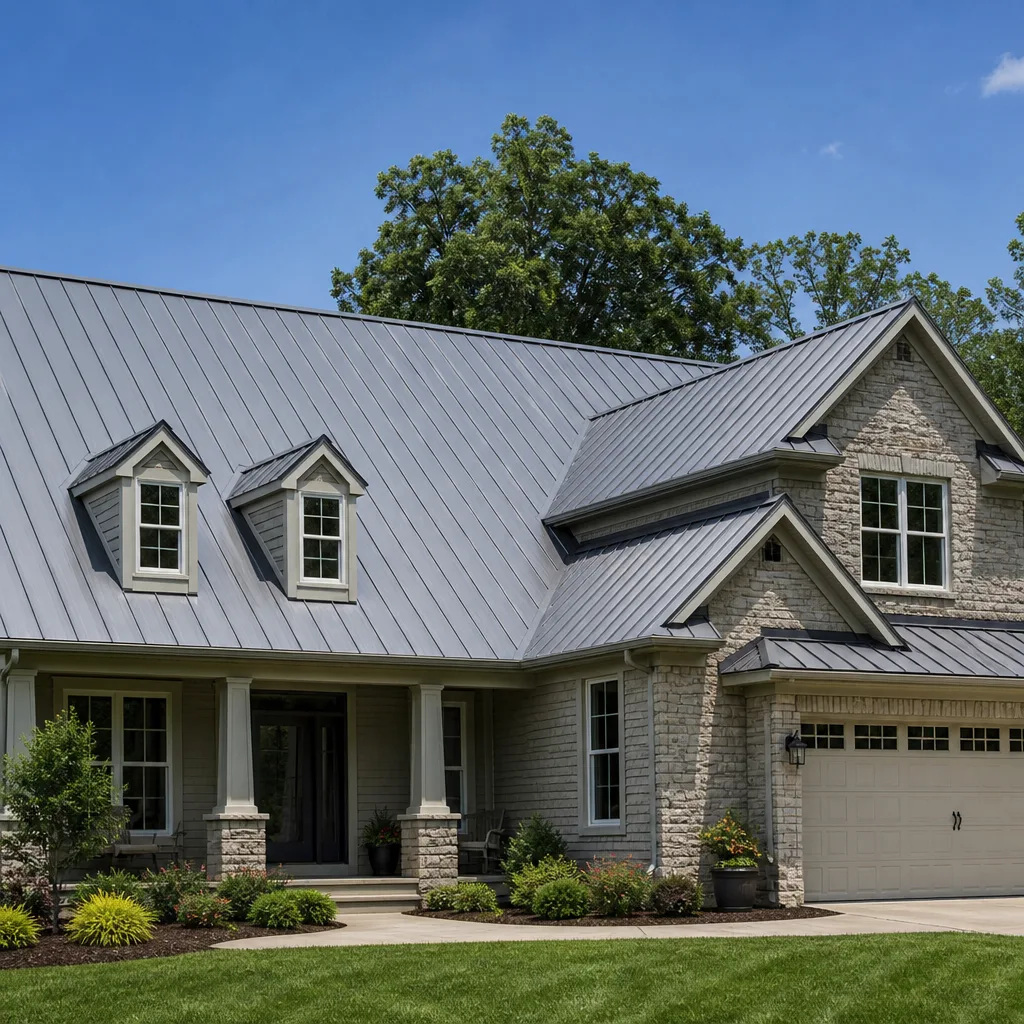 Metal roofing
 Architectural shingles
 Tile roofing
 GAF
GAF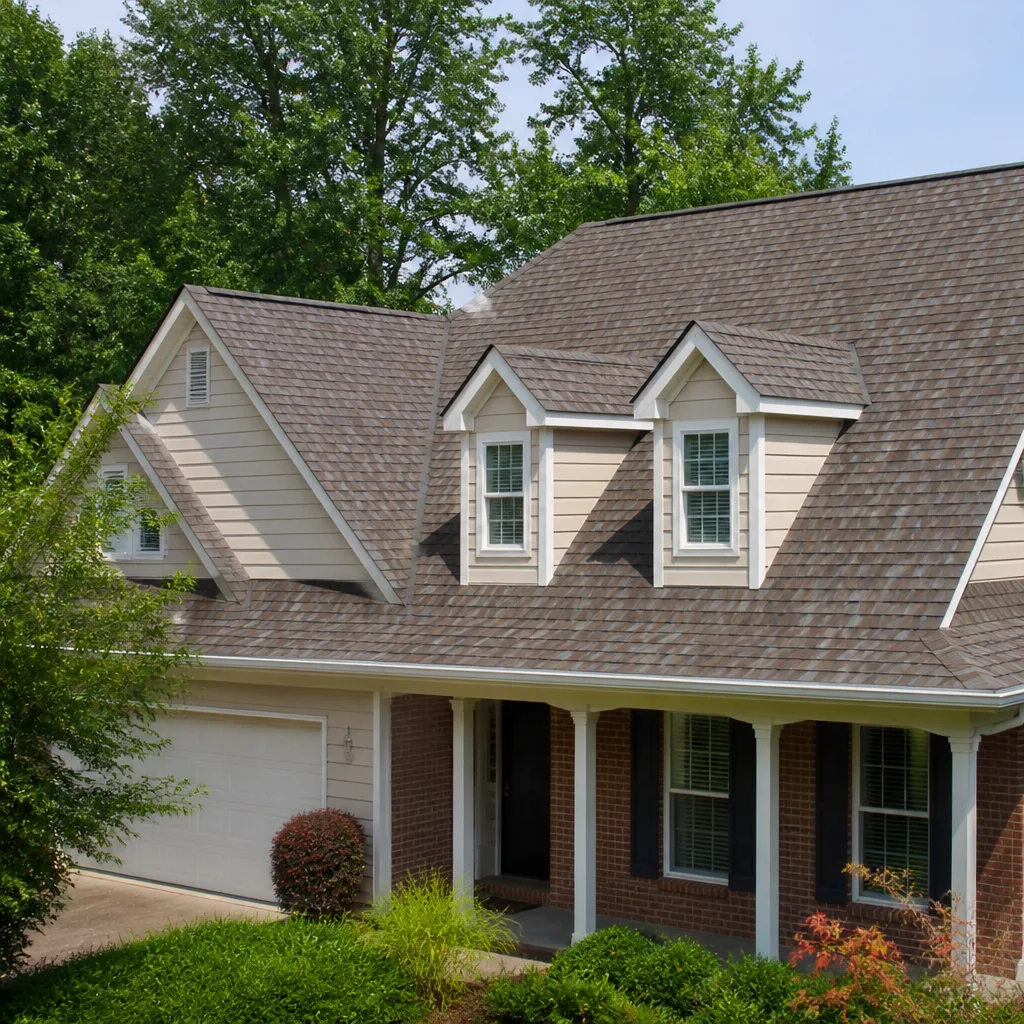 Owens Corning
 Flat & low-slope
Free roof inspection with deck photos before we talk money - GAF and Owens Corning certified installation
Roofing Permits, Codes & Inspections in TX: What You Need to Know
If your house sits in unincorporated Harris County, the City of Houston’s permitting office has zero authority over your roof job. Most Houston homeowners, and a surprising number of contractors, don’t know this until something goes wrong at closing or during an insurance claim. This guide maps the actual permit landscape in the Houston area: which jurisdiction controls your address, what the 2021 International Residential Code changed for reroofing, what a final inspection really checks, and the specific step most guides skip for confirming a permit was pulled in your name before work starts. For the complete guide to roofing in Houston, see our expanded resource.
Quick Answer
Roofing permits in Houston depend on your address: properties inside Houston city limits fall under the City of Houston’s permitting authority, while homes in unincorporated Harris County are governed by Harris County’s separate regulations, and many subdivisions add MUD or HOA overlay requirements on top of either. A roofing permit in Houston typically costs $50 to $150 for residential reroofing, though final fees depend on job valuation and jurisdiction, and skipping a required permit can expose you to insurance claim denial and mandatory disclosure problems when you sell. Most full reroofs in Houston require a permit, while minor repairs under 100 square feet often do not.
Styles & brands we work with
Table of Contents
- The Jurisdictional Split: City of Houston vs. Harris County vs. MUD/HOA
- When a Permit Is Required in Houston (and When It Isn’t)
- What the 2021 International Residential Code Adoption Changed for Houston Reroofing
- What a Roofing Permit Costs in Houston
- What a Final Inspection Actually Checks (and What It Doesn’t)
- Your Liability Exposure When Work Is Done Without a Permit
- How to Confirm a Contractor Pulled a Permit in Your Name: The Step Most Guides Skip
- HOA and MUD Overlay Rules: The Third Layer of Approval
The Jurisdictional Split: City of Houston vs. Harris County vs. MUD/HOA
Houston is one of the few major American cities where the permitting picture changes dramatically based on where your lot line falls. The City of Houston operates its own permitting department through the Houston Permitting Center, and that authority extends only to properties inside the city’s incorporated boundaries. If your mailing address says “Houston” but your house sits in unincorporated Harris County, the City of Houston has no jurisdiction over your roof. Harris County’s permitting regulations apply instead, and they differ in specific ways that matter to your wallet and your legal exposure.
Harris County operates under its own set of rules for unincorporated areas, which include large swaths of neighborhoods like Cypress, Spring, Klein, Atascocita, and parts of Katy that carry Houston postal addresses but fall outside city limits. The county requires permits for structural work including full roof replacements, and it conducts its own inspections through the Harris County Engineering Department. The application process, fee schedule, and inspection protocols are separate from the city’s.
The quickest way to determine which jurisdiction controls your address is to look at your property tax statement or use the City of Houston’s “My City Limits” tool on its website. If the address falls outside city limits, you’re in Harris County territory. If you’re inside city limits, the Houston Permitting Center is your authority. Many subdivisions in the Houston area also have Municipal Utility Districts, commonly called MUDs, that layer additional requirements on top of either jurisdiction, and homeowner associations can impose their own approval processes and material restrictions. We’ve seen homeowners in Spring and Cypress get surprised by a MUD requirement for a re-roof approval letter that no one mentioned until the job was already underway.
When a Permit Is Required in Houston (and When It Isn’t)
A full roof replacement in the City of Houston requires a building permit. A repair of less than 100 square feet of roofing surface generally does not. That’s the plain-language threshold most homeowners need to know, and it’s a clarity point we give to every customer we work with at Brennan Roofing Co Houston home because it determines whether the job falls under inspection authority or not.
Here’s the breakdown for residential roofing work in Houston:
- Full reroof or roof replacement: Permit required in both the City of Houston and unincorporated Harris County. You’re removing the existing roof covering and installing new underlayment and shingles or another roof system. This is structural work under the code.
- Repairs under 100 square feet: No permit required in the City of Houston. This covers small flashing repairs, replacing a few damaged shingles, or sealing a minor leak. Harris County’s threshold is similar for minor repairs.
- Repairs over 100 square feet: Permit required. Once the repair area exceeds roughly one roofing square, the city treats it as a partial re-roof and wants documentation.
- Decking replacement: If the decking underneath the roof covering is compromised and needs replacement, a permit is triggered in most cases, even if the visible repair area is small. Decking is structural.
- Skylight installation or replacement: Changing the roof opening requires a permit. Replacing a skylight within the existing opening generally does not.
The 100-square-foot threshold is the number we tell homeowners to remember. If your contractor says a permit isn’t needed for a full replacement, that’s a roofing warning sign Houston homeowners should watch for. A roof is part of the building envelope, and cities and counties treat envelope work as regulated construction because a bad roof fails inward and damages everything below it.
What the 2021 International Residential Code Adoption Changed for Houston Reroofing
The City of Houston adopted the 2021 International Residential Code, commonly called the IRC, with local amendments, and this adoption changed two things that affect every reroofing project in the city. First, the 2021 IRC strengthened requirements for roof deck fastening in high-wind zones, which includes essentially all of Harris County. Second, the code clarified when a roof covering can be installed over an existing roof covering versus when full removal is required, and Houston’s amendments made that answer stricter than the base code.
The wind provisions matter because Houston sits in a hurricane-prone region. The 2021 IRC requires roof decks in wind-borne debris regions to be fastened with specific nail patterns, and it tightened the requirements for underlayment attachment. If your home was built before the code update and you’re doing a full replacement, the contractor is required to bring the deck fastening up to the current standard where access allows. That’s not red tape. That’s the difference between a roof that stays on in a Category 2 storm and one that doesn’t.
The second change affects the common question of layering. The 2021 IRC generally prohibits installing a new roof covering over more than one existing layer, and Houston’s amendments don’t weaken that. In practice, that means if your house already has two layers of shingles, a third layer is not code-compliant. Full tear-off is required. Even with a single existing layer, the condition of the decking dictates whether layering is allowed, and in Houston’s humidity, we frequently find decking that has to be replaced anyway due to moisture damage.
For Harris County, the unincorporated areas follow the county’s adopted codes, which are also based on the IRC but with county-specific amendments. The practical takeaway is the same: modern reroofing in the Houston area is built around wind uplift resistance and proper deck fastening, not just shingle application. For seasonal roofing care in Houston, wind resistance should be checked before storm season each year. A contractor who quotes a job without addressing deck fastening and underlayment specs may be pricing for code that’s already outdated.
What a Roofing Permit Costs in Houston
A residential reroofing permit in the City of Houston typically runs $50 to $150 depending on the valuation of the job. Harris County permit fees for unincorporated areas are in a similar range, generally $100 to $200 for a full reroof, though the exact number depends on the job’s declared valuation and the current fee schedule. These are ballpark figures, not guarantees. Permit fees change when city councils and county commissioners update schedules, and we’ve seen modest increases over the years.
Here’s what to expect on a typical Houston roofing permit:
| Item | Typical Range |
|---|---|
| City of Houston reroof permit (residential) | $50 – $150 |
| Harris County reroof permit (unincorporated) | $100 – $200 |
| Re-inspection fee (if first inspection fails) | $50 – $100 |
| MUD or HOA approval letter (where required) | $0 – $75 |
The permit fee is a line item in your roofing contract, and the number should be on paper before any work starts. If a contractor wants to handle the permit for you, ask for the permit fee as a separate line item in the written quote. If a contractor says a permit is optional and offers to skip it to save you a hundred dollars, the hundred dollars is not the point. The liability exposure is the point, and that exposure is worth far more than the permit fee.
What a Final Inspection Actually Checks (and What It Doesn’t)
A roofing final inspection in Houston verifies code compliance. It does not verify quality beyond the code’s minimum requirements. That distinction matters, and it’s the reason a passed inspection is not the same thing as a good roof.
When the city or county inspector arrives, here’s what they’re checking:
- Permit visibility: The permit number must be posted on the job site.
- Underlayment type and attachment: The code specifies the minimum underlayment for the roof’s slope and the fastening pattern for the wind zone.
- Decking condition and fastening: Inspector checks that the deck meets structural requirements and is fastened per the 2021 IRC wind provisions.
- Flashing details: Step flashing at sidewalls, counter flashing at chimneys and penetrations, and drip edge at eaves and rakes.
- Roof covering installation: Nail placement and pattern, shingle alignment, and manufacturer’s minimum requirements for the specific product.
- Ventilation adequacy: Intake and exhaust ventilation ratios per code, typically 1 square foot of net free ventilation per 150 square feet of attic space.
What the inspector is not checking: whether the roofer cleaned up all the nails from your yard, whether the shingles were installed with the care that extends the manufacturer’s warranty, whether the crew walked the ridge properly, or whether the underlayment was tucked neatly around penetrations. The inspector is verifying minimum standards. Our industry’s best crews exceed minimums as routine practice, and that’s why we put the Roof Repair in Houston work we do under a written guarantee that goes beyond what any inspection looks at.
One detail that catches people off guard: the inspector is not verifying the condition of the old roof materials underneath the new ones. If a contractor leaves a section of deteriorated decking in place and hides it under new shingles, a standard final inspection may not catch it. A passed inspection is not a substitute for walking the roof with the contractor before the shingles go on.
Your Liability Exposure When Work Is Done Without a Permit
When roofing work that requires a permit is done without one in the Houston area, the homeowner is the party who absorbs the consequences. Not the contractor. That’s the hard truth most guides soften. The contractor may vanish or change a phone number. The homeowner still owns the house, still has the unpermitted roof, and still has to answer for it.
Here are the specific exposures a Houston homeowner faces when required permits are skipped:
- Insurance claim denial: If a storm damages your roof and the insurance adjuster discovers that a prior reroof was done without a required permit, the insurer may deny the claim on the grounds that the structure was modified outside code compliance. This is not hypothetical. Adjusters in Harris County know to look for permit history.
- Resale disclosure requirements: Texas law requires sellers to disclose known material defects. The Texas Seller’s Disclosure Notice specifically asks about unpermitted modifications and additions. If you answer truthfully that the roof was replaced without a permit, you may lose buyers or have to negotiate a price reduction. If you answer falsely, you’ve committed fraud.
- Lender complications: Many mortgage lenders in Texas require attestation that all work was properly permitted before financing closes on a resale. An unpermitted roof can stall or kill a deal.
- Code enforcement action: If the city or county discovers unpermitted roofing work, they can issue a stop-work order, require the work to be opened for inspection, and assess fines. In some cases, they can require the roof to be brought into compliance at your expense.
- Injury liability: If a crew member is injured on your roof and the contractor lacks proper licensing and insurance, the homeowner’s policy may be the target of a claim. Unpermitted work strengthens arguments that due care was not exercised.
The permit is not for the city. The permit is for your protection. It creates a paper trail that proves the work was done under inspection authority, and that paper trail is what protects you at claim time and resale time. In our experience at Roof Inspection in Houston, homes with complete permit histories sell more cleanly than homes without them, and the difference is not small in a market as competitive as Houston’s.
How to Confirm a Contractor Pulled a Permit in Your Name: The Step Most Guides Skip
Most guides tell you to ask your contractor if they pulled a permit. That’s the step everyone knows. The step most guides leave out is verifying it yourself, in the system, before the crew starts tearing off your roof.
Here’s the specific sequence to follow:
- Get the permit number in writing before work starts. The contractor’s quote or contract should list the permit number. If the contractor says the permit is “on the way” or “getting filed this week,” wait. No permit number, no tear-off.
- Look up the permit in the City of Houston’s online portal or Harris County’s online system. Enter the permit number and your address. Confirm the permit is active, issued in your name, and lists the scope of work as roofing. If the permit is in the contractor’s name only, that’s acceptable in many cases, but your name should appear as the property owner of record.
- Verify the permit is for the right address. This sounds obvious, but permit data entry errors happen. Confirm the street number, street name, and any unit or lot number match your property exactly.
- Photograph the permit card posted on the job site. The permit must be displayed. If the crew shows up with no permit posted, call the contractor and stop the job.
- Request the final inspection sign-off afterward. After the job is done, verify that the jurisdiction closed the permit with a passed final inspection. In Houston and Harris County, open permits can be viewed online. An open permit on your property will show up in a title search when you sell.
This verification routine takes about fifteen minutes. It’s the single strongest move you can make to protect yourself from the worst outcomes in this guide. The contractor who encourages you to verify is the contractor who has nothing to hide. The contractor who makes the permit feel like a hassle is the one to walk away from.
HOA and MUD Overlay Rules: The Third Layer of Approval
If you live in a Houston-area neighborhood with a homeowners association, a municipal utility district, or both, you may face a third layer of approval above and beyond the city or county permit. HOAs in neighborhoods like Kingwood, Clear Lake, The Woodlands, and hundreds of master-planned communities across the Houston metro commonly require architectural review before a reroof begins. MUDs may also require documentation that the roof work complies with district drainage standards.
Here’s what to check before you sign a roofing contract in an HOA or MUD community:
- Read your HOA’s covenants, conditions, and restrictions, commonly called CC&Rs. Look for the section on architectural modifications and exterior changes. Roofing is almost always covered.
- Check for an approval letter or ARC application requirement. Many HOAs require written approval before the work begins, with a defined review window, typically 30 to 45 days. Some charge a filing fee. Build this into your timeline.
- Check for material restrictions. Some HOAs restrict the color, brand, or type of roofing material. A common restriction is requiring architectural shingles rather than 3-tab, or restricting metal roofing in certain sections. Manufacturers like Owens Corning and Atlas make architectural lines in a wide enough range that you can usually satisfy an HOA restriction without compromising quality.
- Ask your MUD if a re-roof requires documentation. Some MUDs want to see that the roof’s drainage plan wasn’t altered by the reroof. This is typically a simple letter, but missing it can create an issue at sale.
- Give your contractor the approval letter before the job date. A good contractor will note the HOA and MUD requirements in the contract and build the timeline around them.
We’ve handled reroofs in Houston neighborhoods where the HOA approval added six weeks to the timeline. If you’re replacing a roof before a storm season or before a home sale, that approval window matters. Start the HOA process the same week you accept a roofing bid.
Common Mistakes to Avoid
- Taking “you don’t need a permit” at face value. Some contractors in Houston skip permits to save time or because they have issues with their own licensing standing. If the job requires a permit and a contractor tells you otherwise, get a second opinion. The homeowner is the one who pays for the mistake.
- Assuming your Houston mailing address means City of Houston rules. Large sections of Harris County use Houston postal addresses but fall outside city jurisdiction. Check your authority before you assume anything about permits.
- Paying the full job price before the final inspection passes. A reasonable payment schedule holds the final portion until the permit is closed. Contractors who demand full payment before inspection are asking you to carry all the risk.
- Skipping the HOA review because the job “isn’t a big change.” Many Houston HOAs treat any reroof as an architectural change requiring approval. If you skip it, the HOA can fine you and require you to replace a non-compliant roof.
- Not checking the permit status before the crew arrives. The permit should be active and posted on the job site before any tear-off starts. A crew that begins without a posted permit is a sign the contractor didn’t do the paperwork.
- Failing to keep the permit and inspection records with your home documents. When you sell, the buyer’s title company will ask about permits. Having the records in a folder beats trying to reconstruct them five years later.
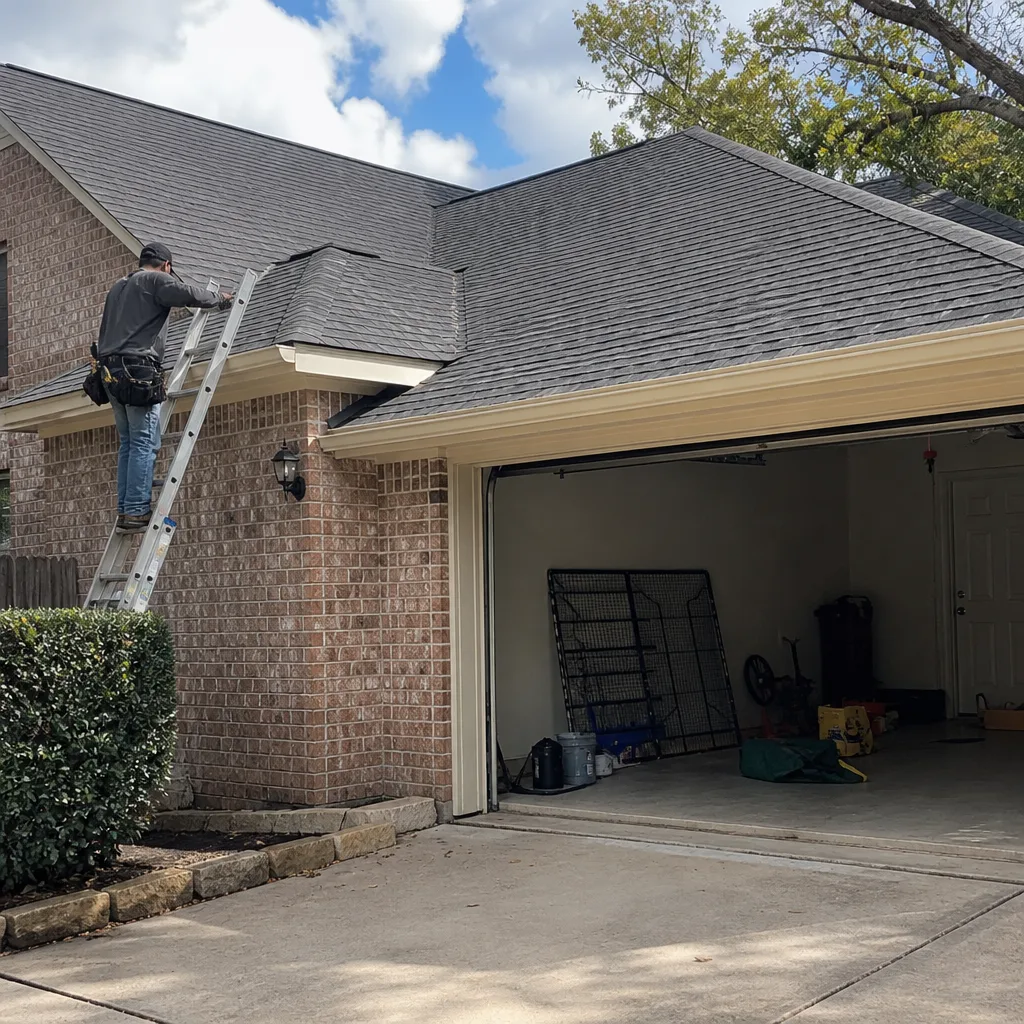
See the difference
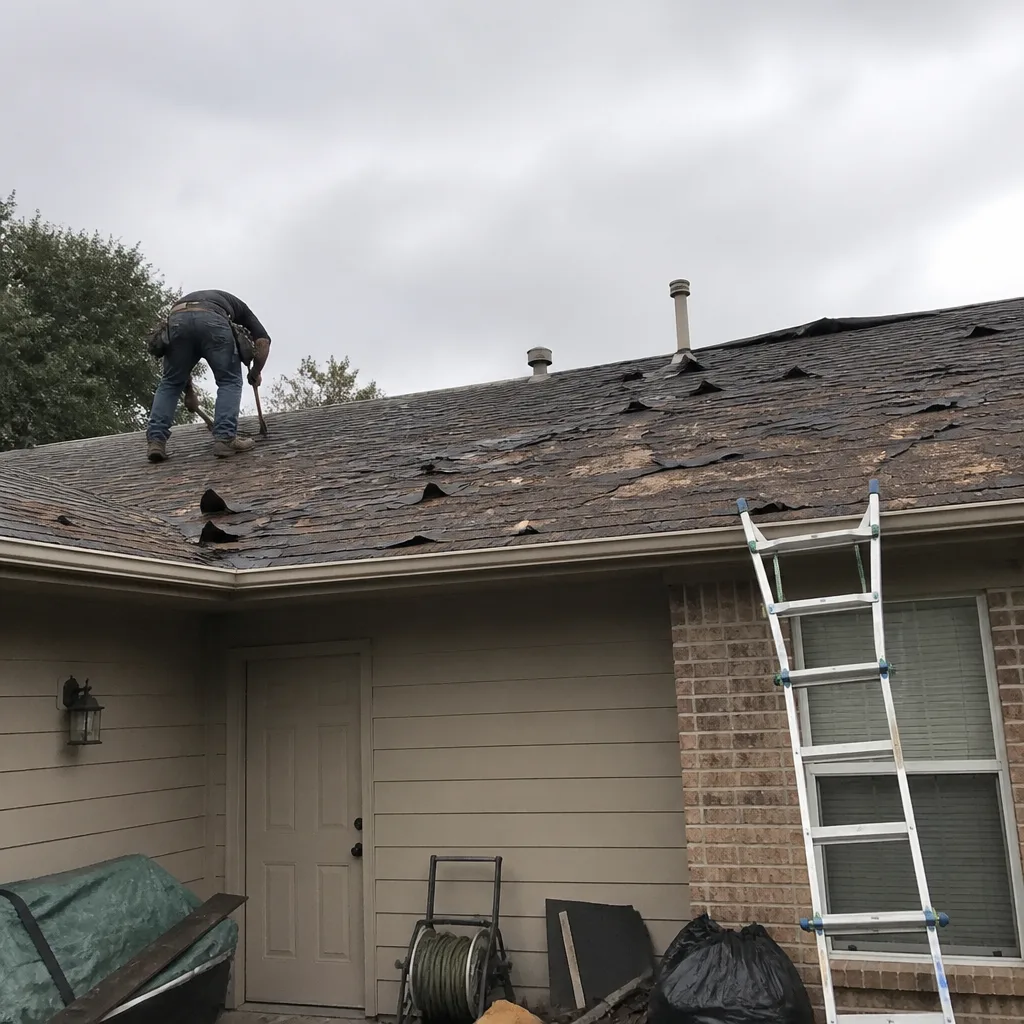 Before
 After
After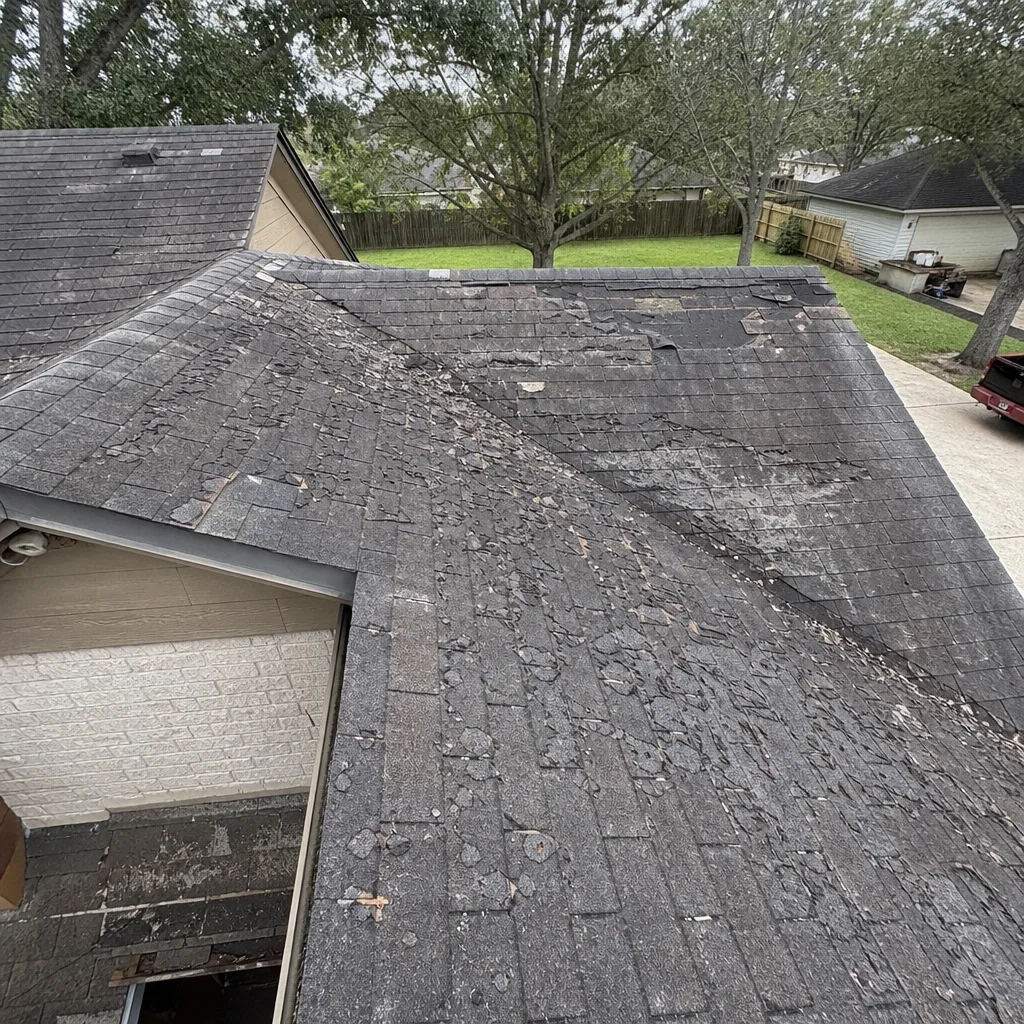 Before
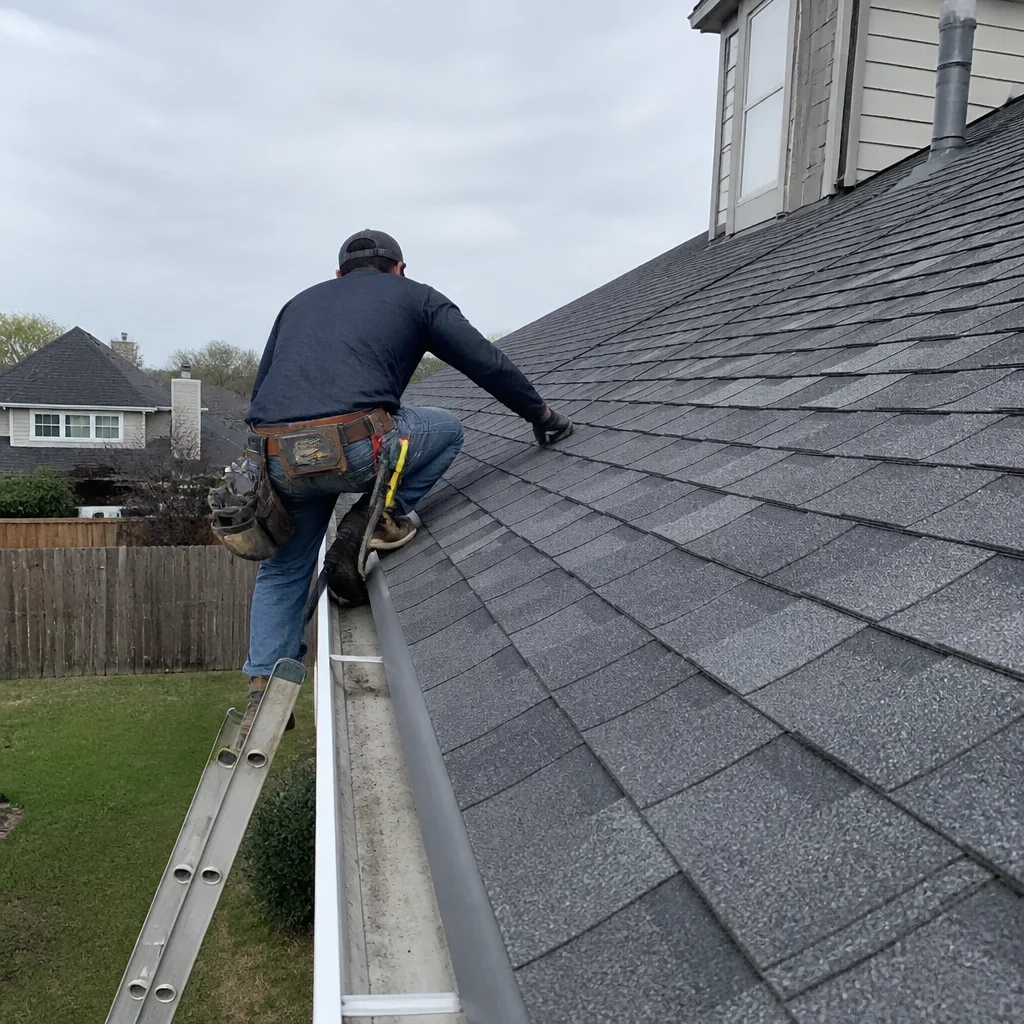 After
After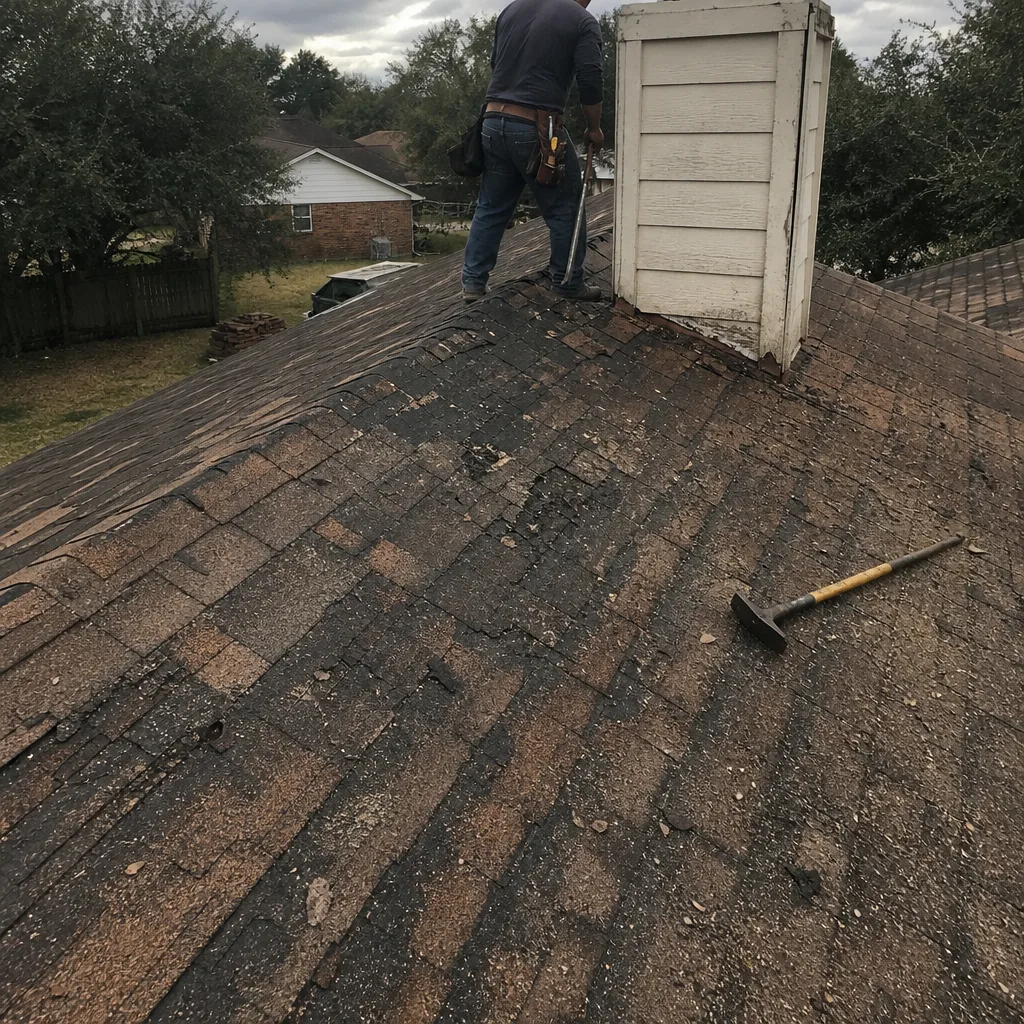 Before
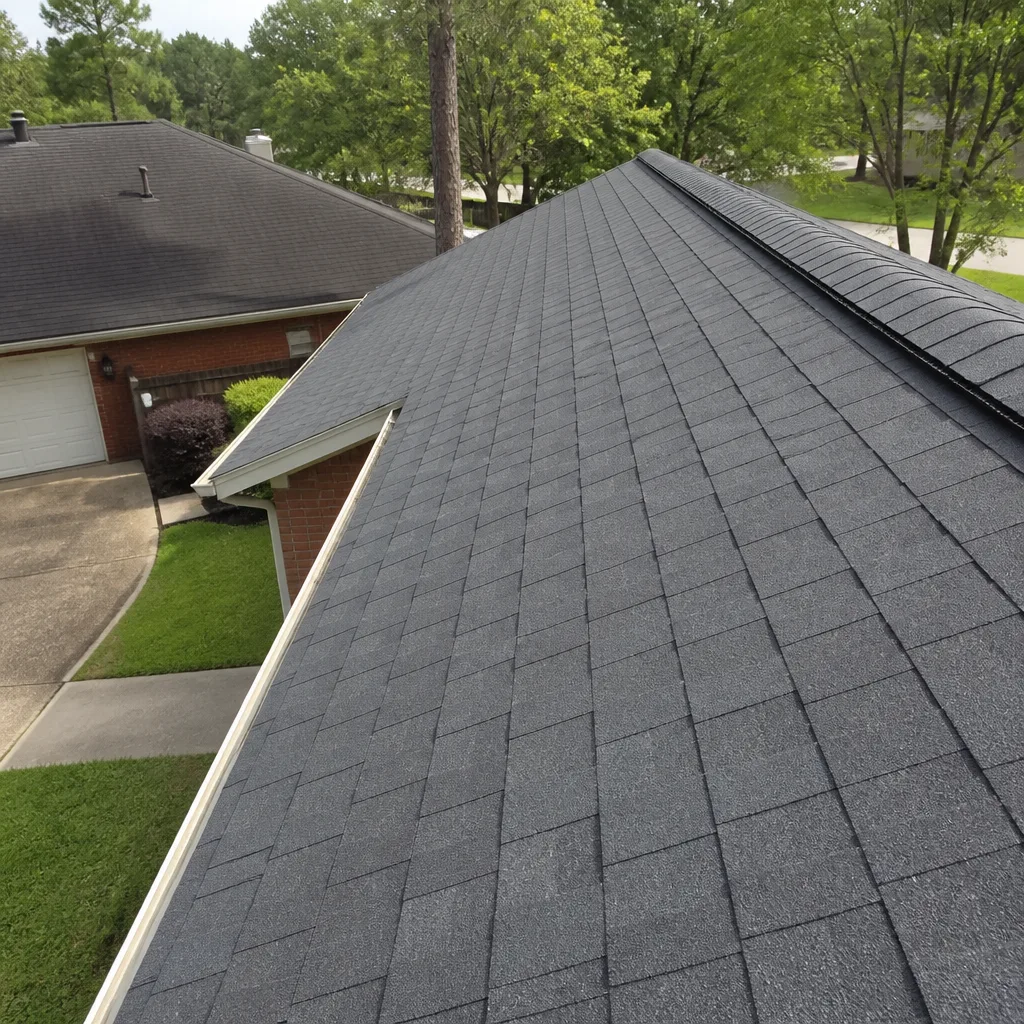 After
AfterWhen to Call a Professional
If your roof has visible damage, leaks into the attic, or is more than 15 years old in Houston’s heat and humidity, a professional inspection is the starting point before any repair or replacement decision. Specific situations that call for a pro include: water stains on ceilings, missing or curling shingles after a storm, granules collecting in gutters, daylight visible through the attic decking, and any roof that is nearing the end of its expected service life. Roofing involves heights, steep slopes, and tool work that carries real injury risk. A fall from even a single-story Houston home can be fatal. We tell homeowners plainly: stay off the roof, call someone who does this every day. Brennan Roofing Co Houston offers free estimates in Houston. Call (940) 461-8481 and we’ll send a background-checked, uniformed technician to give you a written price before any work starts.
Frequently Asked Questions
Yes, a full roof replacement in the City of Houston and in unincorporated Harris County requires a permit. Repairs under 100 square feet generally do not. If you’re unsure whether your job exceeds that threshold, call (940) 461-8481 and we’ll help you figure out what your address requires.
A residential reroofing permit in Houston typically costs $50 to $150 in the city and $100 to $200 in unincorporated Harris County. The fee depends on the job’s valuation. Your contractor should list the permit as a separate line item in your written quote.
The homeowner is exposed to insurance claim denial, resale disclosure problems, code enforcement action, and liability if a worker gets hurt. The paper trail from a permit is what protects you. Always verify a permit is active before work begins.
Many do, even when the city permit is already in hand. Check your CC&Rs for an architectural review requirement and start that process early. The approval window can add weeks to your timeline, especially in master-planned communities.
A final inspection verifies code compliance: underlayment, deck fastening, flashing details, nail patterns, and ventilation ratios. It does not verify the quality of the workmanship beyond code minimums, which is why a written workmanship guarantee matters.
You can, but Texas disclosure law requires you to disclose the unpermitted work, and that disclosure tends to lower your sale price or complicate financing for the buyer. Many Houston buyers’ lenders will not close on a home with known unpermitted structural work. The cleanest path is a permitted roof with closed inspection records.
The Bottom Line
Roofing permits in Houston are not complicated once you know which jurisdiction controls your address. For more guides & resources on Houston roofing, explore our blog. The City of Houston manages permits inside city limits, Harris County manages unincorporated areas, and many subdivisions add HOA or MUD approval layers on top. A full reroof requires a permit; small repairs generally don’t. Verify the permit is active before the crew starts, keep the inspection records, and understand that a passed inspection sets the floor, not the ceiling, for roof quality. If you want a written price before any work starts, call (940) 461-8481. We’ll walk you through what your specific address needs under the City of Houston or Harris County rules and put the number on paper before anyone touches your roof.
Written by Travis Oakley, Owner at Brennan Roofing Co Houston, serving Houston since 2000.