
 Metal roofing
 Architectural shingles
 Tile roofing
 GAF
GAF Owens Corning
 Flat & low-slope
Free roof inspection with deck photos before we talk money - GAF and Owens Corning certified installation
Styles & brands we work with
See the difference
 Before
 After
After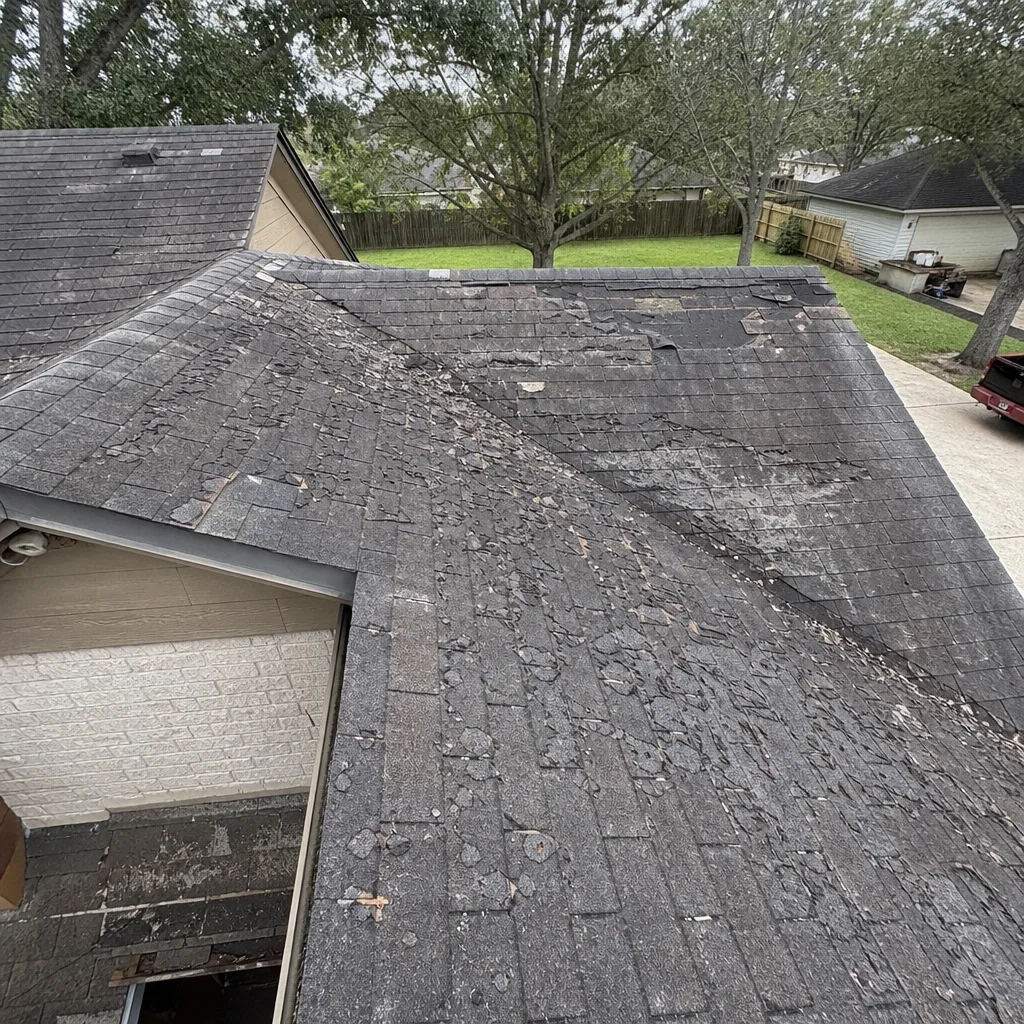 Before
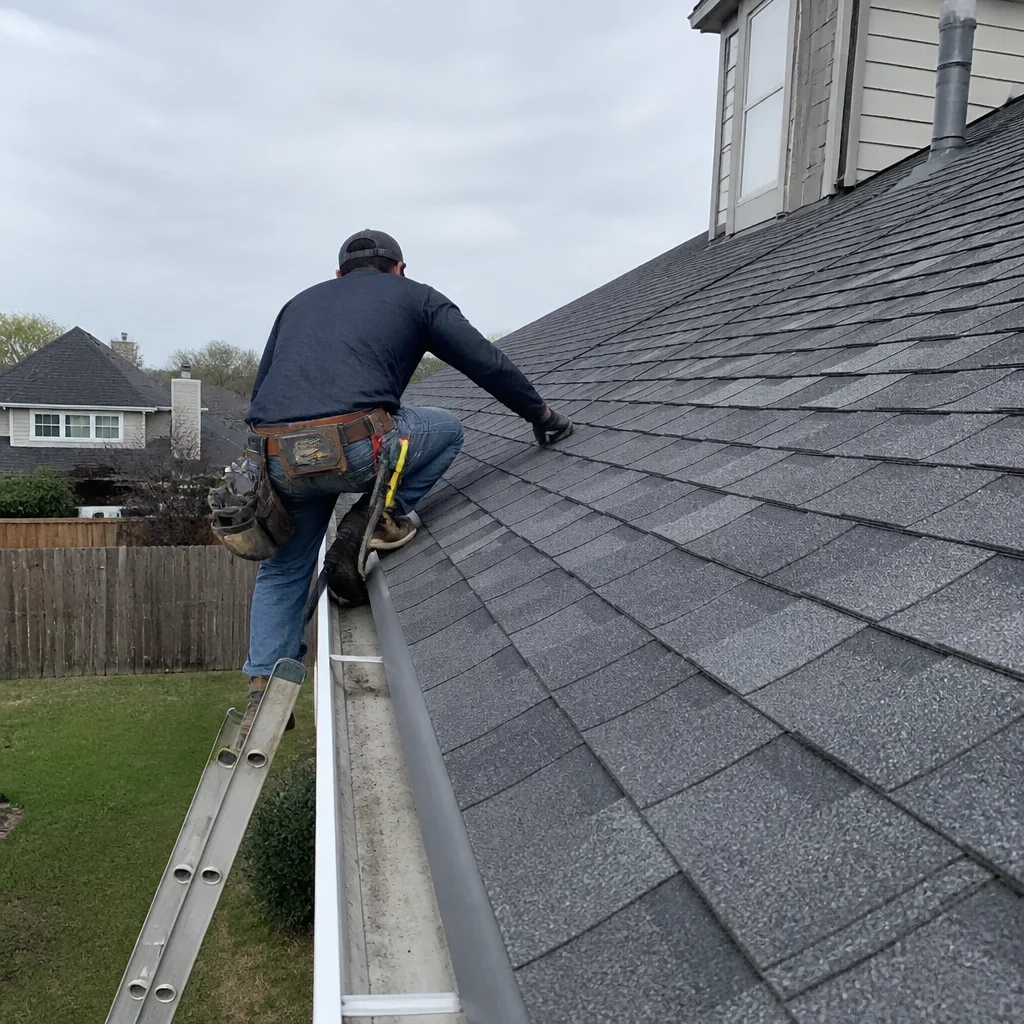 After
After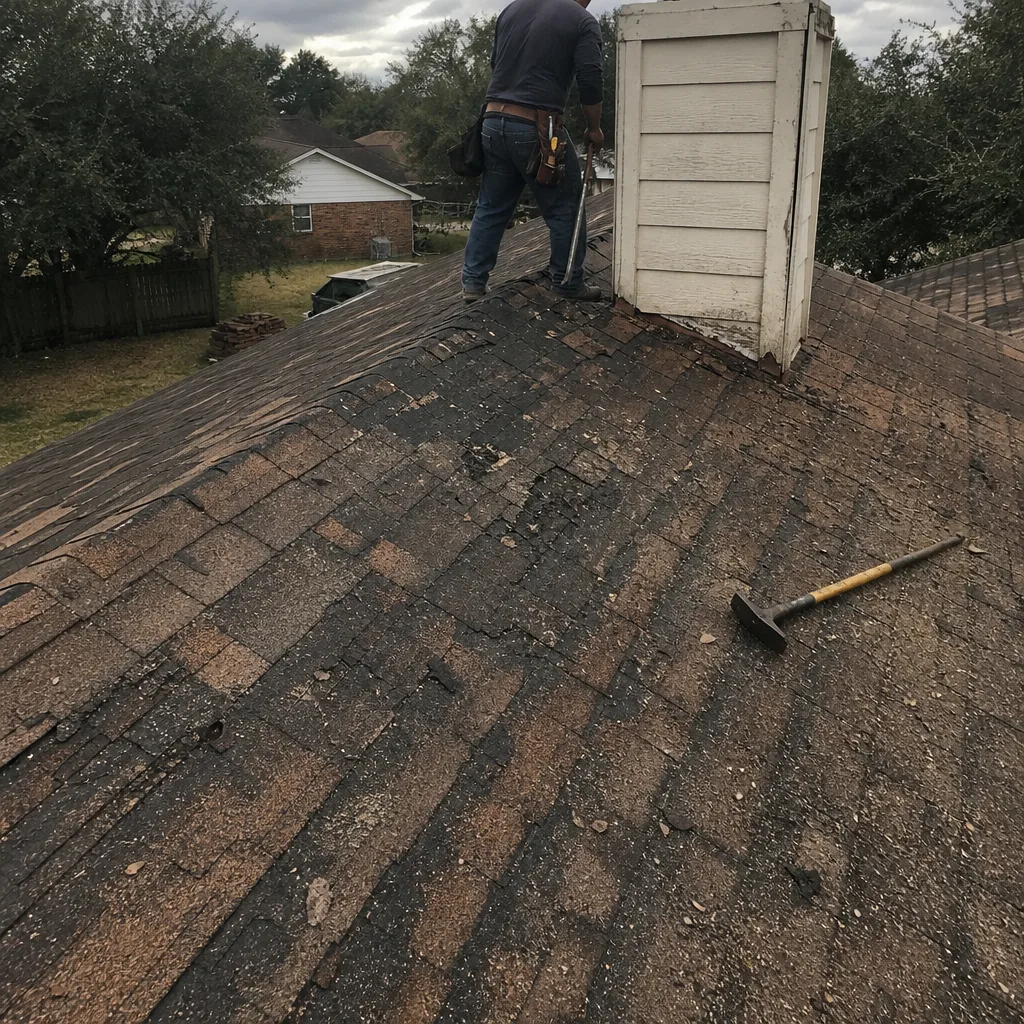 Before
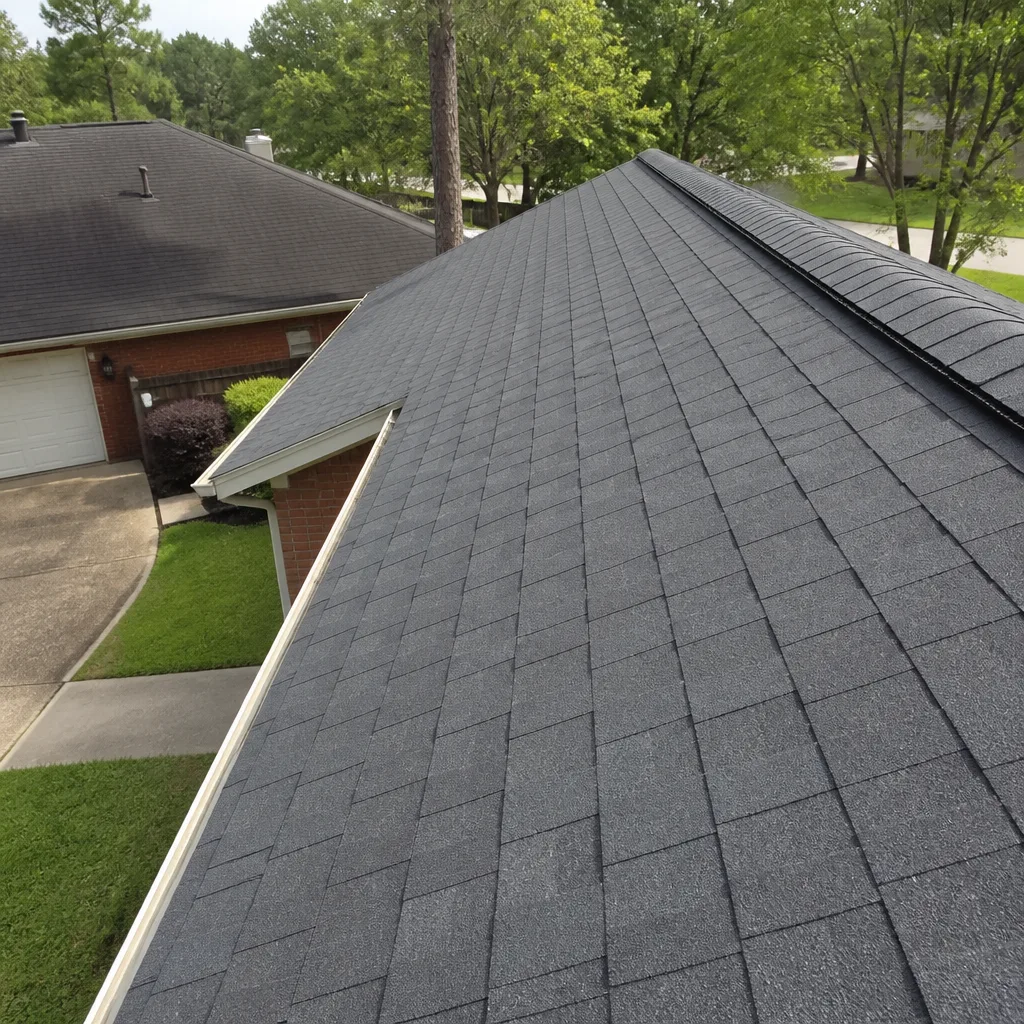 After
AfterFlashing Repair in Houston, TX
Flashing repair in Houston tackles the metal strips that seal the joints where your roof meets a wall, chimney, skylight, or valley. When flashing fails, water gets in. Brennan Roofing Co Houston repairs and replaces roof flashing throughout the Houston area, and the price goes on paper before any work starts. Call (940) 461-8481 and we’ll send a background-checked technician in a uniform, not a subcontractor we’ve never met.
We’re part of the broader Roof Repair service line, but flashing is one of those jobs that deserves its own attention. It’s small in square footage and big in consequence. Most roof leaks in Houston don’t start in the middle of a shingle field. They start at a seam, a transition, a penetration. That’s flashing country.
Houston’s weather doesn’t give flashing an easy life. We get 50-plus inches of rain a year, Gulf-driven humidity that holds moisture against metal for months, and a sun that bakes roof penetrations to 150 degrees on an August afternoon. Galvanized steel expands and contracts with every swing. Aluminum corrodes at the fasteners. Old caulk dries, cracks, and lets go. When that seal breaks, water finds the seam and heads for the attic, which is when you need Leak Repair fast.
Here’s the Garrison Standard, in plain terms: a written price before any work starts, background-checked uniformed technicians who show up inside the promised window, and a full-year written guarantee on every flashing repair we make. Travis Oakley runs this shop, and the standard is the same on every job.
When You Need Flashing Repair
Flashing failure shows up in ways that are easy to misread. Homeowners call us thinking they need a full roof replacement when the problem is actually a 4-foot strip of metal around a chimney that gave up. Here are the signs we see most often in Houston homes:
- Water stains on ceilings or walls near a chimney, skylight, or exterior wall. These stains usually appear below the roof line and darken in the hours following rain. If the stain sits under a roof penetration, flashing is the first suspect.
- Pieces of cracked or missing caulk around pipe boots and vents. Walk around the yard after a storm. If you can see gaps in the sealant around the plumbing vent pipes from the ground, water has a path inside.
- Rust or corrosion on visible flashing at dormers, chimney bases, or roof valleys. When galvanized steel starts to rust through, the metal itself becomes porous. Caulk over rust is a band-aid, not a repair.
- Granules from shingles collecting in gutters near walls. The shingle wear may be the visible problem, but the underlying leak usually runs along the step flashing under those shingles.
- Daylight visible in the attic around vents or pipes. If you can see light, water can enter. Flashing at penetrations should sit tight against the pipe and the roof deck.
- A water stain that recurs in the same spot after heavy rain. Persistent, slow leaks around roof-to-wall transitions are classic step flashing failures. They don’t pour; they drip, and the damage compounds over months.
One Houston-specific note: after hurricane season starts, we get a wave of calls from homeowners in Meyerland, Westbury, and Braeswood whose flashing was popped loose by wind-driven rain. The wind pushes water uphill under shingles and flashing. A seam that held for 15 years can fail in one storm with a strong enough gust.
Our Flashing Repair Process
We follow the same sequence on every flashing job, whether it’s a pipe boot in Katy or a chimney in the Heights. No shortcuts, no surprises.
- Inspection and written diagnosis. A technician gets on the roof and identifies exactly which flashing sections have failed and why. We don’t speculate from the driveway. You get the finding in plain language, with the fix and the price on paper.
- Written price before any work starts. The number we write is the number you pay. It doesn’t move at the door. The Garrison Standard applies to a $200 pipe boot replacement the same as it does to a $30,000 roof.
- Removal of the failed flashing and surrounding materials. We pull the old metal, cut back damaged shingles or decking as needed, and expose a clean surface to work with. Flashing only seals when it sits flat against intact substrate.
- Installation of new flashing, properly lapped and fastened. Step flashing under shingles, counter flashing over the top, pipe boots sized to the penetration, and sealant applied between layers. We use materials from manufacturers including GAF, CertainTeed, and Owens Corning when the repair ties into those roofing systems.
- Water test and visual confirmation. Before we leave, we run water over the repaired area and check underneath where we can. If it leaks, we fix it before we’ve left the driveway.
- Written guarantee in hand. Every flashing repair is covered by the 365-Day Done Right Promise. If it fails within one year, we come back at no charge. No fine print. No prorating.
Every crew member is background-checked and arrives in uniform. You’ll know who’s on your roof and why they’re there. That’s part of the Garrison Code: show up, do the work right, stand behind it.
Flashing Repair Pricing in Houston
Wondering How Much Does Roof Repair Cost? (2026 Price Guide) - Houston, TX? Flashing repair in Houston typically runs $250 to $650 for the most common fixes: replacing a pipe boot, repairing step flashing along a wall, or resealing and re-anchoring a section of counter flashing. Larger jobs that require removing and reinstalling shingles across an entire roof-to-wall transition or rebuilding flashing around a chimney run $800 to $1,500.
Here’s the honest breakdown of what moves the price:
- Type of flashing. Pipe boot replacement is the simplest and least expensive, usually $250 to $400. Step flashing along a wall runs $450 to $800 depending on length. Full chimney flashing rebuilds are the most labor-intensive.
- Roof pitch and accessibility. A steep roof with a 10/12 pitch takes longer and requires more safety rigging. A single-story ranch in Spring with a 4/12 pitch is simpler to work on.
- Condition of surrounding materials. If the decking under the flashing is rotted or the shingles are brittle and can’t be lifted without breaking, the repair scope expands. We’ll show you what we found before we add a dollar to the written price.
- Material choice. Standard galvanized steel and aluminum cover most jobs. If your roof uses a premium system from GAF, CertainTeed, or Owens Corning, we’ll match the flashing material to preserve the manufacturer’s warranty.
- Number of penetrations. A single pipe boot is one thing. A roof with six plumbing vents, two skylights, and a chimney that all failed is another. You’ll see each item priced on paper.
| Flashing Repair Type | Typical Range in Houston |
|---|---|
| Pipe boot replacement | $250 – $400 |
| Step flashing repair (per wall line) | $450 – $800 |
| Skylight or roof window flashing | $500 – $900 |
| Chimney flashing repair / rebuild | $700 – $1,500 |
| Valley flashing replacement | $600 – $1,100 |
These are the ranges we’ve seen across Houston: Cypress, Pearland, Sugar Land, Kingwood, Clear Lake. Your exact number depends on the roof, the access, and the material. Call (940) 461-8481 for a free estimate. The price goes in writing before we touch anything.
Why Flashing Fails Faster in Houston
Not every city treats roof flashing the same way. Houston is hard on metal.
The humidity is the quiet enemy. It’s not just the rain itself; it’s the moisture that never leaves. Metal flashing stays damp for weeks at a time in a Houston summer, which accelerates corrosion even on galvanized steel, especially around the cut edges and fastener holes. That’s where we see pinhole leaks start.
The thermal cycle is the second factor. A Houston roof surface swings by 80 to 100 degrees between a July afternoon and a January night. Metal expands and contracts with every cycle. Over 15 or 20 years, that movement works fasteners loose, widens nail holes, and breaks the bond on old sealant. The flashing doesn’t fail because the metal was bad. It fails because it was installed without accounting for the movement. We install flashing with proper lap and fastening patterns so the metal can move without opening a water path.
And a note for the spring season: the heavy thunderstorms in March through May, combined with pollen and oak debris, clog gutters and force water to back up under the lower edges of flashing at roof-to-wall transitions on a lot of Houston houses. A clogged gutter can push water uphill 6 inches, and that’s past the lap line of most step flashing. If your gutters are clean and the flashing is lapped right, that water finds the downspout instead of the attic.
Flashing Repair vs. a Patch: What Actually Holds
We get asked about sealant-only fixes, and we’ll be straight with you. A tube of roofing cement on a failed flashing seam is a temporary measure. It may buy a dry month or two. It will not hold through a Houston storm season.
Flashing fails because the metal has pulled away, the lap is wrong, the fastener is backed out, or the sealant underneath has degraded. Caulk over the top addresses none of that. The right fix is to remove the failed section, address the movement or substrate problem, and install new flashing that’s mechanically fastened and properly lapped. That’s what we do, and that’s why we can put a year-long written guarantee on it.
Do You Need Flashing Repair or a Full Roof Replacement?
Sometimes flashing has failed because it was poorly installed or has simply aged past its service life, and the surrounding roof deck and shingles are still sound. In that case, a targeted Flat Roof Patch or flashing repair is the right call, and we’ll tell you that plainly.
Other times, the flashing failure is a symptom of a larger problem: the roof is at end of life, the shingles are brittle, the decking is showing water damage at the transitions, and multiple penetrations are compromised. In that case, a repair that costs $800 now might be followed by another $500 repair in six months. We’ll show you the condition of the roof when we’re up there and lay out the options. The decision is yours, and the price for either path goes on paper before any work starts.
When a full replacement is needed, the roof systems we install come from manufacturers including GAF, CertainTeed, Owens Corning, and Boral. The flashing gets installed to those manufacturers’ specs so the warranty on the roof actually means something.
Homeowner’s Quick Reference: Flashing Types
We use the trade’s terms on the job. Here’s what they mean, in plain English.
- Step flashing: Short, L-shaped metal pieces woven into the shingles where a roof meets a vertical wall. Each piece laps the one below it so water always runs downhill to the gutter, never behind the wall.
- Counter flashing: A second layer of metal that hangs down over step flashing from the wall side. It’s the top layer of the two-part seal at a chimney or wall junction.
- Pipe boot: The rubber-and-metal collar around plumbing vent pipes. The rubber gasket dries out and cracks over time; it’s the single most common flashing failure on Houston roofs.
- Valley flashing: Metal or membrane in the V where two roof planes meet. Water concentrates in valleys, so leaks there move fast and do disproportionate damage.
- Drip edge: The metal strip at the roof’s edge that directs water into the gutter and away from the fascia and decking. Not strictly a leak repair item, but related, and often missing on older Houston homes.
FAQs – Flashing Repair
How much does flashing repair cost in Houston?
Flashing repair in Houston generally runs $250 to $650 for common fixes like pipe boot replacement or step flashing repair, and $700 to $1,500 for chimney flashing rebuilds or extensive corrections. The price depends on the flashing type, roof pitch, decking condition, and materials. Call (940) 461-8481 for a free estimate; the number goes on paper before any work begins.
How do I know if my flashing is leaking?
Look for water stains on ceilings or walls near chimneys, skylights, exterior walls, or roof valleys, especially after rain. Visible rust, cracked sealant around pipe boots, or daylight in the attic around penetrations are also flashing failure signs.
Can you fix flashing without replacing the whole roof?
Yes, in most cases flashing can be repaired or replaced independently of the roof. We’ll confirm the surrounding decking and shingles are sound, then repair only the failed flashing. If the roof is at end of life, we’ll show you that and you’ll decide the path.
How long does flashing repair last?
Properly installed flashing should last 15 to 20 years or more in Houston’s climate. Every Brennan Roofing Co Houston flashing repair carries the 365-Day Done Right Promise in writing; if it fails within a year, we come back at no charge. Call (940) 461-8481 to schedule an inspection.
Schedule Your Flashing Repair in Houston
Flashing repair is one of those jobs that rewards doing it right the first time. A small seam, fixed properly, prevents a decade of slow water damage. A small seam, patched with caulk, buys a month. We don’t do the second kind of repair.
Call (940) 461-8481 and you’ll talk to a live person, day or night. We’ll schedule a free inspection, get a technician on your roof, and put the written price in your hand before any work starts. That’s the Garrison Standard. Every job. No exceptions. Learn more about the full scope of our work on our Roof Repair in Houston page, or head back to home to see everything we do.
Written by Travis Oakley, Owner at Brennan Roofing Co Houston, serving Houston.