
 Metal roofing
 Architectural shingles
 Tile roofing
 GAF
GAF Owens Corning
 Flat & low-slope
Free roof inspection with deck photos before we talk money - GAF and Owens Corning certified installation
IKO Flashing Replacement: The Houston Owner’s Guide
IKO flashing replacement in Houston typically runs $450 to $1,200 installed, depending on how much flashing needs to come off and what the deck underneath looks like once we open it up. We stock IKO-compatible flashing on our trucks, so most jobs are done in one visit. Most homeowners find out their flashing has failed after a storm, when water shows up on a ceiling or along a wall line. The flashing is the metal that bridges the gap where the roof meets a wall, chimney, skylight, or valley, and when it fails, water gets in. That’s the part that fails first on IKO roofs in this climate, and we’ll explain why below.
Key Takeaways:
- Installed replacement cost in Houston: $450 – $1,200 for typical flashing repairs
- We stock IKO-compatible flashing on the truck, so most repairs are same-visit
- Houston’s heat and humidity age flashing sealant faster than the shingles themselves
- You get a written price before any work starts, and a one-year guarantee in writing
- Call (940) 461-8481 for a free estimate
What IKO Flashing Does (and Why It Fails in Houston)
Flashing is the sheet metal, usually galvanized steel or aluminum, that directs water away from the places a roof can’t shed water on its own. Where your roof meets a brick wall, a chimney, or a dormer, shingles alone won’t keep water out. The flashing laps under the shingles and behind the siding or stucco so water drains down and out, not in. In Houston, the real enemy is the sealant and the micro-movement from heat. We get months of 95-plus degree days, and the metal expands. It cools overnight and contracts. That cycle, year after year, cracks the sealant bond at the edges. Then a Gulf Coast downpour pushes water through those hairline gaps. We replace failed IKO flashing all over Houston, from Meyerland to Kingwood, and the failure pattern is almost always the same: the shingles are fine, the flashing seal failed.
Brennan Roofing Co Houston is an independent roofing contractor. We are not affiliated with IKO, but we install IKO roofing products and replace IKO flashing with OEM or equivalent-compatible material matched to the existing system.
Which IKO Models This Applies To
This applies to the full range of IKO asphalt shingle lines installed across Houston: Cambridge, Dynasty, Nordic, and Royal Estate. The flashing itself is not shingle-specific, but the installation method has to match the shingle profile and the roof geometry. IKO’s heavier laminated lines, Dynasty and Royal Estate, have a thicker profile at the lap, which means the flashing step needs a slightly wider counter-flashing cut where it meets the wall. A flashing replacement done wrong on those lines will leak at the exact corner where the step flashing meets the sidewall flashing.
You can identify your IKO shingle by checking the bundle wrapper if you have one left in the garage or attic, or by the printed markings on the underside of a shingle tab. If you can’t find either, we identify it on site. The flashing itself is generic sheet metal, but the profile, the gauge, and the way it’s lapped are what matter. We use 26-gauge galvanized or aluminum flashing for IKO replacements. The aftermarket pieces we carry match the OEM dimensions and profile, and we’ll tell you if we can use them or if your particular transition needs an OEM-width piece. The gotcha we see often: a roofer will replace a step flashing section with a narrower gauge than what’s there, and it won’t lap correctly under the IKO shingle’s nail line. That’s the kind of thing that looks fine for six months and then leaks in the first hard rain of June.
Styles & brands we work with
Signs Your IKO Flashing Replacement Is Failing
Here’s what failing IKO flashing looks like from inside and outside the house. You don’t need all five to need a replacement; one or two is enough to warrant an inspection.
- Water stains on the ceiling at the wall line or around a chimney. This is the classic flashing failure signature. The water enters at the transition point and travels along the framing before it shows up on the drywall. By the time you see the stain, water’s been moving for weeks or longer.
- Damp or discolored wall sheathing in the attic along the roof-to-wall junction. If you can safely access your attic after a rain, look at the wall line where the roof meets vertical framing. Dark streaks or soft wood there means water is getting past the flashing and wicking into the structure.
- Lifted or separated flashing at the roof-to-wall seam. Houston heat and humidity break down the sealant, and the metal itself can lift off the deck as the sealant lets go. You’ll see a gap between the flashing and the shingle or the wall. If you can see the gap standing at ground level, it’s already failing.
- Rust or corrosion on flashing metal. Galvanized flashing in Houston’s humidity eventually rusts, especially at the cut edges and the fasteners. Once the galvanized coating fails, the metal perforates, and those pinholes let water straight through.
- Granule loss concentrated at the flashing line. When water runs under an IKO shingle at the flashing, it accelerates granule loss on the shingle’s underside. You’ll see a bare strip of asphalt along the flashing edge. That’s not normal wear; that’s water working at the bond.
See the difference
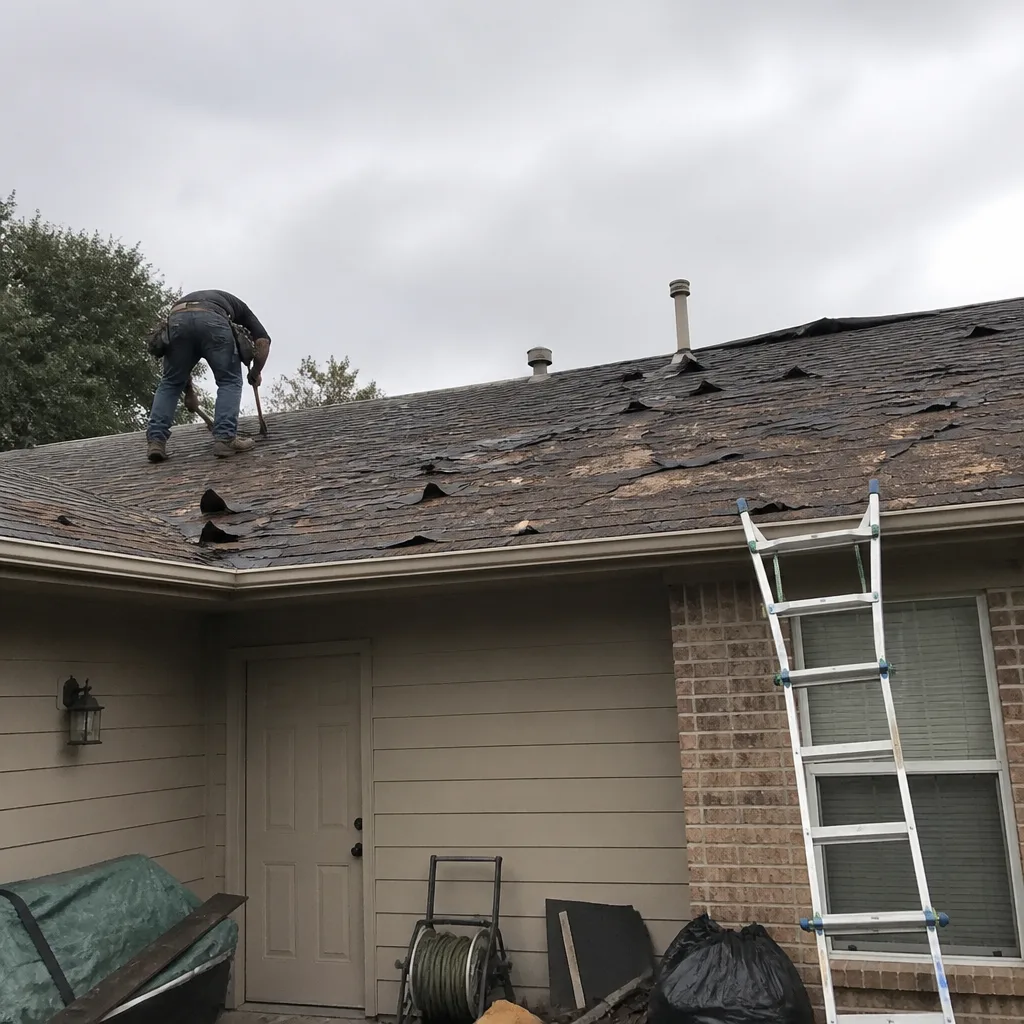 Before
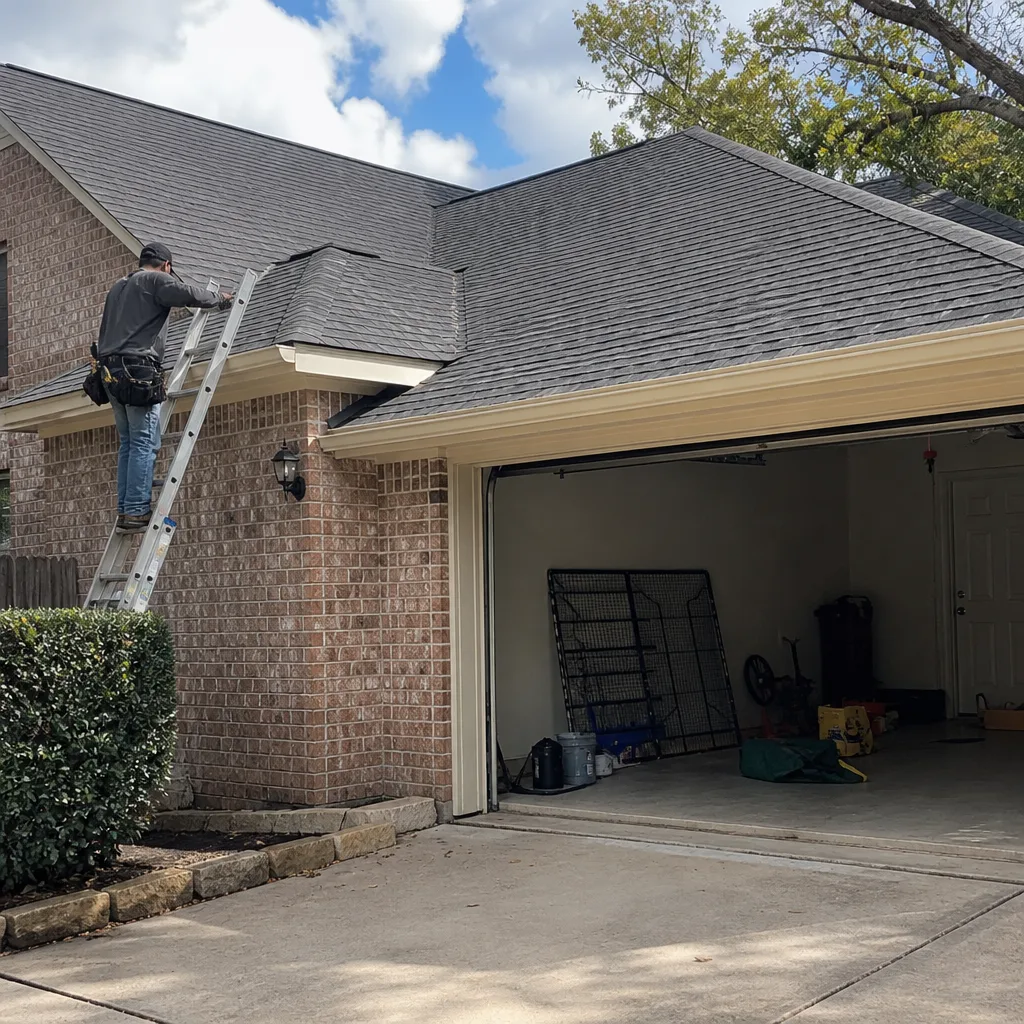 After
After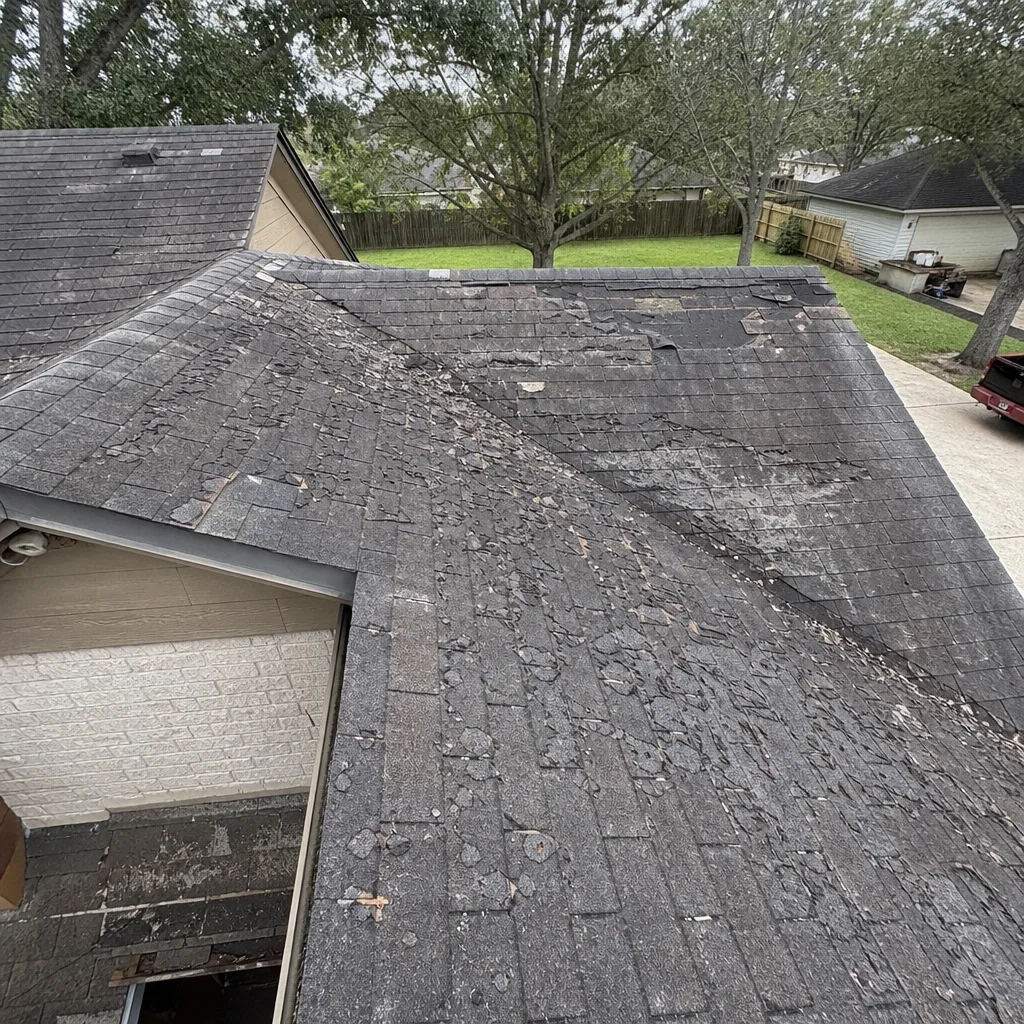 Before
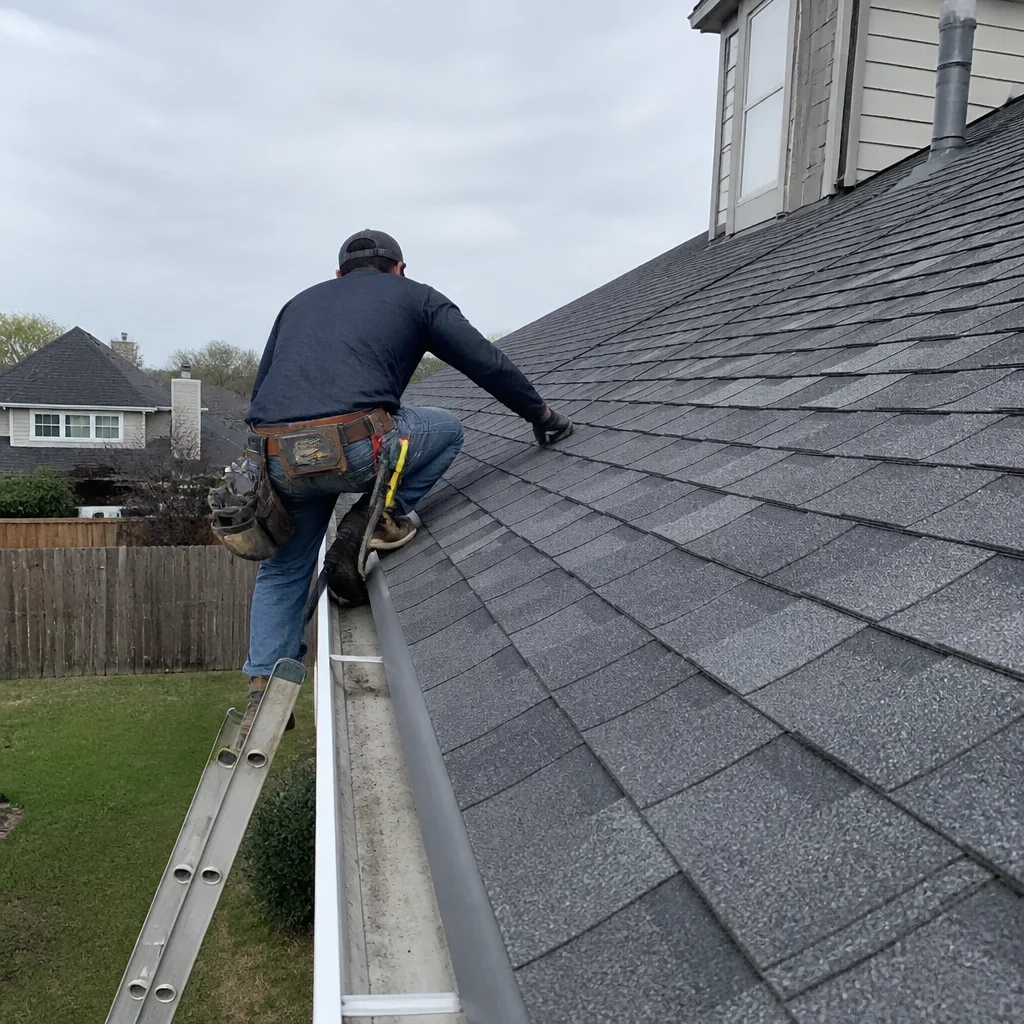 After
After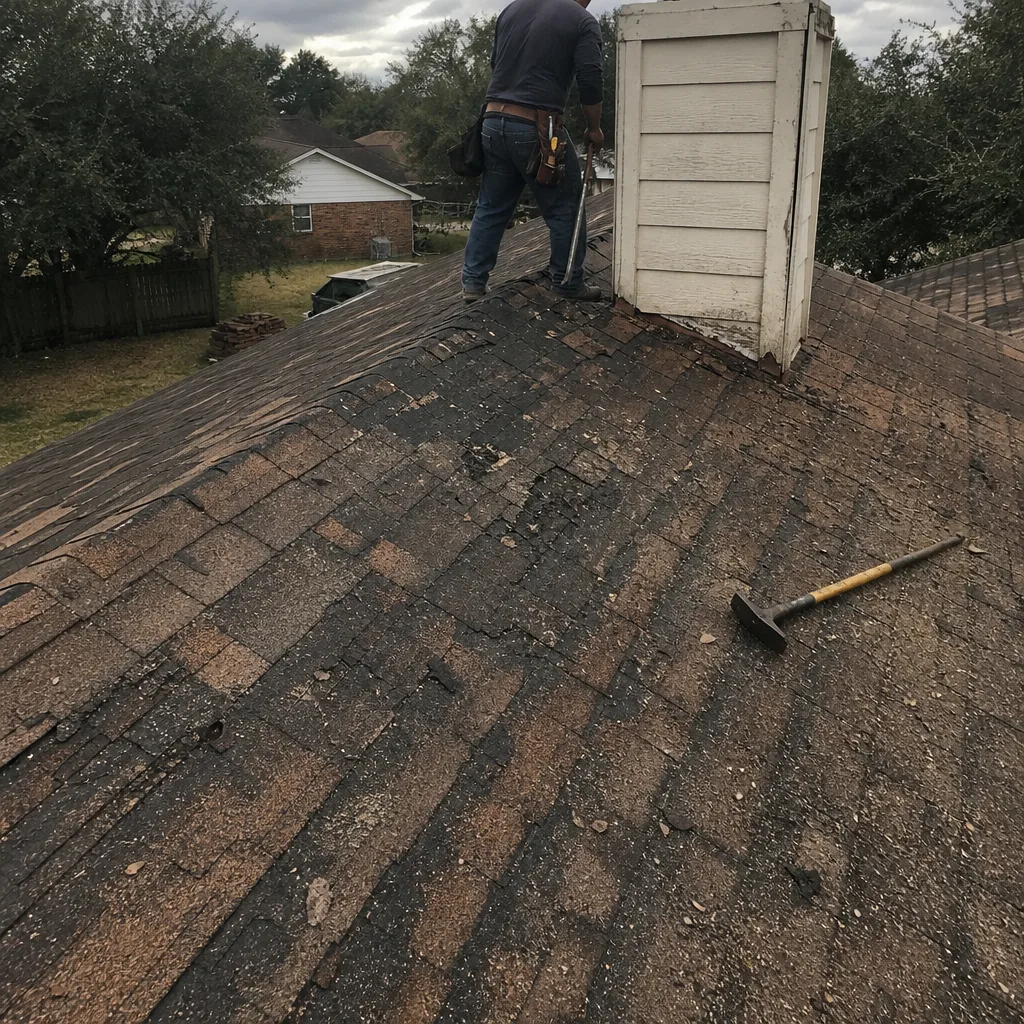 Before
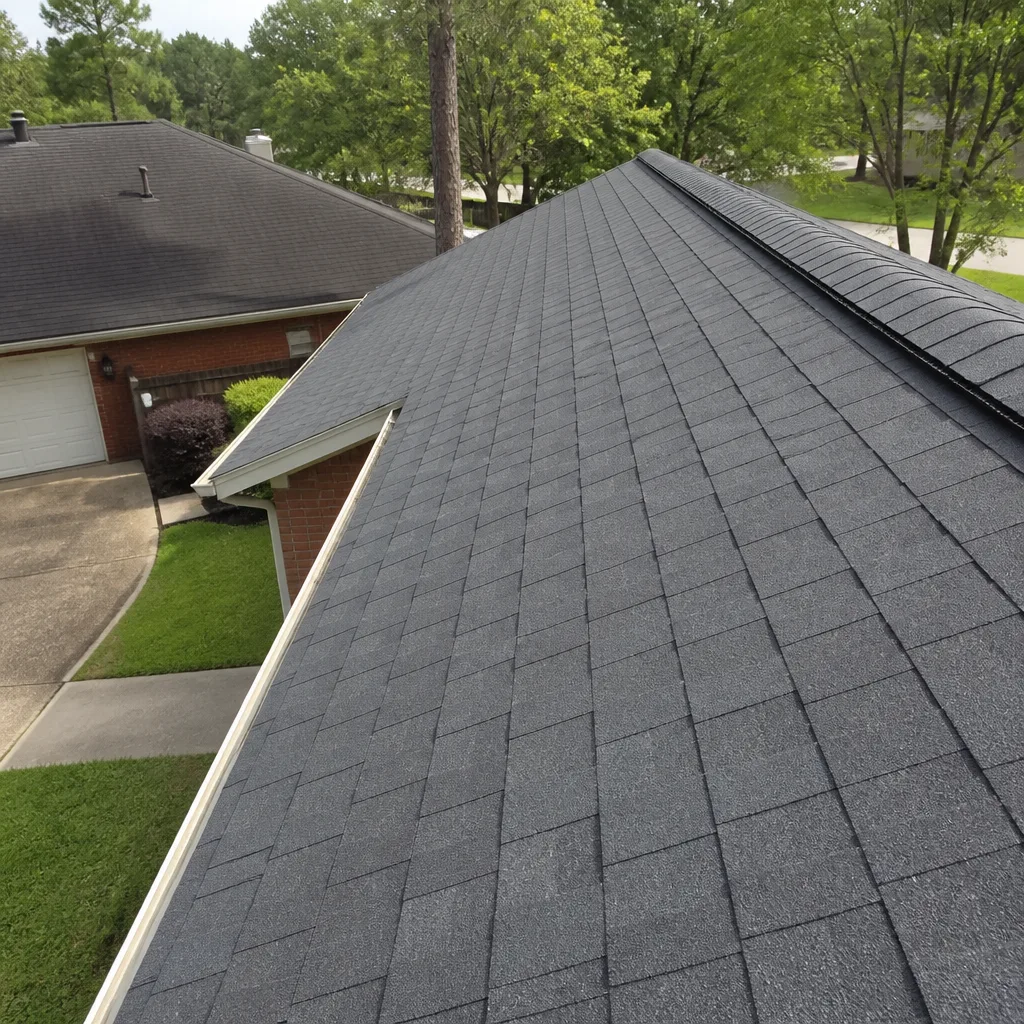 After
AfterReplacement Cost & What’s Included
For a typical IKO flashing replacement in Houston, you’re looking at $450 to $1,200 installed. That covers removing the old flashing, inspecting and replacing any damaged felt or decking immediately beneath it, installing new flashing matched to your IKO profile, resealing all laps and fasteners, and hauling off the old metal. The price range is driven by how many linear feet of flashing need replacement, whether the deck needs repair once we open it up, and whether the flashing is ground-level accessible or requires ladder and bracket work along a two- or three-story wall.
We put the price in writing before any work starts. That number does not move at the door. If we open it up and find decking rot, we’ll show you, explain what it means, and give you a separate line item before we do anything. The replacement itself is covered by our 365-Day Done Right Promise: if it’s not done right, we make it right, in writing, at no charge. That means if the repair fails within one year, we come back for free.
DIY or Call Us?
There’s a version of this job you can check on your own, and a version you should not attempt. If you want to inspect, do it from the ground or a safe ladder: look for lifted flashing, rust, or gap lines at the wall joint. Do not go on the roof. Flashing replacement on an IKO roof means lifting shingles without cracking them, cutting step flashing to the right profile, and re-nailing without hitting the water channel underneath. If you get the nail pattern or the lap wrong, you’ve created a leak where there wasn’t one. It’s also genuinely dangerous: roof work in Houston means steep slopes, morning dew, and surface temperatures that hit 140 degrees in July. The fall risk is real, and a wrong step doesn’t just cost money.
Travis Oakley has been reading Houston roofs since he brought his trade foundation here from the San Fernando Valley, where he learned roofing at Los Angeles Trade-Technical College before running full tear-offs and re-roofs from Meyerland to the Energy Corridor. He’ll tell you the same thing on the phone: flashing can be fixed in a morning if you catch it early, and ignored for a year if you don’t. If you see any of the signs above, call (940) 461-8481. We’ll look at it, tell you what’s actually wrong, and put the price on paper before we touch a shingle.
FAQs
IKO flashing in Houston typically lasts 15 to 20 years before the sealant bond fails, but the shingles themselves can last 25 to 30. The flashing almost always goes first. Heat cycling, humidity, and hurricane-season wind-driven rain all shorten the effective life, and we replace flashing on IKO roofs that still have years of shingle life left. Call (940) 461-8481 if your flashing is at or past that age and you want it inspected.
A small sealant gap can sometimes be resealed, but that’s a temporary patch, not a repair. Once the metal is rusted through, lifted, or the laps have separated, resealing won’t hold for more than a season in Houston’s heat. Replacement is the only durable fix, and it’s less expensive than repairing the water damage that follows a patch job that fails.
Most flashing replacements on an IKO roof take 3 to 5 hours on site. That includes removing the old flashing, checking the deck, installing the new metal, and resealing everything. If we find decking rot that needs replacing, it adds a few hours. Call (940) 461-8481 and we’ll give you a realistic time window for your specific roof.
We stock flashing on our trucks that matches IKO profiles and dimensions, so most jobs are done same-visit. If your roof has a custom transition or an unusual profile that needs an OEM-width piece, we’ll order it and have it in days, not weeks. We also carry compatible flashing for GAF, Owens Corning, and CertainTeed systems.
Your flashing replacement price is written down before we start, and that number doesn’t move. If we find decking rot or other damage once the flashing is lifted, we’ll show you what we found, explain what it means, and put the additional work on a separate line item for your approval. You never pay for work you didn’t approve.
Written by Travis Oakley, Owner, Brennan Roofing Co Houston at Brennan Roofing Co Houston, serving Houston and nearby areas.